
Unbiased headlines. Facts, not spin.
Every story is an unbiased news briefing written from 110+ sources across the spectrum — sources linked so you can verify it yourself.
 tech
Major Story (7/10)
August 16, 2026 at 12:47 AM
tech
Major Story (7/10)
August 16, 2026 at 12:47 AM
State Department Draft Tells Allies: Join China's AI Coalition, Lose U.S. Backing
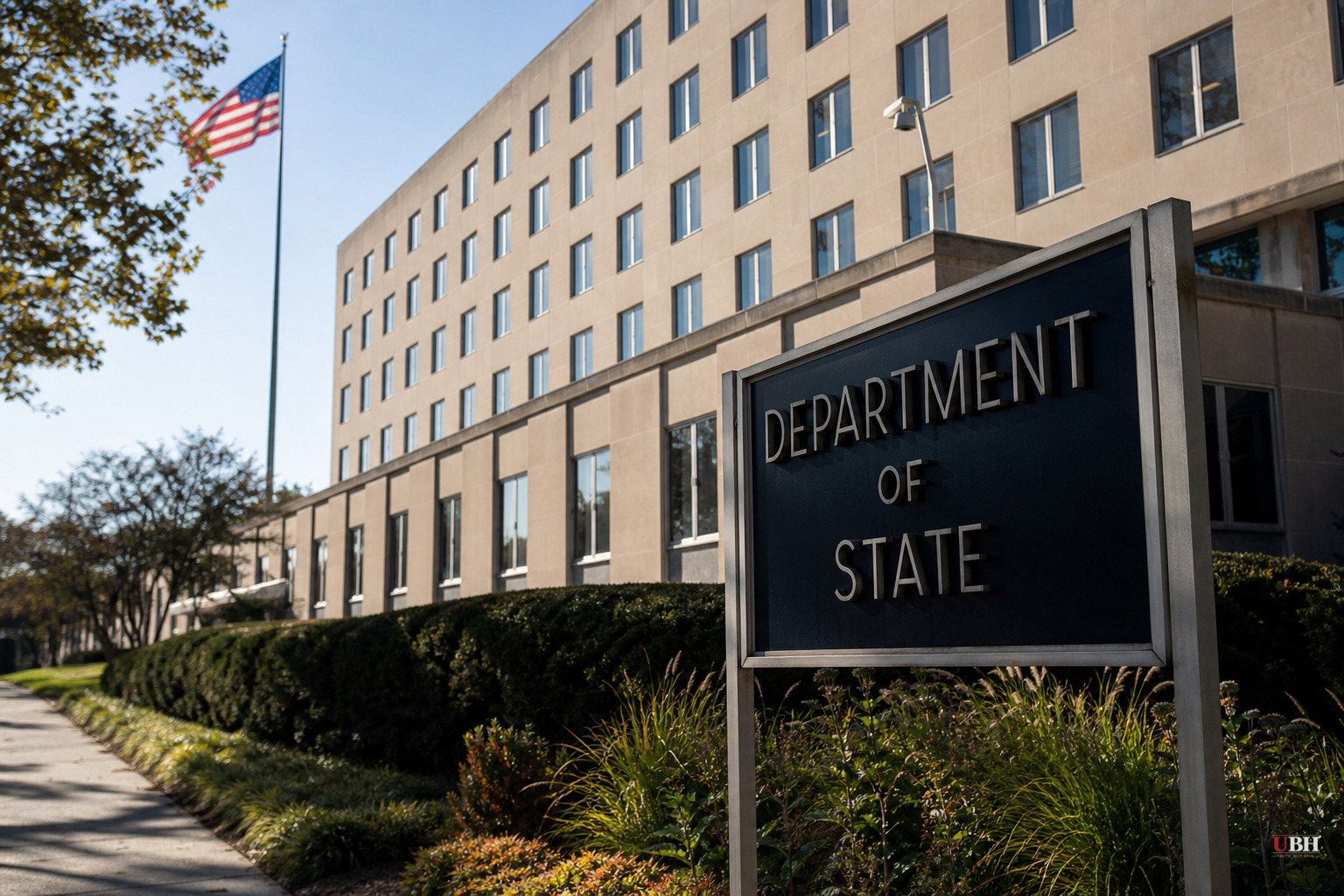
The State Department has drafted a letter telling dozens of countries to pick a side in the AI arms race with China, according to an internal draft reviewed by Reuters and a U.S. official who spoke to the news agency. The message is blunt: sign onto Beijing's competing AI framework, and you're out of the U.S.-led coalition.
The letter targets the 35 signatories of a U.S. "AI Opportunity Statement" signed in June. That group overlaps heavily with Pax Silica, the initiative Washington launched last year to lock down supply chains for AI models, semiconductors, and critical minerals amid the broader tech rivalry with China, according to Reuters.
About two dozen countries have joined Pax Silica so far, including close U.S. allies Japan, Australia, and South Korea, Reuters reported. Kazakhstan is also on the list, a country Washington wants for its critical mineral reserves. Kazakhstan is also the only country known to have joined China's rival framework at the same time, and that's reportedly what triggered this letter in the first place.
The draft doesn't pull punches. "To be part of everything is to be part of nothing," it reads, according to Reuters. "Signature of the Pax Silica Declaration is not merely a membership subscription, but a commitment." It goes on: "It cannot be held alongside membership in duplicative initiatives whose expectations conflict with our own." China isn't named directly, but nobody's confused about who that line is aimed at.
This comes a month after Chinese President Xi Jinping rolled out his own answer, the "World Artificial Intelligence Cooperation Organization," built around pushing China's open-weight AI models as an alternative to American systems, Reuters reported in July.
Reuters could not confirm when the letter will actually go out, or whether the State Department will soften the language before it does. The draft itself was undated. The State Department told Reuters it doesn't comment on "purportedly leaked internal documents," which is standard practice and not an admission of anything.
China's embassy in Washington pushed back hard. A spokesperson told Reuters the country opposes "politicizing trade and technology issues" and that "such actions will only stifle global AI advances and serve no one's interests." The Kazakh embassy did not respond to Reuters' request for comment.
Chinese open-weight models have been closing the gap fast on proprietary systems from OpenAI and Anthropic, according to CNBC's reporting on the matter. If Beijing can offer smaller countries cheap AI infrastructure with no strings attached, and those same countries also take American investment and expertise, the U.S. gets none of the leverage it's paying for. A coalition that lets members hedge with Beijing isn't really a coalition. It's a subsidy program with an exit ramp built in.
Forcing an ultimatum on countries like Kazakhstan, which sits on critical mineral deposits the U.S. actually needs, could backfire. If Kazakhstan feels cornered, it might just lean harder into Beijing rather than cut ties, especially since China is a closer trading partner geographically and has fewer conditions attached to its money. Small and developing nations juggling both superpowers aren't doing it out of confusion. They're doing it because playing both sides gets them more investment, and an American letter demanding loyalty doesn't change that math on its own.
No timeline exists yet for when this letter goes out or how many of the 35 signatories will actually face a hard choice. Kazakhstan's response, or lack of one, will be the first real test of whether the threat has teeth or whether Washington is bluffing on a hand it can't fully back up with cash and chips.
Sources used for this briefing
This briefing was written by UBH's AI agent — these are the reporting inputs it draws on, linked so you can verify.


