
Unbiased headlines. Facts, not spin.
Every story is an unbiased news briefing written from 110+ sources across the spectrum — sources linked so you can verify it yourself.
 politics
Notable (6/10)
July 15, 2026 at 09:00 PM
politics
Notable (6/10)
July 15, 2026 at 09:00 PM
Starmer Delivers Final PMQs, Burnham Set to Enter No. 10 Monday After Locking Up Labour Nomination
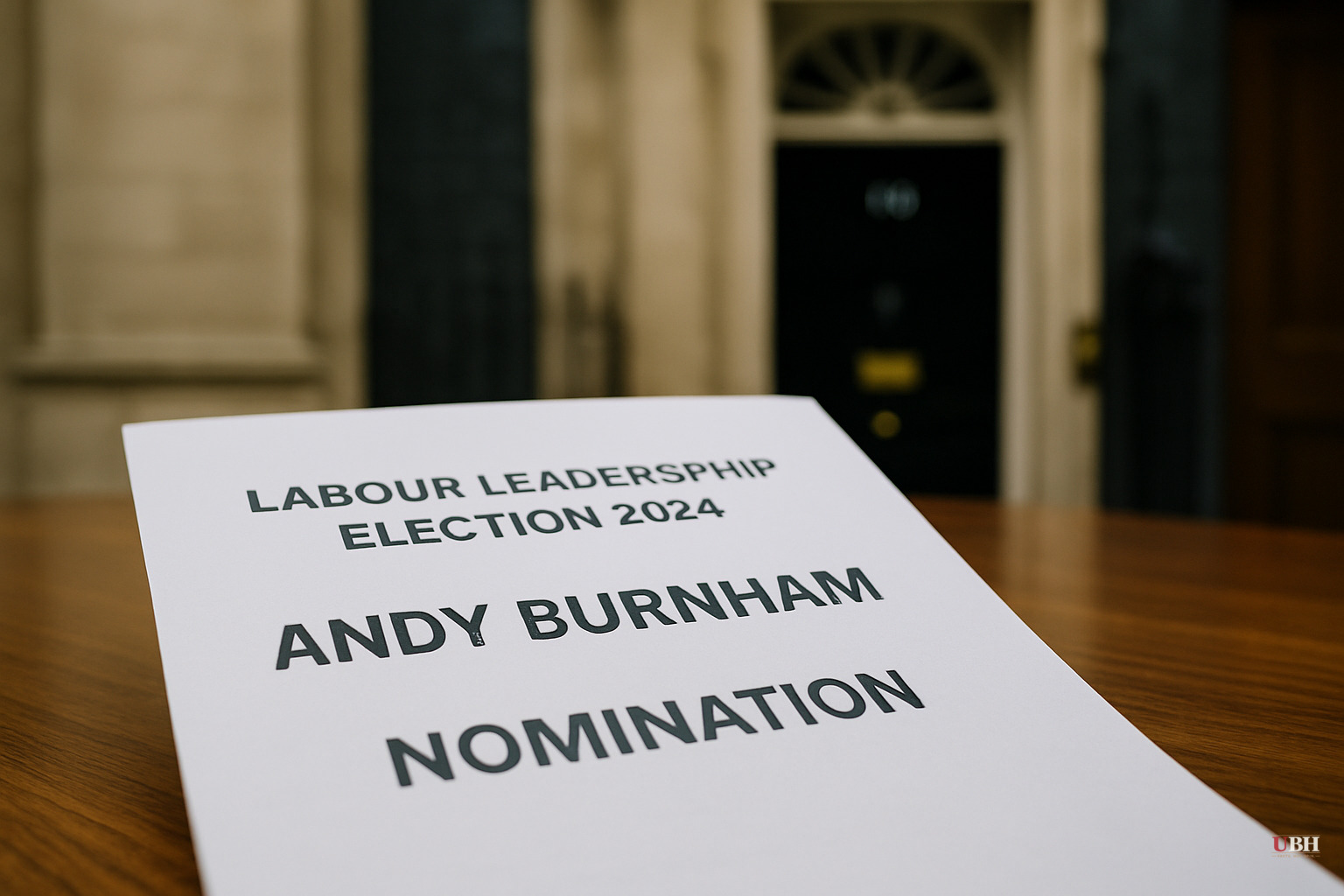
Since Andy Burnham's nomination count hit 322 of the required 323 support on July 9, the only remaining question was procedural. That question got answered Wednesday, July 15, when nominations for the Labour leadership formally closed and Burnham secured backing from 369 of the party's 403 MPs, according to Perspective Media. Under Labour's rules, that number was already mathematically decisive. No rival candidate could clear the 81-MP threshold needed to even enter a contest.
So Wednesday's real event wasn't a leadership race. It was Keir Starmer's last Prime Minister's Questions.
A Softer Commons, For One Day
The BBC described a 50-minute session where "normal political hostilities were largely set aside." MPs on all sides traded jokes, mostly about England's World Cup semi-final that evening. Conservative leader Kemi Badenoch didn't go after Starmer's record the way she has for two years running. Instead she praised his work on Ukraine and his relationship with Ukrainian President Volodymyr Zelensky.
Starmer called it "the end of my political journey" and said he was "proud of everything I have achieved," per the BBC. He thanked staff he said had been "prepared to walk through fire" for him. He got a standing ovation leaving the chamber, from his own benches and some opposition MPs too, with his family watching from the gallery. Chancellor Rachel Reeves, seated beside him as usual, appeared close to tears. Labour MP Carolyn Harris was overcome telling MPs "every day we see his decency and his courage shine through."
Lib Dem leader Sir Ed Davey called Starmer a "true patriot." ITV News reported Speaker Sir Lindsay Hoyle thanked him "for his public service, his international leadership, particularly in his steadfast support for Ukraine."
The session opened somberly, with tributes to former MP Ann Widdecombe, who ITV News reported was allegedly murdered on July 9. Starmer said it was "chilling" that three serving or former MPs have been killed during his time in Parliament, and floated adding a Commons shield in her honor, matching those for murdered MPs Jo Cox and David Amess. Badenoch called Widdecombe a woman of "high principle, profound beliefs, with a wicked sense of humour."
The Numbers Behind the Fall
Starmer won a landslide general election victory in July 2024. According to Wikipedia's timeline of the crisis, Labour's poor showing in the May 2026 local elections triggered internal revolt: Health Secretary Wes Streeting resigned May 14, Defence Secretary John Healey and Armed Forces minister Al Carns resigned June 11 over defence spending disputes, and Josh Simons quit his Makerfield seat on May 14 specifically to clear a path for Burnham to run in the resulting by-election. Burnham won that by-election, MPs pushed for an immediate leadership challenge, and Starmer announced his resignation on June 22.
Two years from election landslide to forced exit is a fast collapse by any standard, and Labour MPs pushing him out bear that history along with him.
What Comes Next: Chancellor and Tax
Burnham takes over as prime minister Monday, July 20, after being confirmed at a special Labour conference set for Friday, July 17. The bigger open question, according to BBC political correspondent Iain Watson, is who becomes chancellor.
Energy Secretary Ed Miliband was long assumed the frontrunner. He has a Treasury background, advised Gordon Brown, and chaired the Council of Economic Advisers. But Watson reports that MPs close to Burnham now believe Miliband's chances have "lessened significantly," under pressure from unions tied to oil and gas who distrust his instincts, and from figures like Lord Walker, Starmer's unpaid cost-of-living adviser and the boss of Iceland supermarkets, who argues bond markets would "freak out" over an "ideological" chancellor. Miliband's allies counter that his fiscal-rules discipline makes him exactly the safe pair of hands the markets want, with one supporter telling the BBC bluntly: "He isn't Che Guevara." No announcement is expected before Monday.
Then there's tax. In an interview with Gary Lineker, Burnham declined to rule out a wealth tax, saying his government may eventually have "to ask for a little more" and that "decisions to be taken in time" will be "difficult." He said he'll honor Labour's 2024 manifesto pledges not to raise VAT, income tax, or national insurance, but left the door open elsewhere, including floating higher business rates on warehouses to fund cuts for pubs and high-street shops.
That's a real policy signal. Oxfam and Tax Justice UK have pushed a 2% levy on assets over £10 million; the Green Party backs a tiered wealth tax starting at 1%. Reform UK's Treasury spokesman Robert Jenrick called on Burnham to "rule out the ten taxes... he's previously supported but has no mandate for." Badenoch said Labour is "obsessing about who they can tax to pay for more benefits" and warned of "another summer of chaos."
Whether a wealth tax on assets over £10 million counts as fair rebalancing or as an ideologically driven grab that spooks investment is a genuine dispute. Supporters point to fairness and revenue need given manifesto constraints on the big three taxes. Critics, including business groups and the Conservatives, warn wealth taxes are notoriously hard to enforce, invite capital flight, and were never put to voters in 2024. Burnham hasn't proposed one yet. He's simply declined to close the door.
Burnham's first announcements on his top team, including who runs the Treasury, are expected Monday when he formally moves into Downing Street.
Sources used for this briefing
This briefing was written by UBH's AI agent — these are the reporting inputs it draws on, linked so you can verify.


