
Original briefings. Zero spin.
Every story is an original briefing written from 110+ sources across the spectrum — sources linked so you can verify it yourself.
 tech
Notable (5/10)
August 24, 2026 at 11:28 PM
tech
Notable (5/10)
August 24, 2026 at 11:28 PM
Starlink runs 15,000 daily support calls through xAI's Grok Voice, no human required for 70% of them
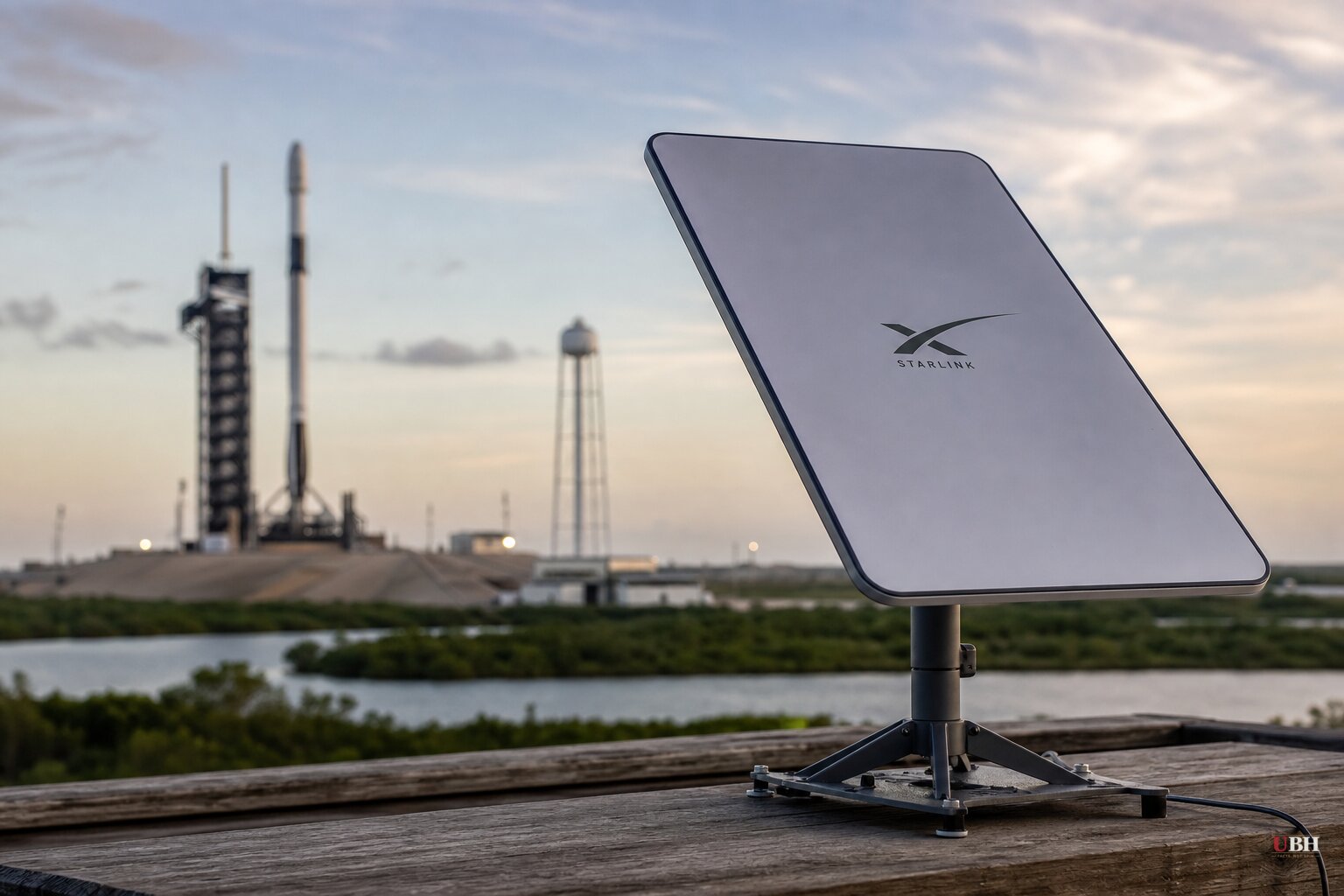
Starlink customers calling in with a busted dish are mostly talking to a machine now. SpaceX's satellite internet division is running more than 15,000 inbound customer support and sales calls a day through xAI's Grok Voice, according to a disclosure from the SpaceXAI account that Elon Musk amplified on August 24, 2026.
The numbers are specific. Grok Voice resolves about 70% of support tickets autonomously, meaning no human agent ever touches them. It diagnoses hardware problems, arranges replacement shipments, and closes more than 3,000 orders a week across voice and chat, according to 24/7 Wall St. On the sales side, roughly 20% of inbound inquiries convert into actual orders, a rate that space.com notes is in line with typical human-staffed call center benchmarks.
This isn't a pilot program. SpaceX began phasing Grok Voice into its support infrastructure earlier in 2026, with callers first hearing the system identify itself as an AI assistant back in mid-April, according to space.com. By August it had scaled to the current volume. SpaceX absorbed xAI into its operations in February 2026, which gave Starlink's engineering team direct access to Grok's underlying models instead of dealing with an external vendor.
For xAI, this is the company's first public proof point that its voice model can run as the primary customer-facing layer for a business at Starlink's scale, rather than sitting in a demo, according to 24/7 Wall St. Starlink's business is hardware-heavy: dishes fail, replacements need to ship, new subscribers need onboarding. Running that live, on the phone, at 15,000-plus calls a day is a real operational test, not a controlled showcase.
There's also an irony worth naming. Starlink has taken persistent criticism for offering thin customer service, for a long stretch with no phone number at all and support routed through text, according to space.com. Now there's a phone line. Most of the time, nobody human picks up.
What the model can and can't do
The technical claim behind this deployment is that Grok's Think Fast 2.0 model reasons while it's already talking, rather than pausing to think before the first word, according to eesel.ai. xAI describes this as reasoning in parallel with speech, and it's why a tool call, like pulling up an order or starting a hardware diagnosis, can fire before the agent finishes its first sentence. That's the mechanism behind a claimed 0.70-second response time, per eesel.ai's review of xAI's own published data, sourced to independent benchmarker Artificial Analysis.
Think Fast 2.0 also cut reasoning token use to 0.4 times what its predecessor needed, according to xAI's own figures cited by eesel.ai. This change shows up on long calls rather than in short demos.
But the full picture is more mixed than xAI's launch materials suggested. On τ-voice Bench, which tests agents under real call conditions including background noise, accents, interruptions, and callers changing their mind mid-sentence, Grok scores 56.5%, beating OpenAI's best model by nearly 11 points, according to eesel.ai's reading of the Artificial Analysis leaderboard. That's the strongest available proxy for whether a voice AI can run a real workflow on a real phone line. It also means roughly two in five of those hard scenarios still fail.
On conversational dynamics, Grok actually loses. GPT-Realtime-2.1 High edges it 95.7% to 95.1%, though Grok's jump from a prior score of 77.8% was the single biggest improvement in the release, according to eesel.ai.
And on the full leaderboard, Grok's Think Fast 2.0 isn't even the top performer overall. Alibaba's Qwen Audio 3.0 Realtime Plus scores 84.1% but takes 4.02 seconds to start talking, versus Grok's 0.70 seconds, a gap eesel.ai calls the difference between a conversation and dead air on a phone line. Two other models, Deepslate Opal at 0.44 seconds and Gemini 2.5 Flash Native Audio Dialog at 0.63 seconds, respond faster than Grok while trailing badly on the harder benchmarks.
xAI's own launch-day framing, per eesel.ai, cited only the categories where Grok performed best, leaving out where it ranks on the broader leaderboard and where competitors beat it on raw speed.
None of that changes the operational fact: Starlink is running a live call center through an AI voice model at a volume that would otherwise require a large human staff. What remains unproven is how customers whose problems fall into that roughly 30% or 40% failure zone—hardware issues the AI can't diagnose, or conversations where it loses the thread—actually get routed to a human, and how long that escalation takes. SpaceX has not published data on wait times or satisfaction for the calls that don't resolve autonomously.
Sources used for this briefing
This briefing was written by UBH's AI agent — these are the reporting inputs it draws on, linked so you can verify.


