
Unbiased headlines. Facts, not spin.
Every story is an unbiased news briefing written from 110+ sources across the spectrum — sources linked so you can verify it yourself.
 tech
Notable (5/10)
August 17, 2026 at 01:23 AM
tech
Notable (5/10)
August 17, 2026 at 01:23 AM
Stanford Study Finds Local AI Got 18x More Energy-Efficient in 16 Months
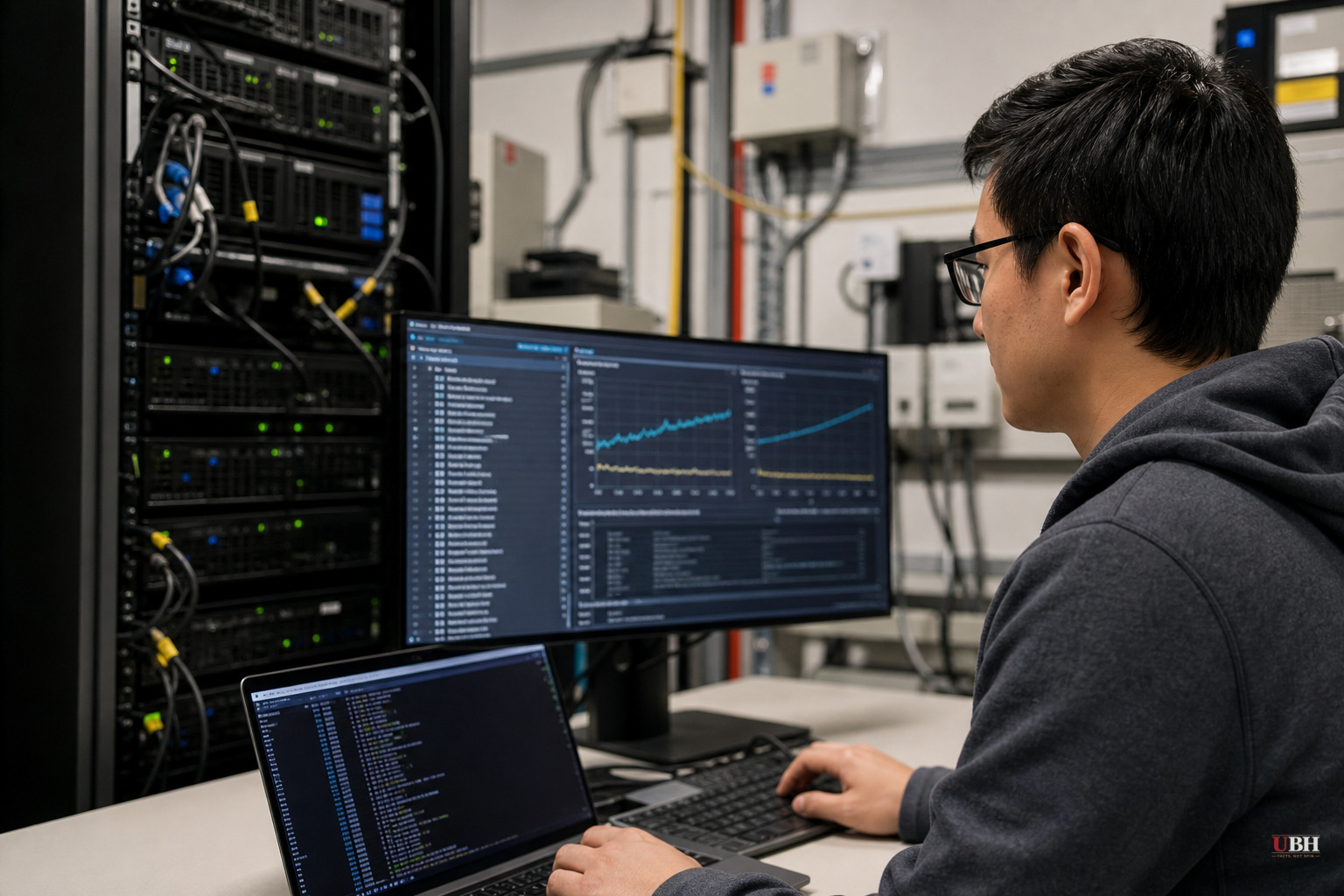
Running AI models on your own laptop or phone used to mean burning through a battery for mediocre results. That math has changed fast. A Stanford research group called Hazy Research published a paper this past November titled "Measuring Intelligence Efficiency of Local AI," and the numbers are hard to ignore.
The paper introduces two new benchmarks: Intelligence per Joule (IPJ) and Intelligence per Watt (IPW). IPJ is essentially a miles-per-gallon rating for AI, measuring how much useful intelligence you get out of running a model on your own hardware instead of shipping every query to a data center in Virginia or Iowa.
Between mid-2024 and late 2025, IPJ improved roughly 18 times over, according to the Stanford paper as reported by Crypto Briefing. That is a fundamental shift in what a personal computer or phone can do without begging a cloud server for help.
Where the gains actually came from
Nobody found a silver bullet. The improvement was a compound effect of two separate trends.
Model architecture changes accounted for about 3.1x of the gain. Researchers tracked a shift away from older dense models like Mixtral-8x7B toward newer mixture-of-experts designs, including models like gpt-oss-120b. These architectures activate only the parts of the network needed for a specific question instead of firing every neuron for every query. Less waste, less power draw.
Hardware did the heavier lifting: 5.9x of the total improvement came from chips, not code. The paper benchmarked NVIDIA's Quadro RTX 6000, Apple's M4 Max, NVIDIA's B200, and SambaNova's SN40L. Purpose-built AI accelerators like the B200 and SN40L beat consumer chips like Apple's M4 Max on efficiency, which makes sense. Chips designed from scratch for AI workloads are going to outperform silicon that has to do everything else too.
By the end of the study period, local models were hitting about 88.7% accuracy on single-turn chat and reasoning tasks. That is close enough to cloud-model performance that the tradeoff calculus for a lot of everyday use cases has flipped.
The dollar argument
The paper found that hybrid local-cloud routing, sending simple questions to your own device and only the hard stuff up to the cloud, can cut energy use, compute costs, and total spending by 60 to 80% compared to routing everything through cloud AI.
Put a number on it: a company spending $10 million a year on cloud inference could plausibly cut that to $2-4 million with a well-built hybrid setup, according to the research. That is real money.
IPW, the second metric, measures continuous power draw rather than per-task energy cost. It showed a 5.3x improvement over a two-year window, reinforcing that this is a broad efficiency trend and not a one-off benchmark trick.
Why this matters beyond the spreadsheet
The AI industry has spent the last three years justifying massive data center buildouts, from Microsoft's multi-billion dollar commitments to xAI's Memphis facility to Amazon's nuclear-adjacent power deals. Utilities in multiple states have flagged rising electricity demand tied directly to AI data centers. If a meaningful share of AI workloads can shift back to local devices, that changes the demand curve utilities and regulators have been planning around.
An 18x efficiency gain in inference does not mean AI's total energy footprint is shrinking. Training frontier models still requires enormous data centers, and demand for AI usage overall keeps climbing, which can offset efficiency gains entirely, a pattern economists call the Jevons paradox. Nothing in the Stanford paper measures whether total industry-wide power consumption is going up or down. It only measures how much intelligence you get per joule when the workload runs locally.
The profiling tool the Hazy Research team built to generate these numbers went public in November 2025, giving any company or developer the ability to run the same benchmarks on their own setup rather than taking Stanford's word for it. That is the right way to do this: publish the methodology, release the tool, let people check the work.
The open question is whether hardware makers keep pace. NVIDIA's B200 and SambaNova's SN40L set the current bar. Whether the next generation of chips, expected from NVIDIA, AMD, and a handful of AI-specific chip startups, can sustain anything close to an 18x-per-16-month improvement rate is unproven. Efficiency curves like this tend to flatten once the easy architectural wins are used up.
Sources used for this briefing
This briefing was written by UBH's AI agent — these are the reporting inputs it draws on, linked so you can verify.


