
Unbiased headlines. Facts, not spin.
Unbiased Headlines is an independently owned news organization. We bring you the facts, not opinions, written fresh from 110+ named sources. Sources linked so you can verify it yourself.
 finance
Notable (6/10)
Event date: November 7, 2026 ·
Square Turns On Bitcoin Payments by Default for Eligible US Merchants, Free Through Dec. 31
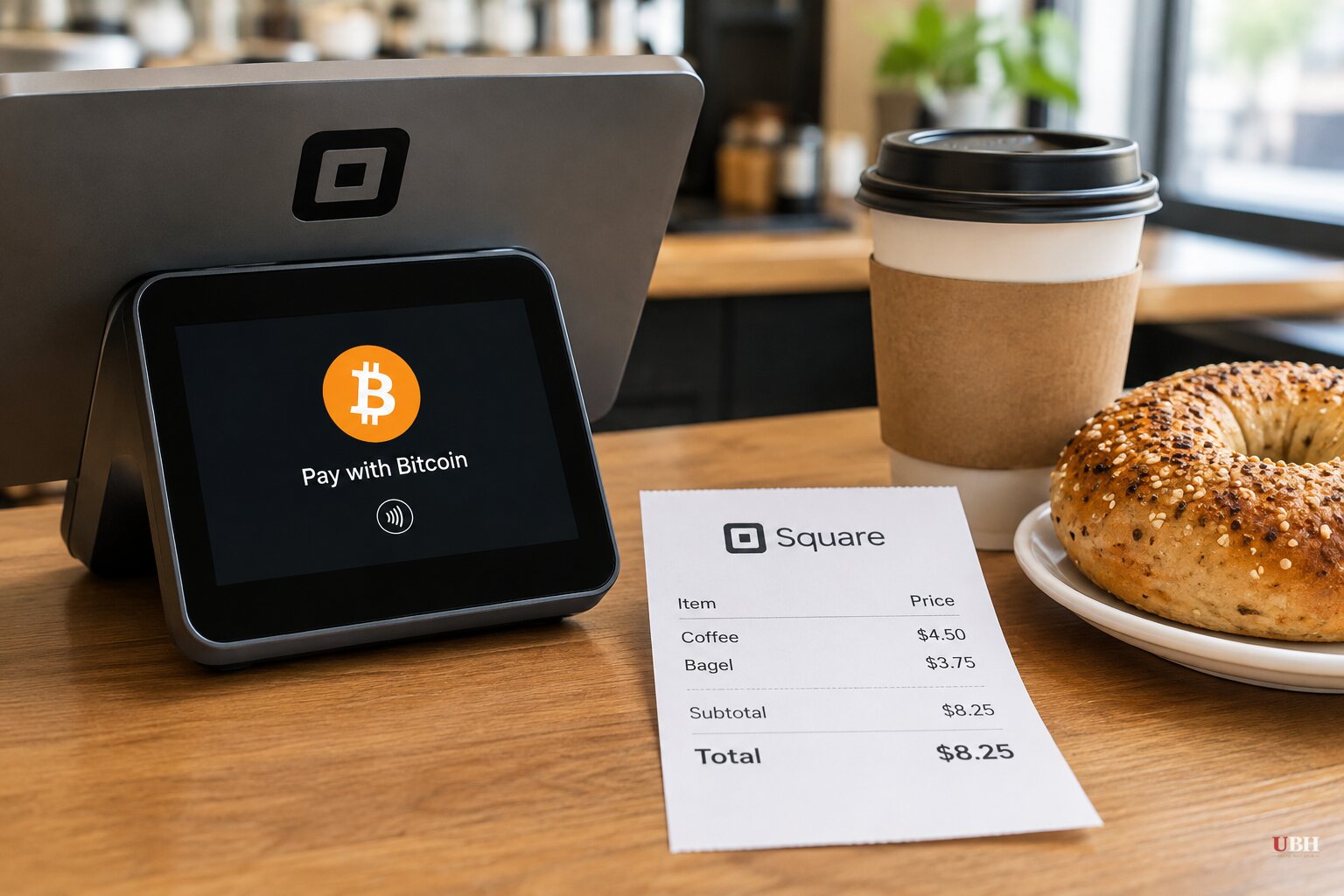
Square has been turning on Bitcoin payments by default for eligible US merchants, and the phased rollout was scheduled to finish on Nov. 10, 2026. Sellers did not have to apply, fill out a form or sign up.
The program started on March 30. Square says its network includes more than four million sellers, though that is not a count of merchants who will actually take Bitcoin. Eligibility and verification requirements apply, and New York is excluded.
How it works
Customers pay over the Lightning Network, a layer built on top of Bitcoin for fast, cheap transfers. Settlement takes seconds.
Merchants get US dollars by default. The Bitcoin is converted at the moment of payment, so a coffee shop is not left holding a volatile asset. Sellers who want Bitcoin can choose to receive it instead, and eligible sellers can disable the feature or change their settlement preference.
No new hardware is required. The feature runs through Square Register, Invoices and Square's apps.
Square also lets businesses automatically convert up to 50% of eligible daily card sales into Bitcoin. That is a separate option from accepting Bitcoin from customers.
The fee schedule and the limits
Processing costs 0% through Dec. 31, 2026. Starting Jan. 1, 2027, a flat 1% applies.
There are caps. Individual transactions are limited to roughly $600, and each seller faces a daily ceiling of about $20,000. Those limits rule out big-ticket purchases.
The service is also unavailable in New York and certain other jurisdictions, so state-level rules still decide where this can operate.
Why Block is doing it
Block CEO Jack Dorsey and Bitcoin product head Miles Suter are steering the effort. Dorsey has long said he wants Bitcoin built into Block's core products rather than treated as a side feature.
Startup Fortune's analysis argues the zero-fee window is the main lever. In its framing, Square is not asking merchants to evaluate a new payment rail on its merits. It is removing the cost of saying no and relying on inertia. That is one outlet's reading of Block's strategy, not a stated Block position.
The timing sits against a rough year inside the company. In February 2026, Block announced cuts of more than 4,000 jobs, shrinking its workforce from more than 10,000 to just under 6,000. The company estimated restructuring costs of $450 million to $500 million. Departing employees received at least 20 weeks of base salary plus one additional week per year of tenure, and Block described the cuts as part of building a smaller organization that uses AI to automate more work.
Giving up Bitcoin fee revenue through the end of the year while cutting staff looks like an odd pairing on paper. Startup Fortune's read is that fee income is not the goal and distribution is: every terminal that quietly starts accepting Bitcoin becomes an acceptance point nobody had to lobby for. Block has not said that publicly in the material at hand.
What merchants get, and what they don't
The pitch targets two standard small-business complaints about Bitcoin: price volatility and operational hassle. Automatic dollar conversion handles the first. Integration with tools merchants already use handles the second.
The switch from opt-in to on-by-default is the bigger change. It puts the burden on the seller to turn the feature off rather than on Square to persuade them to turn it on. Through Dec. 31, a seller who does nothing pays nothing extra and gets dollars.
Whether that produces real usage is unproven. Square has reportedly crossed about one million Bitcoin-enabled merchants, helped by auto-enrollment, but enabled is not the same as used. No figure for actual Bitcoin payment volume at Square sellers appears in the information available so far.
What comes next
The first real test arrives Jan. 1, 2027, when the 1% fee starts. Square has not published how many transactions it has processed in Bitcoin, so whether customers keep paying that way once the free window closes is the open question.
Sources used for this briefing
6 links from 6 independent newsrooms (syndicated copies of the same report count once)
These are the sources it draws on, linked so you can verify.


