
Unbiased headlines. Facts, not spin.
Unbiased Headlines is an independently owned news organization. We bring you the facts, not opinions, written fresh from 110+ named sources. Sources linked so you can verify it yourself.
 finance
Major Story (7/10)
Event date: October 27, 2026 ·
Funds Warn Brazil's $126 Billion Stock Rout Isn't Over as Economists Raise Rate Forecasts
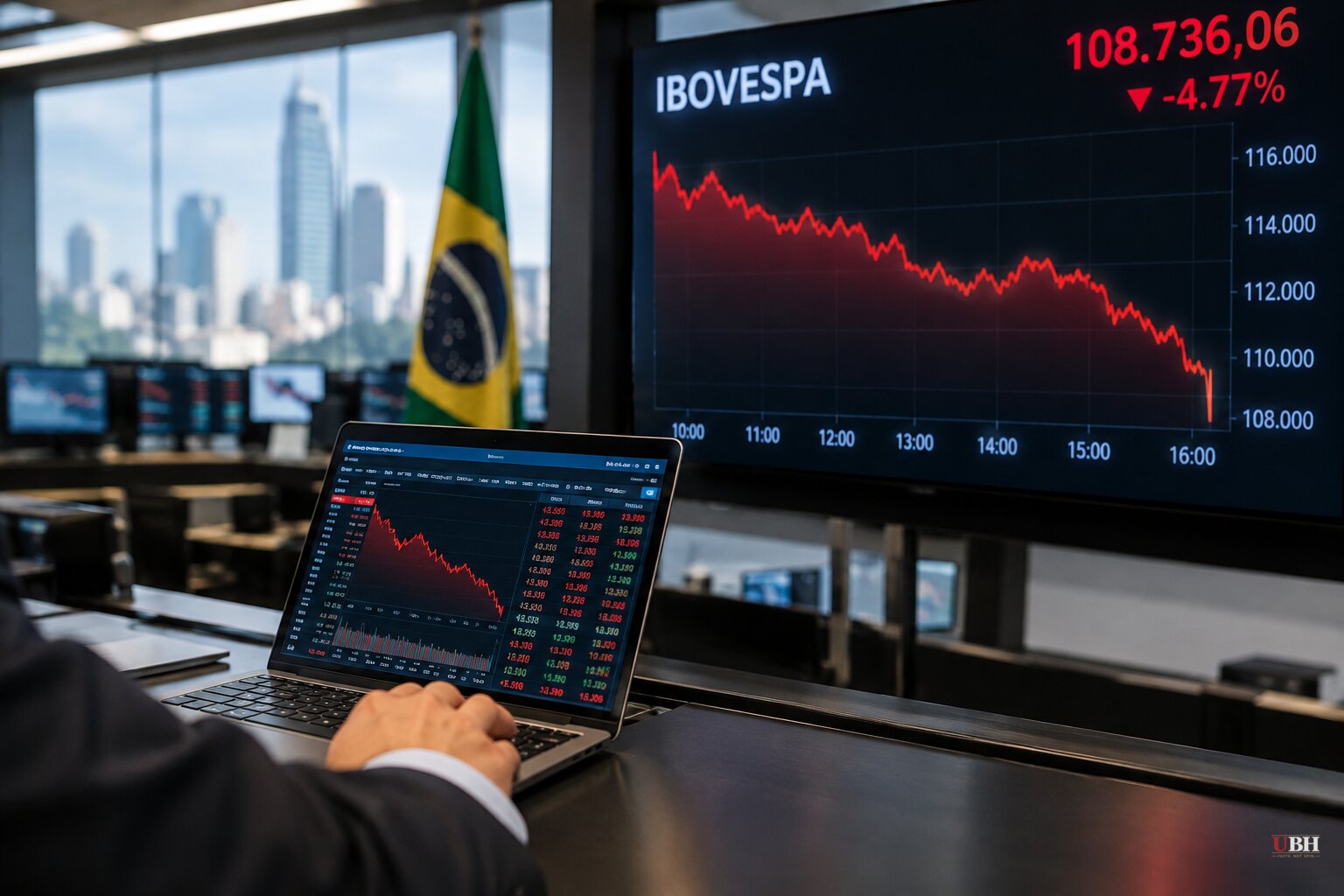
Since Lula's Oct. 25 runoff victory sent Brazilian markets into the steepest one-day fall in 36 years, the damage has not been confined to a single bad Monday. Bloomberg reports that funds are now warning the roughly $126 billion stock market rout is not over.
The same Bloomberg coverage points to a string of follow-on stress. The real has hit its lowest level since December after dovish minutes. Economists have lifted their key-rate forecasts again following Lula's win. Defaults at Brazil's shadow banks have drawn regulatory scrutiny. Franklin Templeton's Brazil unit has trimmed risk while saying it sees no change in direction under Lula.
What the first day looked like
On Monday, Oct. 26, the Ibovespa fell nearly 17% at its worst and closed down roughly 14%. B3, the exchange operator, halted trading for 30 minutes after the index dropped 10%. It was the first such halt since March 2020.
The real fell close to 12% intraday and ended the session about 8% weaker against the dollar, by one tally. Other tallies put the closing loss closer to 11%.
The individual wreckage was worse. According to Chosun Ilbo's tally, B3 shares fell 36%, BTG Pactual 33%, Banco do Brasil 28%, Bradesco 23%, and the small-cap index 27%, a record one-day drop. Petrobras lost more than 10%. In New York, brokerage XP fell more than 48%.
Eduardo Kon, a portfolio manager at Heritage Capital Partners, said he has watched the market since 2001 and compared the selling to the Sept. 11 attacks and the pandemic.
Why it hit so hard
Investors had piled in on a Bolsonaro win. After Flávio Bolsonaro took first place in the first round, the Ibovespa climbed nearly 25% between mid-September and the runoff, and Wall Street banks including UBS, Morgan Stanley, JPMorgan and Citigroup put out buy calls on Brazil.
Lula won by about 4.4 million votes, a margin of 3.58%. Markets had priced in tighter spending and lower borrowing costs. Lula's campaign-season spending announcements pointed the other way.
Rachel Ziemba of the Center for a New American Security told Al Jazeera that traders were "covering their bets that assume a Bolsonaro victory and tighter fiscal policy." Rate futures jumped, and some longer-dated swap contracts moved almost 300 basis points after hitting trading limits.
A weaker real makes imports pricier and complicates inflation control. That is the channel through which the currency drop feeds into the rate outlook economists keep raising.
Bolsonaro's exit and Trump's comments
Flávio Bolsonaro has refused to accept the result. He has said he will seek annulment of the election and called Lula's campaign an "unprecedented abuse of both political and economic power." He also objected to polls staying open two hours longer nationwide because of transport problems in some cities, an extension made at Lula's request. Bolsonaro himself had asked for stations to stay open in some regions because of heavy rain, though he still called the nationwide extension "unacceptable."
No verified evidence of fraud has been presented. Lula supporters describe the result differently. Lawyer Julio Canelo told AFP it was "a victory for the entire democratic spectrum."
On Monday, Oct. 26, Supreme Court Justice Alexandre de Moraes ordered Bolsonaro to surrender his passports and barred him from leaving the country. Bolsonaro said the order was based on a remark by his brother Eduardo, who told a U.S. podcast two days before the vote that if Flávio did not win, he favored him leaving Brazil. Flávio said he never intended to leave. Brazilian police are separately investigating him over the financing of "Dark Horse," a biopic about his father, Jair Bolsonaro.
On Wednesday, Oct. 28, Flávio landed at Opa-locka Executive Airport near Miami with his family after the Trump administration granted them visas. In an open letter on X, he called himself "the leader" of Brazil and accused "criminals who stole Brazil's election" of running a "tyranny." He had first used the phrase "the elected president" in a post that was later deleted.
Trump has been inconsistent. He told reporters Oct. 26 that he "didn't take sides" but that it "looked like another rigged election," while adding, "I like Lula, I get along with him very well." On Oct. 28 he said of the Bolsonaros, "I think they're fine people," and added, "The election was very strange... You look at what happened to their market." A market selloff driven by investors' fiscal fears is not evidence of a rigged count.
What comes next
The pre-election rally was a crowded bet, and the unwind has been sharp. Funds saying the rout is unfinished, plus economists raising rate forecasts, point to the same worry: that Lula's gradual approach to the budget will not bring borrowing costs down.
Brazil's finances are the test. Lula faces rising debt and the job of protecting both social programs and investment, and investors are watching for budget signals on spending and debt before deciding whether to return.
Sources used for this briefing
7 links from 7 independent newsrooms (syndicated copies of the same report count once)
These are the sources it draws on, linked so you can verify.


