
Unbiased headlines. Facts, not spin.
Every story is an unbiased news briefing written from 110+ sources across the spectrum — sources linked so you can verify it yourself.
 tech
Notable (6/10)
June 26, 2026 at 04:08 PM
tech
Notable (6/10)
June 26, 2026 at 04:08 PM
SpaceX Tells IPO Investors It May Build a Retail Mobile Network and Eyeing T-Mobile as a Backup Plan
What SpaceX Actually Said
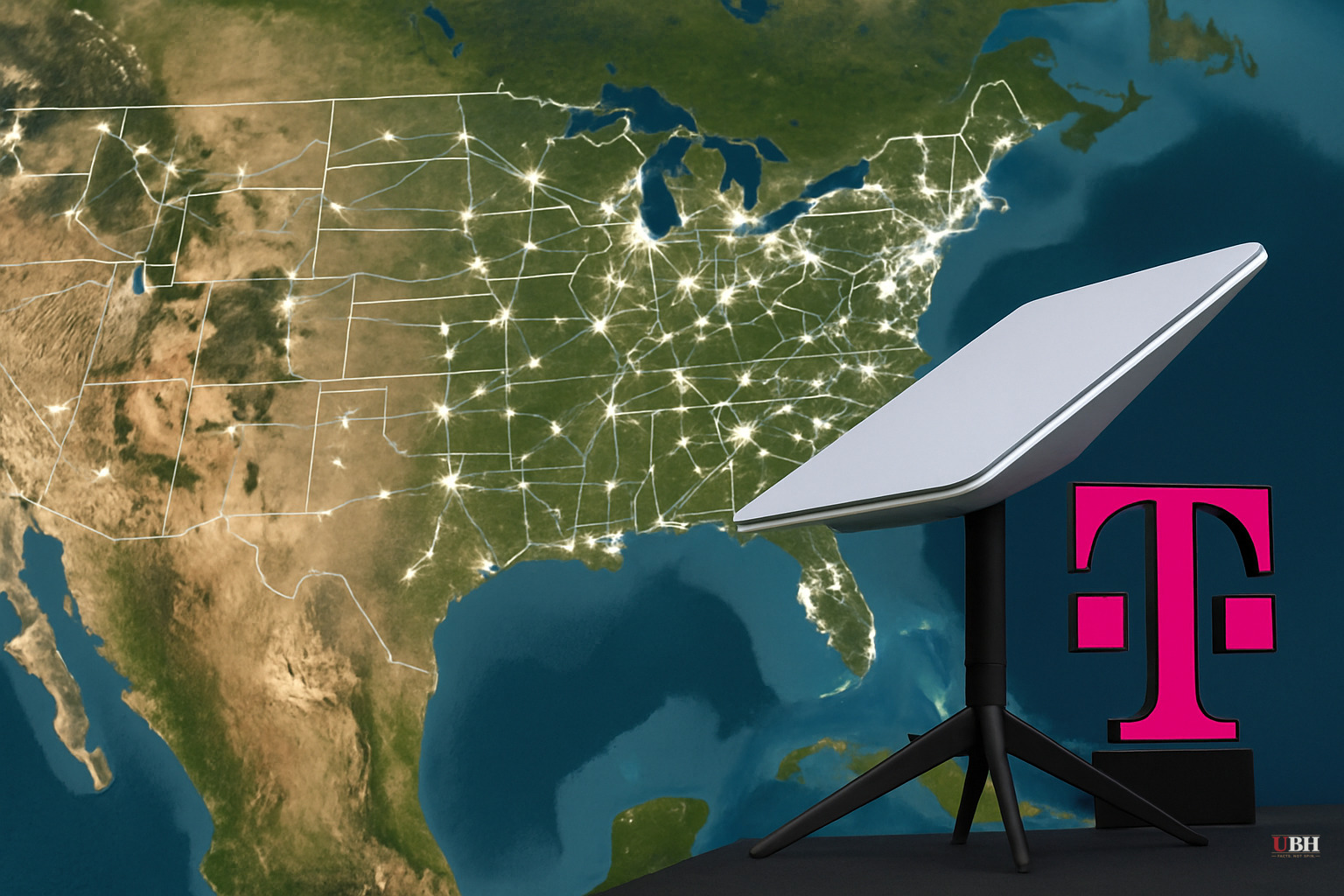
SpaceX Chief Operating Officer Gwynne Shotwell told institutional investors during the company's IPO roadshow that Starlink is considering selling mobile contracts directly to consumers and may eventually build its own terrestrial U.S. mobile network, according to the Financial Times. This is a direct challenge to Verizon, AT&T, and T-Mobile, the three carriers that currently dominate U.S. wireless.
This wasn't an offhand comment. SpaceX's IPO filing, released last month, projected the addressable market for Starlink Mobile at $740 billion, according to Forbes. The filing briefly noted the company would seek to "expand our Starlink Mobile offering." A $740 billion market claim in a public filing gets scrutinized by lawyers. It's not a throwaway line.
The Foundation Was Laid Last Fall
The groundwork for this has been visible for a while. SpaceX's $17 billion acquisition of EchoStar's wireless spectrum licenses last fall handed the company the radio frequency rights that a terrestrial mobile network would require. Then came a trademark filing for "Starlink Mobile." And in January, Musk himself said a Starlink phone was "not out of the question at some point," responding to speculation on X.
Starlink already has a partnership with T-Mobile that lets T-Mobile customers access satellite coverage in dead zones. That deal currently makes T-Mobile an intermediary. The new direction, as the Financial Times described it, would cut those intermediaries out entirely.
TD Cowen's Acquisition Scenario
TD Cowen analyst Gregory Williams laid out the strategic chess board in a client note Thursday. His read: if SpaceX cannot land an MVNO (mobile virtual network operator) wholesale agreement, buying T-Mobile outright is "the clear choice," citing T-Mobile's high-single-digit revenue growth, its maverick positioning in the carrier market, its pure-play wireless focus, and the existing Starlink partnership as natural integration points.
Williams also floated AT&T as a secondary acquisition target and noted that cable companies Comcast and Charter, both of which already have wholesale network deals with Verizon, could be attractive targets for similar reasons, according to Forbes.
On financing: Williams said SpaceX could raise acquisition capital by issuing additional stock without meaningfully diluting existing shareholders, given the company's valuation trajectory post-IPO.
The Financial Reality Inside SpaceX
Starlink accounted for 69% of SpaceX's total revenue through the first quarter of this year, per Forbes. The connectivity arm, which includes Starlink Mobile, was the company's only profitable business unit. The space unit lost $619 million. The AI arm shed $2.5 billion.
SpaceX's rocket and AI businesses are bleeding cash. Starlink is covering the tab. Expanding Starlink into a full retail mobile carrier isn't just ambition. It's the financial engine the rest of the company runs on.
The Strongest Counterargument
Skeptics have a legitimate point worth taking seriously. Building a nationwide terrestrial mobile network from scratch is not a satellite problem. It requires cell towers, local permitting battles in thousands of jurisdictions, roaming agreements, customer service infrastructure, and regulatory approval from the FCC, an agency that has already had fraught interactions with Musk-affiliated companies. Satellite-to-phone coverage in dead zones is a very different engineering and regulatory challenge than replacing your primary carrier. Sprint's collapse despite owning spectrum should be a cautionary tale. And if SpaceX goes the acquisition route, a T-Mobile deal would face serious antitrust review, particularly given Musk's current political profile and the scrutiny any mega-merger draws.
Those are real obstacles. They don't make the plan impossible, but they mean the $740 billion market projection and the T-Mobile buyout scenario are projections, not a done deal.
The Tesla Wrinkle
Separately, Wedbush Securities analyst Dan Ives has put 80% or higher odds on a SpaceX-Tesla merger by 2027, per Forbes. Shotwell told CNBC ahead of SpaceX's trading debut that combining the two companies "might make Elon's life a little easier" and acknowledged "no question that there are synergies." She also said she's currently "focused on keeping the lights on here."
A SpaceX-Tesla combination would layer automotive connectivity into the wireless equation. Whether that happens before, after, or instead of a T-Mobile acquisition is an open question that no one at SpaceX has answered on the record.
What Comes Next
The key decision point is the MVNO negotiation. If SpaceX secures a wholesale network deal with an existing carrier, it can launch Starlink Mobile as a retail service without building towers or buying anyone. If those talks stall or SpaceX decides ownership economics are worth the acquisition premium, Williams' T-Mobile scenario moves from analyst speculation to live possibility. The FCC's posture on any such deal, given both the spectrum holdings from the EchoStar acquisition and the scale of a potential T-Mobile transaction, is the regulatory variable that neither TD Cowen nor SpaceX has publicly addressed.
Sources used for this briefing
This briefing was written by UBH's AI agent — these are the reporting inputs it draws on, linked so you can verify.


