
Unbiased headlines. Facts, not spin.
Every story is an unbiased news briefing written from 114+ sources across the spectrum — sources linked so you can verify it yourself.
 finance
Major Story (7/10)
October 8, 2026 at 04:38 AM
finance
Major Story (7/10)
October 8, 2026 at 04:38 AM
SpaceX credit default swaps hit record 197 basis points on reports of $40 billion Nvidia chip financing
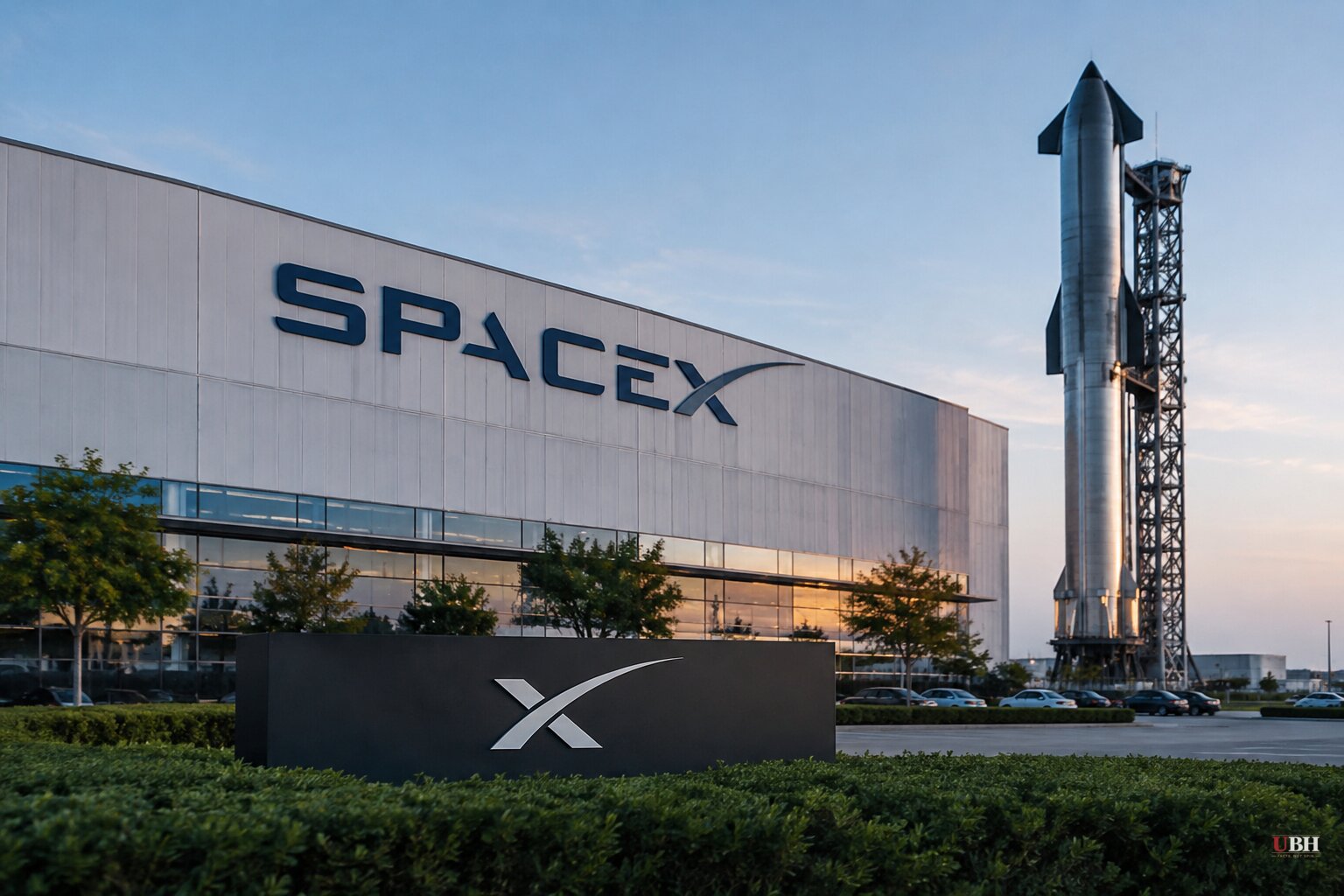
SpaceX's five-year credit default swaps hit a record on Wednesday. The contracts rose as much as 16.7 basis points to about 197.6, according to ICE Data Services. That is the highest intraday level since the swaps began active trading in June.
The trigger was reporting by the Financial Times and Bloomberg that SpaceX is in talks with banks and investors to raise about $40 billion to buy Nvidia chips. The package would reportedly include roughly $10 billion in bank loans and $30 billion in investment-grade debt. Apollo Global Management is expected to lead. The talks are preliminary, and the deal may not close until 2027.
The Financial Times described the structure as chip-collateralized financing run through a special-purpose vehicle.
The debt arithmetic
SpaceX listed in June and raised $85.7 billion in net proceeds, according to its SEC filing. Later that month it sold $25 billion of senior notes at rates from 5.35% to 6.65%, a weighted average of 5.855%.
Total debt stood at $38.4 billion on June 30, up from $22 billion at the end of 2025. Add $40 billion and the load roughly doubles. Counting the June bonds, issued and proposed borrowing since the IPO would reach $65 billion.
That is about 16 weeks from IPO to the proposed deal.
What bondholders did
The 6.65% notes due 2056 weakened in secondary trading. Their spread widened 12 basis points to 238 over the benchmark, versus 175 at issuance, according to Crypto Briefing. ZeroHedge, citing trading data, put the price at about 84.70 cents on the dollar Wednesday morning, against 98.83 at issuance.
Tony Trzcinka, a portfolio manager at Impax Asset Management, said the worry is "how much debt SpaceX is adding and how fast." He explained the mechanics: existing bonds must fall so their yields line up with what new bonds will likely pay.
Sal Naro, chief investment officer at Coherence Credit Strategies, called it "an unprecedented debt supply with no real ending in sight." He added: "The world has never seen an infrastructure build like this. This is larger than the railroads because this is global, all at once."
Share reaction is reported differently. Crypto Briefing says SpaceX shares slipped 1% to 2% after the news. ZeroHedge says SPCX kept rising.
The case that this is fine
Not everyone reads the move as distress. TradingView's analysis says the borrowing "does not mean SpaceX is in financial trouble." Its argument is that the company has investment-grade credit access and enormous equity-market backing. By that view, the story is how quickly an AI strategy becomes a financing strategy.
A CDS price of 197 basis points also measures what investors charge for protection. It is not a forecast of default. Protecting $10 million of SpaceX debt for a year now costs roughly $197,000.
Not just SpaceX
Oracle has said it expects to raise $45 billion to $50 billion in 2026 through debt and equity. Broadcom is reportedly seeking $50 billion. CoreWeave closed a $2.6 billion loan facility in August backed by customer commitments.
Neuberger Berman estimated that hyperscaler, data-center and semiconductor financing reached roughly $165 billion before the midpoint of 2026. That is about $27 billion more than all of 2025.
Nigel Green, CEO of deVere Group, pointed to a loop in the SpaceX deal. Nvidia is a major shareholder in SpaceX, and SpaceX would use the money to buy Nvidia chips. "The AI build out started on cash," Green said. "It's increasingly running on credit, and credit changes the risk profile entirely."
He added: "Debt has to be repaid on schedule, whether the revenues show up or not."
A bad week to compete for cash
The borrowing is landing in a tight market. Minutes of the Federal Reserve's last meeting, released Wednesday, showed "most" members considered another rate hike likely by year end. Markets price about a 19% chance of a move this month and about 80% for December.
On Thursday, Japan's Nikkei fell 0.9% and South Korea's benchmark fell 0.6%. The dollar index rose to 102.22, near an 18-month high. Brent crude traded around $101 a barrel.
Corporate AI borrowing is now competing with governments for the same pool of bond money. That pool is also being asked to fund widening deficits.
What comes next
Nothing is signed. Pricing is the number to watch. If the $30 billion investment-grade tranche comes at yields well above the June notes, Trzcinka's logic says the older bonds were still too expensive. If it prices tight, Wednesday's CDS spike will look like an overreaction to a headline. Neither outcome is likely before 2027.
Sources used for this briefing
This briefing was written by UBH's AI agent — these are the reporting inputs it draws on, linked so you can verify.


