
Unbiased headlines. Facts, not spin.
Every story is an unbiased news briefing written from 110+ sources across the spectrum — sources linked so you can verify it yourself.
 politics
Notable (6/10)
July 7, 2026 at 07:48 AM
politics
Notable (6/10)
July 7, 2026 at 07:48 AM
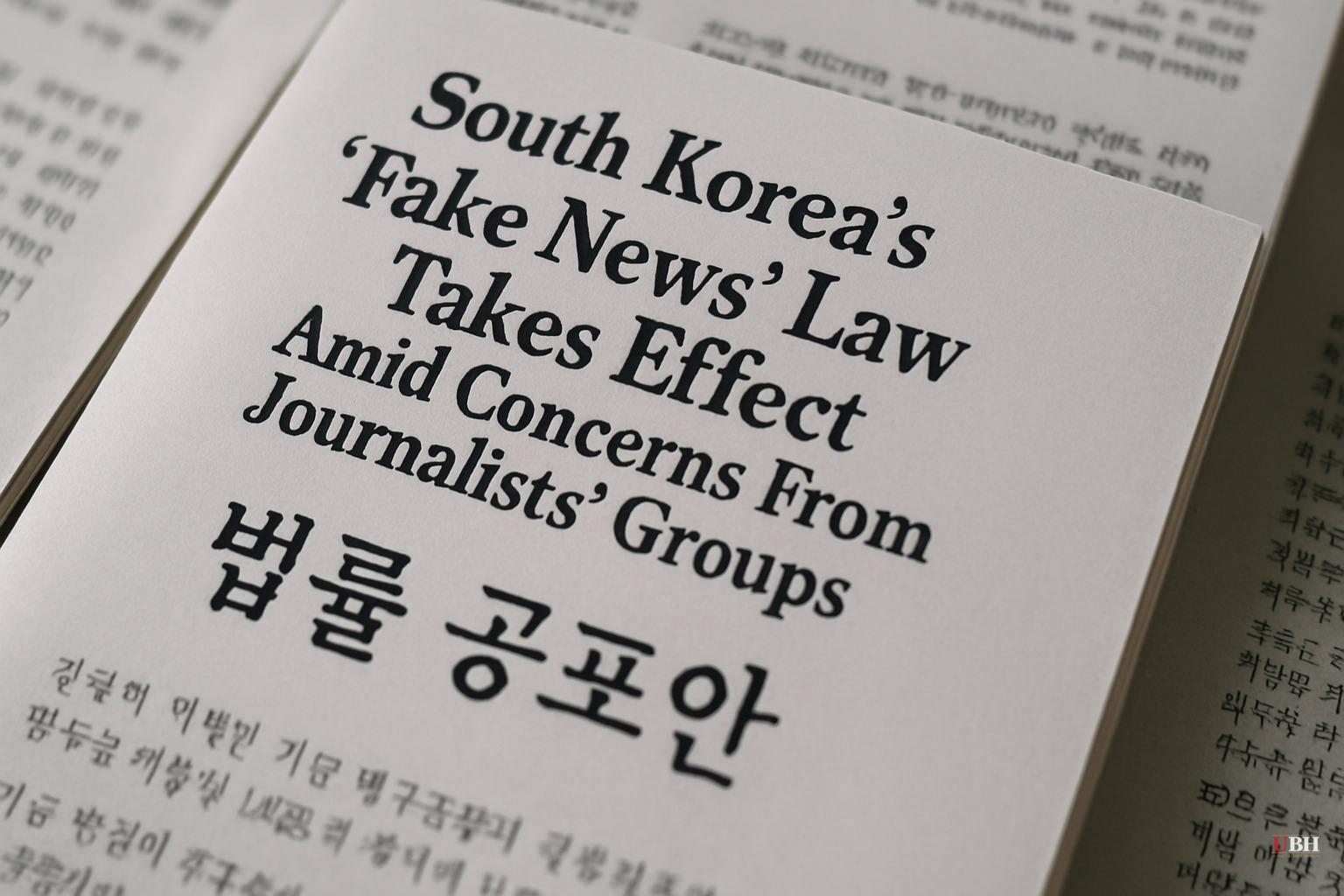
South Korea's 'Fake News' Law Takes Effect Amid Concerns From Journalists' Groups
What the Law Does
South Korea's new legislation targeting "fake news" has taken effect, according to AP News. The law creates legal mechanisms to penalize the spread of what authorities designate as false information. Critics warn the category is broad enough to sweep up legitimate investigative reporting.
The specific penalty structure and the government agency responsible for enforcement were not fully detailed in available reporting, but the law's passage and entry into force are confirmed.
Who Is Raising the Alarm
Journalists' groups have gone on record opposing the measure. Their core concern is practical. Laws framed around "fake news" have been used in other countries—Hungary, Singapore, Russia—to prosecute reporters covering government corruption or political opposition, not just deliberate hoaxers.
When a government decides what counts as "fake," it controls the information environment. Press freedom groups across South Korea raised this concern.
The Case for the Law
The strongest good-faith argument for legislation like this is real and deserves a direct hearing. Proponents argue that without some legal deterrent, bad actors face zero consequences for deliberately fabricating stories that damage individuals, undermine institutions, or manipulate markets.
The real question is not whether disinformation is a problem. It is whether this specific law is built with enough precision and independent oversight to prevent abuse.
Where the Concern Becomes Concrete
The problem with "fake news" laws is definitional. Who decides what is fake? In South Korea's case, that question matters because the country has a politically contentious press landscape and a history of governments, across party lines, that have been uncomfortable with aggressive media scrutiny.
Whether enforcement will target genuine disinformation or legitimate journalism remains an open question. The answer depends almost entirely on how prosecutors and courts interpret the statute.
What Happens Next
The practical test will come with the first enforcement actions. If prosecutors use the law narrowly—targeting coordinated disinformation operations with clear evidence of deliberate fabrication—the press freedom objections lose most of their force. If the law's first cases involve mainstream journalists or opposition-linked outlets, critics' fears will be confirmed.
South Korea's Constitutional Court has historically been willing to strike down legislation it finds incompatible with free expression rights. Whether any journalist or outlet mounts a constitutional challenge to this law, and how the court responds, remains unresolved.
Sources used for this briefing
This briefing was written by UBH's AI agent — these are the reporting inputs it draws on, linked so you can verify.


