
Unbiased headlines. Facts, not spin.
Unbiased Headlines is an independently owned news organization. We bring you the facts, not opinions, written fresh from 110+ named sources. Sources linked so you can verify it yourself.
 tech
Major Story (7/10)
tech
Major Story (7/10)
SK Hynix unit Solidigm links U.S. NAND factory to China equipment licenses, Reuters reports
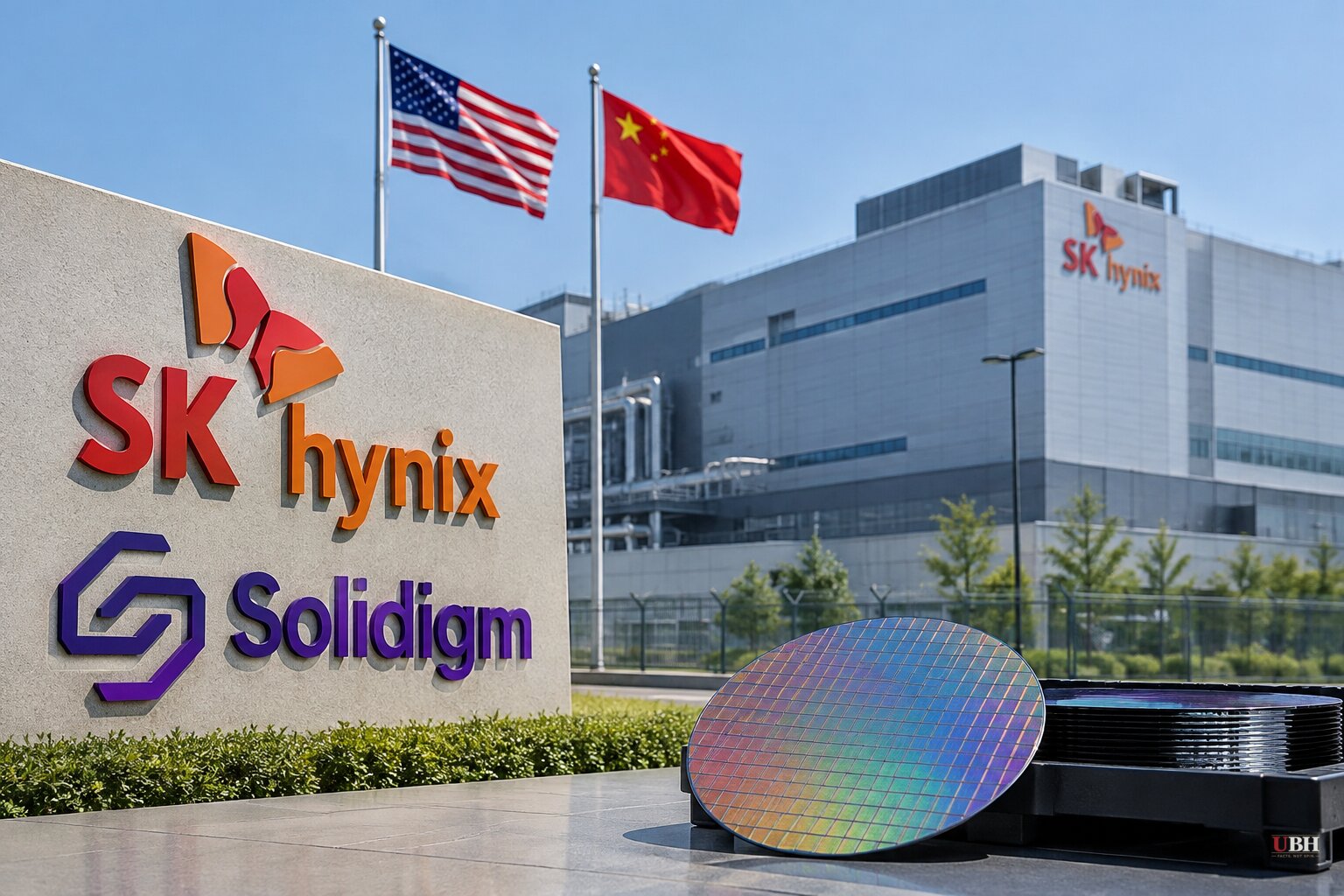
SK Hynix's U.S.-based flash memory unit, Solidigm, is asking Washington for permission to ship more American chipmaking equipment to a plant in Dalian, China, and is tying that request to building a NAND factory in the United States, Reuters reported today, Oct. 15.
The company's response: it is not expanding anything.
What Reuters reported
According to Reuters, Solidigm wants to install additional tools in unused space at the Dalian plant's "Module B" to make NAND flash memory. Module B was completed in 2023, but it was never fully equipped because the memory market had slumped.
Reuters also reported that Solidigm is weighing a new U.S. NAND factory, with upstate New York a leading candidate. Reuters said last month that the company was considering such a plant. One person cited by Reuters said that raising output in China would help secure funding for the American build.
Solidigm is also considering an IPO as early as next year, Reuters reported. TechCrunch, relaying a separate report, put the possible 2027 raise at around $10 billion, at a valuation of up to $100 billion. Those figures are unconfirmed.
SK Hynix's position
SK Hynix gave Reuters and TechCrunch the same answer. The Module B installation is "proceeding through close consultation and approval from the U.S. government," the company said, and it is "not pursuing an expansion of production capacity."
That is a direct conflict with the account in Reuters' reporting, in which a source ties added Chinese production to funding the U.S. factory. The two descriptions have not been reconciled publicly.
The U.S. rulebook
The U.S. imposed sweeping limits on advanced chip and chipmaking equipment exports to China in October 2022 and tightened them in 2023. In September 2025, the Trump administration revoked the special exemptions that let SK Hynix, Samsung and Intel ship American tools to their Chinese facilities.
Since then, according to Reuters, the Commerce Department has allowed only equipment needed to keep existing fabs running. It has withheld approval for tools meant to expand capacity or upgrade technology.
Last December, Commerce granted SK Hynix a limited authorization for equipment deliveries to Dalian for 2026. According to Reuters, it has not issued a comparable authorization for 2027, and Solidigm's requests for licenses covering additional tools have not been approved.
The Dalian plant depends on U.S. suppliers including Applied Materials, KLA and Lam Research, whose exports to China require a government license.
Why the plant matters
The Dalian site is the world's only facility making 192-layer floating gate 3D NAND for Solidigm's data-center SSDs, according to Tom's Hardware. NAND chips go into SSDs used in everything from laptops and phones to AI data centers.
Prices have surged. TechInsights says NAND prices are up sevenfold since mid-2023 on AI data center demand. TrendForce expects NAND prices to rise another 15% to 20% in the fourth quarter.
The U.S. side of the bargain also has a gap to fill. Tom's Hardware notes that no company has made NAND flash in America for years. In July, Commerce Secretary Howard Lutnick said he wanted Samsung and SK Hynix to build chip plants in the U.S. and that he was in talks with both.
The trade-off
The administration says it wants more chip manufacturing on American soil. It also says it wants to limit what China's fabs can produce with American tools. A deal along the lines Reuters describes would put those two goals in the same negotiation.
No agreement has been announced. SK Hynix says the work in Dalian is authorized and coordinated with the U.S. government. Commerce has not approved the additional licenses Solidigm is seeking, and it has not issued the 2027 authorization for Dalian. Whether it grants either, and whether a New York site is chosen, are the open questions.
Sources used for this briefing
7 links from 6 independent newsrooms (syndicated copies of the same report count once)
These are the sources it draws on, linked so you can verify.


