
Unbiased headlines. Facts, not spin.
Unbiased Headlines is an independently owned news organization. We bring you the facts, not opinions, written fresh from 110+ named sources. Sources linked so you can verify it yourself.
 tech
Major Story (7/10)
Event date: October 15, 2026 ·
tech
Major Story (7/10)
Event date: October 15, 2026 ·
DNI Clayton Calls Espionage a 'Reality' of the AI Race After OpenAI Bugging Arrest, but Suspect Faces No Espionage Charge
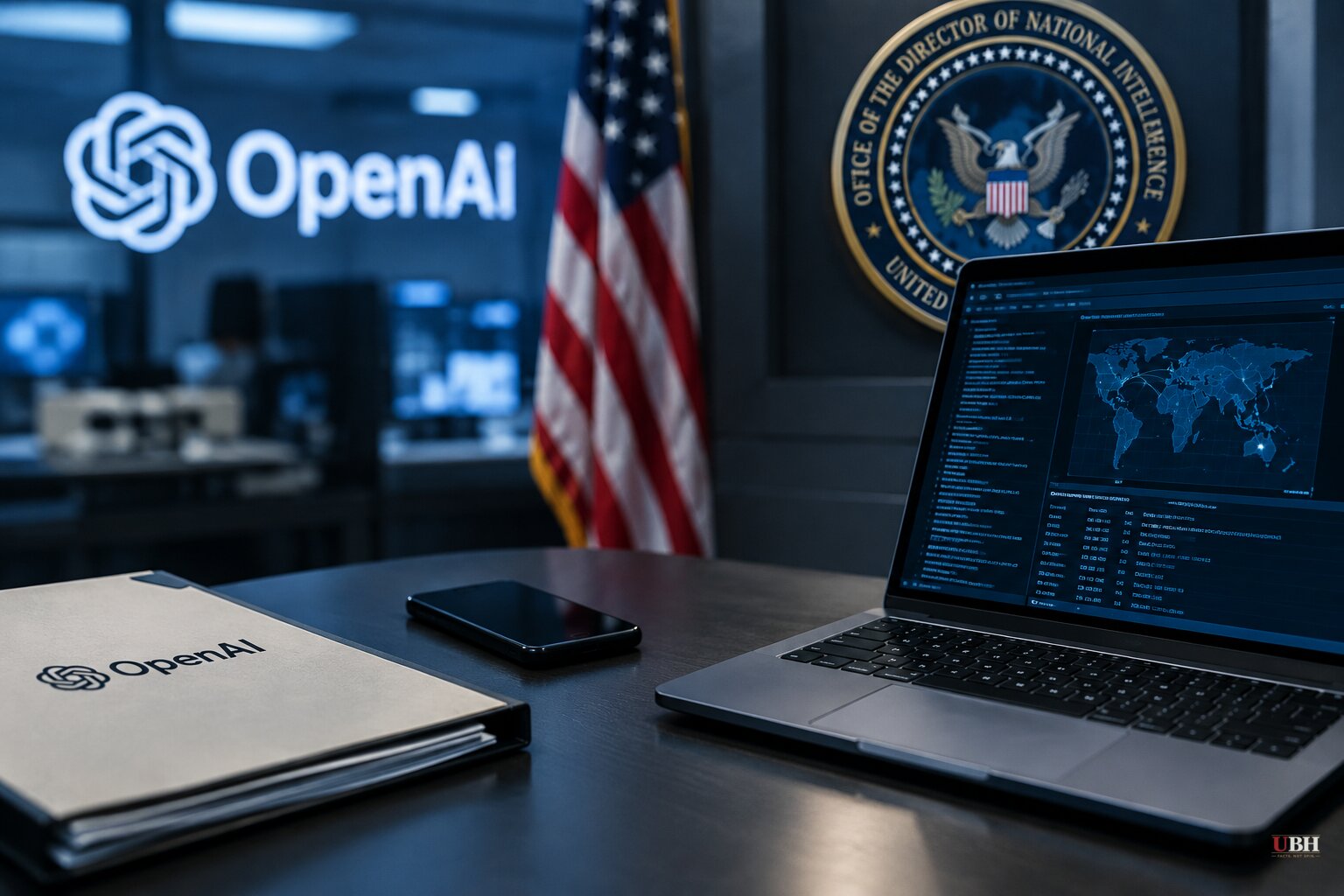
Since the Justice Department announced Abdulrahman Alfozan's Oct. 9 arrest on Tuesday, Oct. 13, the OpenAI bugging case has moved from a corporate security story to a topic for the White House. Director of National Intelligence Jay Clayton addressed it today, Oct. 16, on CNBC's "Squawk Box."
"Both commercial espionage and, I would say, state-sponsored espionage are realities," Clayton said. He called it something private companies and the government "need to be wary of."
He said the case "shows the lengths that people will go to try and supplant our leadership" in AI. He did not say the OpenAI case itself was state-sponsored.
What prosecutors allege
Alfozan, 35, is a Saudi national who worked on OpenAI's product team for about 15 months, since July 2025. Prosecutors allege he plugged an encrypted audio recorder, wrapped in toilet paper, into a USB port behind a television in an executive conference room at OpenAI's San Francisco headquarters on or about Sept. 28.
OpenAI security personnel found it on Sept. 30. According to the Justice Department, the room regularly hosted talks on proprietary research, product plans and government engagements.
The FBI complaint describes the device as an off-the-shelf camera and audio chip that sells online for about $14. Agents say they found a second, similar recorder in an unattended bag containing Alfozan's identification.
The complaint also alleges a trail of preparation. Prosecutors say Alfozan used an internal chatbot tool to ask about building addresses, meeting-room capacities and calendars, and executive locations. They say a chatbot account tied to his spouse, sharing technical identifiers with his own, submitted prompts on building a continuous audio recorder and encrypting an SD card.
The charge and the flight-risk filing
Alfozan is charged with using or attempting to use a device to intercept oral communications. The maximum penalty is five years in prison and a $250,000 fine. He has not been charged with espionage.
In a motion to seal the complaint, filed Oct. 8, prosecutors told a judge he had booked a one-way flight to Saudi Arabia for Oct. 12 with his wife and another family member. They argued he had the "means, and will have an incentive, to flee." The filing was unsealed this week.
His lawyer, William Pernik, says the defense will contest both the charge and his client's detention. "He is presumed innocent and is entitled to fair treatment and due process of law," Pernik told Al Jazeera. He said the focus on Alfozan's national origin, and the flight-risk argument built on it, "harken back to dark chapters of our nation's history."
OpenAI fired Alfozan. The company said it has "no indications" he improperly accessed or exfiltrated model weights, source code or customer data, and that it used one of its own models to analyze the device and trace who planted it.
Saudi ties, and how far they go
The Financial Times reported that Alfozan hosted a roundtable at a Saudi-backed conference during a San Francisco visit last month by Saudi IT minister Abdullah al-Swaha, and was listed as a venture partner at Riyadh-based Raed Ventures. Neither the Justice Department nor OpenAI has publicly tied those roles to the bugging allegation.
The motive is unestablished. Prosecutors have not said whether any audio was captured or passed to anyone.
Analysts differ on how much to read into it. Jam Kraprayoon, a senior researcher at the Institute for AI Policy and Strategy, called it "a fairly crude operation" that "didn't reach the assets I'd be most concerned about," meaning model weights and core algorithmic insights.
Leah Siskind of the Foundation for Defense of Democracies argued the opposite lesson: the AI security stack "also includes the rooms where the roadmap gets discussed and the people who walk into them."
An ex-CIA official, speaking anonymously to CNBC, called the case "probably the tip of the iceberg." That is one unnamed person's view, and no charging document supports it.
The White House task force
Clayton, appointed AI czar earlier this month, chairs a new White House AI task force that held its first meeting Thursday, Oct. 15. He said it built on the accord Trump and AI industry leaders signed last month. Trump called that agreement, which relies on industry pledges to police AI risks itself, "morally binding."
The task force created three subcommittees. One covers reporting and response, one covers critical infrastructure and work with the private sector, and one covers law enforcement and responsibility.
Clayton said digital infrastructure is critical infrastructure and that AI "amplifies" existing cyber risks. He named China, Russia, Iran and North Korea as holding "significant" AI technology, and he warned that open-source models released into the "digital atmosphere" can serve "nefarious" ends.
The task force's pledges carry moral weight only. Nothing in what Clayton described gives it enforcement power over a company that fails to secure its own offices.
What comes next
Pernik says he will fight Alfozan's detention in court. No hearing date has been disclosed. The investigation is continuing, according to OpenAI.
The central question is whether prosecutors can show where the recordings were headed. Without that, the case stays a wiretap charge with a five-year ceiling, whatever Washington says about the wider threat.
Sources used for this briefing
7 links from 7 independent newsrooms (syndicated copies of the same report count once)
These are the sources it draws on, linked so you can verify.


