
Unbiased headlines. Facts, not spin.
Unbiased Headlines is an independently owned news organization. We bring you the facts, not opinions, written fresh from 110+ named sources. Sources linked so you can verify it yourself.
 tech
Major Story (7/10)
tech
Major Story (7/10)
Meta's Oct. 30 business terms let it crawl linked websites and train AI on the content, legal experts say
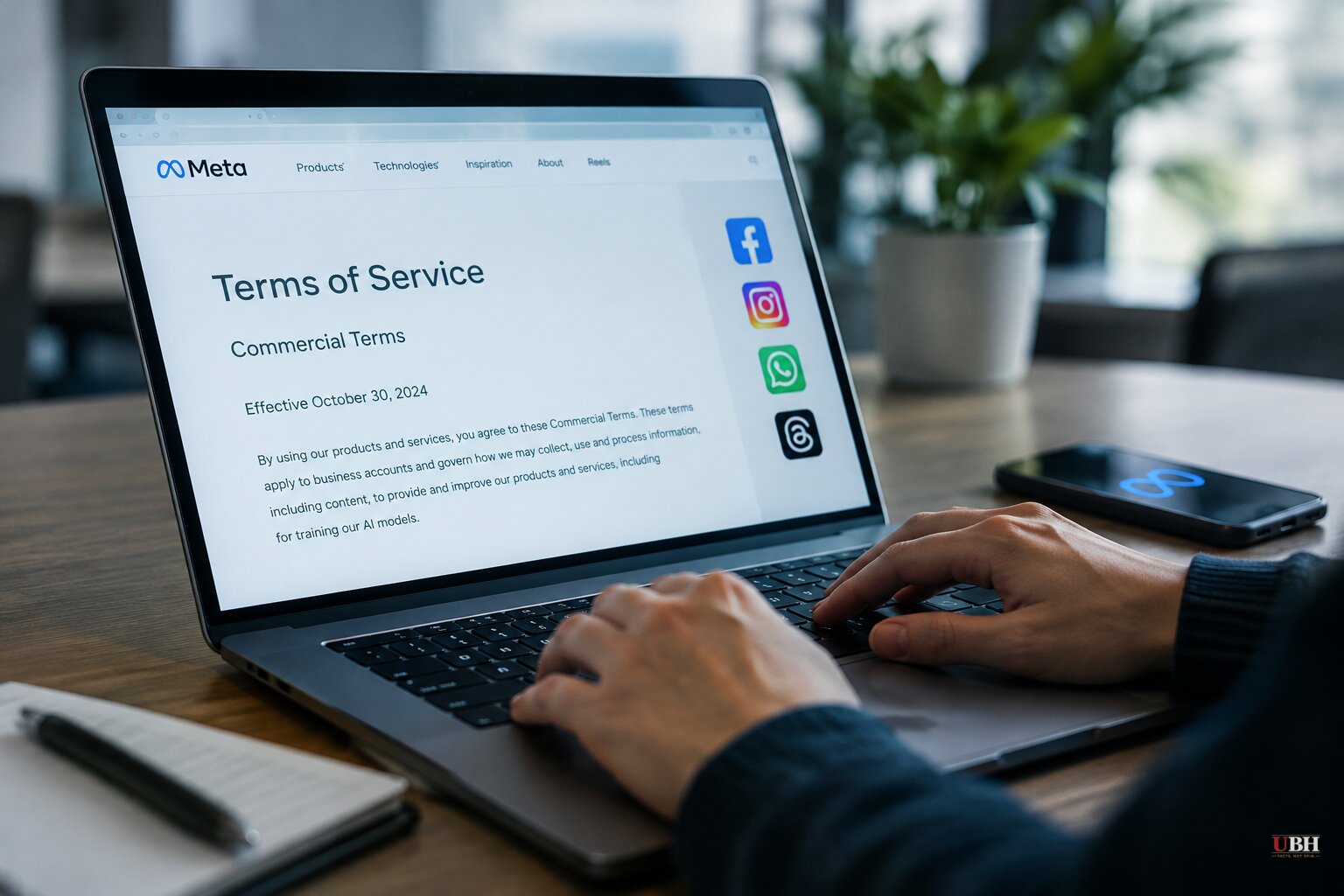
Meta is rewriting the rules for every business that advertises or posts on its platforms, and the fine print reaches well beyond Facebook and Instagram.
The updated Commercial Terms take effect Oct. 30, two weeks from today. They apply to business accounts across Facebook, Instagram, WhatsApp and Messenger. Nieman Lab first reported on the clause and what it could mean for publishers.
What the terms say
The key passage has businesses authorizing Meta, "or any entity acting on our behalf," to use "web scrapers, bots, robots, spiders, crawlers, and user agents" and to "create test credentials" to access and crawl the domains, pages or URLs "associated with your products or services." Meta can also "periodically pull updates."
The permitted uses are broad: Meta may use the content to "provide, develop, improve, research, train, and maintain the integrity of" its products and services. Meta defines its products to include AI at Meta. That is how the training language lands on outside content.
There is no opt-out. A business that keeps using Meta's tools after Oct. 30 is treated as having accepted. The notice says those who disagree "may stop all access or use of our Products for business or commercial purposes."
Why newsrooms are in the crosshairs
Nearly every news organization runs at least one Meta business account. Nieman Lab says it has one too. Three legal experts who reviewed the clause told the outlet it could sweep in virtually every newsroom's website.
Matt Topic, a media and intellectual property attorney at Loevy & Loevy, called it "a remarkable provision to bury in [the] terms of service," because it would give Meta access to material that "would likely cost many millions of dollars in a licensing market." He added that it is not clear whether a court would enforce the clause, "but publishers should assume that it would be enforceable."
Cornell law professor James Grimmelmann said the language "clearly represents permission to Meta to train AI on any content from their sites." University of Wisconsin law professor Benjamin Sobel compared the setup to tying, since a business must accept the scraping permission to keep access to Meta's business products.
The terms land after Meta struck AI licensing deals with CNN, Fox News, USA Today and People Inc. Those publishers negotiated payment. Smaller outlets with no deal could be covered by the terms for nothing.
Meta also launched a Meta One subscription last month that requires businesses and creators to pay to include links in posts and reels. In Nieman Lab's words: "Meta has begun charging users to post links to the same content that it will be permitted to crawl for free."
Meta's position
Meta's account differs. The company told Nieman Lab the update consolidates existing permissions and will not change how it crawls publishers' sites. Meta did not immediately respond to a request for comment from The Verge.
Meta also points site owners to instructions on its developer page for blocking its crawlers with robots.txt, the file that tells bots which parts of a site they may access. Legal experts quoted in the reporting warn that the new contract language could give Meta an argument that its commercial terms override those blocking instructions. No court has ruled on that.
Open questions
The scope is vague. The clause covers domains "associated with" a business's products or services, and also those "made available through your or users' use of" Meta products. Legal experts say it is uncertain how far that reaches, including into content hosted on outside sites but linked from a covered one.
A narrow reading could cover product descriptions, catalogs and basic metadata. A broad one could cover a company's main domain, landing pages, ad links and the pages behind them.
The "test credentials" language raises a separate issue: registration walls. Meta declined to say whether it extends to paywalls, according to Nieman Lab. The clause does not name a specific AI model, and Meta has not said how it decides which site counts as "associated" with an account.
The effect is also not limited to publishers. A small business that takes orders over Instagram or inquiries over WhatsApp faces the same choice: accept the scraping permission or give up the channel.
What happens next
The terms take effect Oct. 30. Whether publishers drop their Meta business accounts, negotiate carve-outs or challenge the clause in court is unresolved. So is the question Topic raised: whether a judge would treat continued use of an ad tool as consent to scrape a separate website.
Sources used for this briefing
7 links from 6 independent newsrooms (syndicated copies of the same report count once)
These are the sources it draws on, linked so you can verify.


