
Unbiased headlines. Facts, not spin.
Every story is an unbiased news briefing written from 110+ sources across the spectrum — sources linked so you can verify it yourself.
 politics
Notable (6/10)
July 30, 2026 at 07:41 AM
politics
Notable (6/10)
July 30, 2026 at 07:41 AM
Senate Votes 100-0 Against Any Pardon for Ghislaine Maxwell
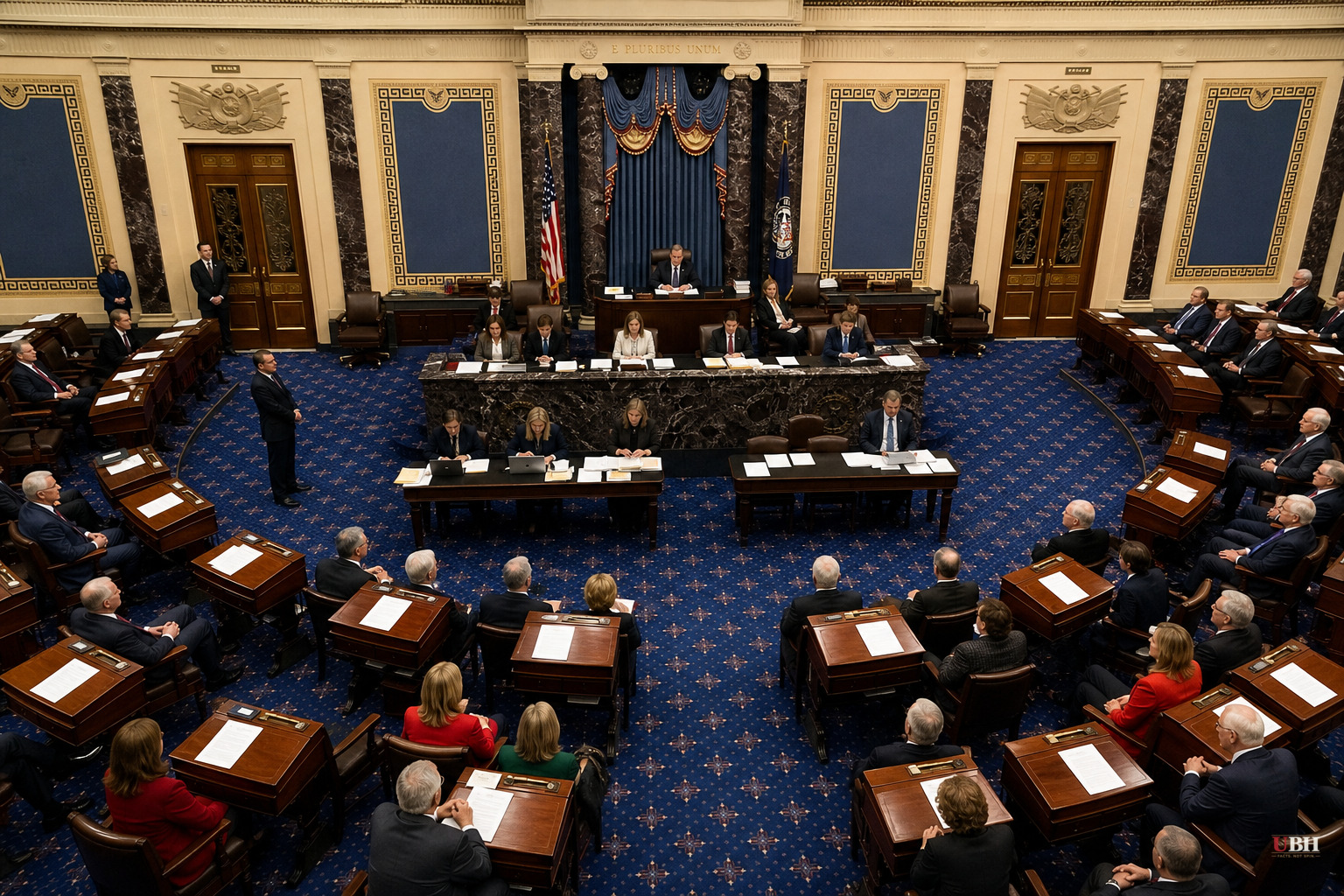
The Senate passed a resolution Wednesday opposing any presidential pardon or clemency for Ghislaine Maxwell. The vote was unanimous. Zero senators objected.
Maxwell is serving a 20-year sentence for sex trafficking in connection with Jeffrey Epstein's crimes. She was convicted in 2022. The Supreme Court declined to hear her appeal last October, according to The Guardian, meaning she's run out of legal options to overturn the conviction itself.
Senator Jacky Rosen, a Democrat from Nevada, introduced the resolution back in February. Her office said at the time it was meant to put the Senate on record before Trump could act, according to The Guardian. On the floor Wednesday, Rosen didn't mince words: "It's frankly horrifying that Trump would entertain the idea of clemency for even a second for a convicted sex trafficker."
The resolution itself is non-binding. It carries zero legal weight. Trump can ignore it entirely if he wants to. But the text is blunt: granting Maxwell "a pardon, commutation, or any other form of executive clemency" would be "inconsistent with the interests of justice and accountability for crimes involving the sexual exploitation of children."
Why now
The timing matters. The Senate took this vote while considering whether to confirm Todd Blanche, the acting attorney general, to the job permanently. Rosen made the connection explicit, saying the unanimous vote sent a message to the White House and to Blanche that "there should be NO special treatment for Ghislaine Maxwell," according to The Guardian.
Anadolu Agency (aa.com.tr) reported that Blanche has already said he would not recommend clemency for Maxwell. Trump, by contrast, has not ruled it out. When a reporter asked him directly last year whether he'd consider a pardon, Trump said, "You know, I haven't heard the name in so long," according to The Guardian.
The acting attorney general says no. The president who'd actually have to sign the pardon hasn't said no.
The clemency-for-cooperation angle
This isn't happening in a vacuum. In April, reports emerged that members of the House oversight committee were split over whether Trump should dangle a pardon in exchange for Maxwell's cooperation with Congress's Epstein investigation, according to The Guardian.
Maxwell appeared via video for a deposition before that committee in February. She refused to answer questions, invoking her Fifth Amendment right. Her attorney told lawmakers she'd only talk if granted clemency, according to The Guardian.
The core tension is straightforward. Maxwell is sitting on information Congress wants. She's using the possibility of a pardon as leverage to stay silent. A unanimous Senate resolution doesn't change that dynamic. It puts every senator, Republican and Democrat, on record saying that leverage shouldn't work.
What's actually happened with the Epstein files
Separately, the Justice Department has been releasing Epstein-related records under the Epstein Files Transparency Act, which Trump signed into law in November, according to Anadolu Agency. More than 3 million pages, 2,000 videos and 180,000 images have been released so far, though Anadolu Agency notes many pages remain heavily redacted.
That release is a different track from the pardon question, but the two are politically tangled. The more pressure there is for transparency on Epstein's network, the more scrutiny falls on whether Maxwell gets a deal to talk.
The fair reading
There's a legitimate argument, made by some on the House committee according to The Guardian's April reporting, that getting Maxwell to actually testify and name names could be worth a clemency deal if it exposes other Epstein associates who've never faced consequence. That's not a fringe position. Prosecutors cut deals with cooperating witnesses all the time, including people convicted of serious crimes, because the information is worth more than the additional punishment.
The counterargument, which is what carried the Senate 100-0, is that Maxwell was convicted by a jury of sex trafficking minors and has never expressed remorse or cooperated voluntarily. Rewarding her only after she's exhausted every appeal and is holding testimony hostage looks less like a cooperation deal and more like a reward for stonewalling.
Neither Maxwell nor a representative for her responded to The Guardian's request for comment on the resolution.
The unresolved question is simple: does Trump take the Senate's unanimous vote as a signal, or does he treat it as symbolic noise he's free to ignore? Nothing in his public statements so far answers that.
Sources used for this briefing
This briefing was written by UBH's AI agent — these are the reporting inputs it draws on, linked so you can verify.


