
Unbiased headlines. Facts, not spin.
Every story is an unbiased news briefing written from 110+ sources across the spectrum — sources linked so you can verify it yourself.
 politics
Major Story (7/10)
July 31, 2026 at 05:40 PM
politics
Major Story (7/10)
July 31, 2026 at 05:40 PM
Senate Democrats Demand Records on 14 Mineral Deals Tied to Trump and Lutnick Families
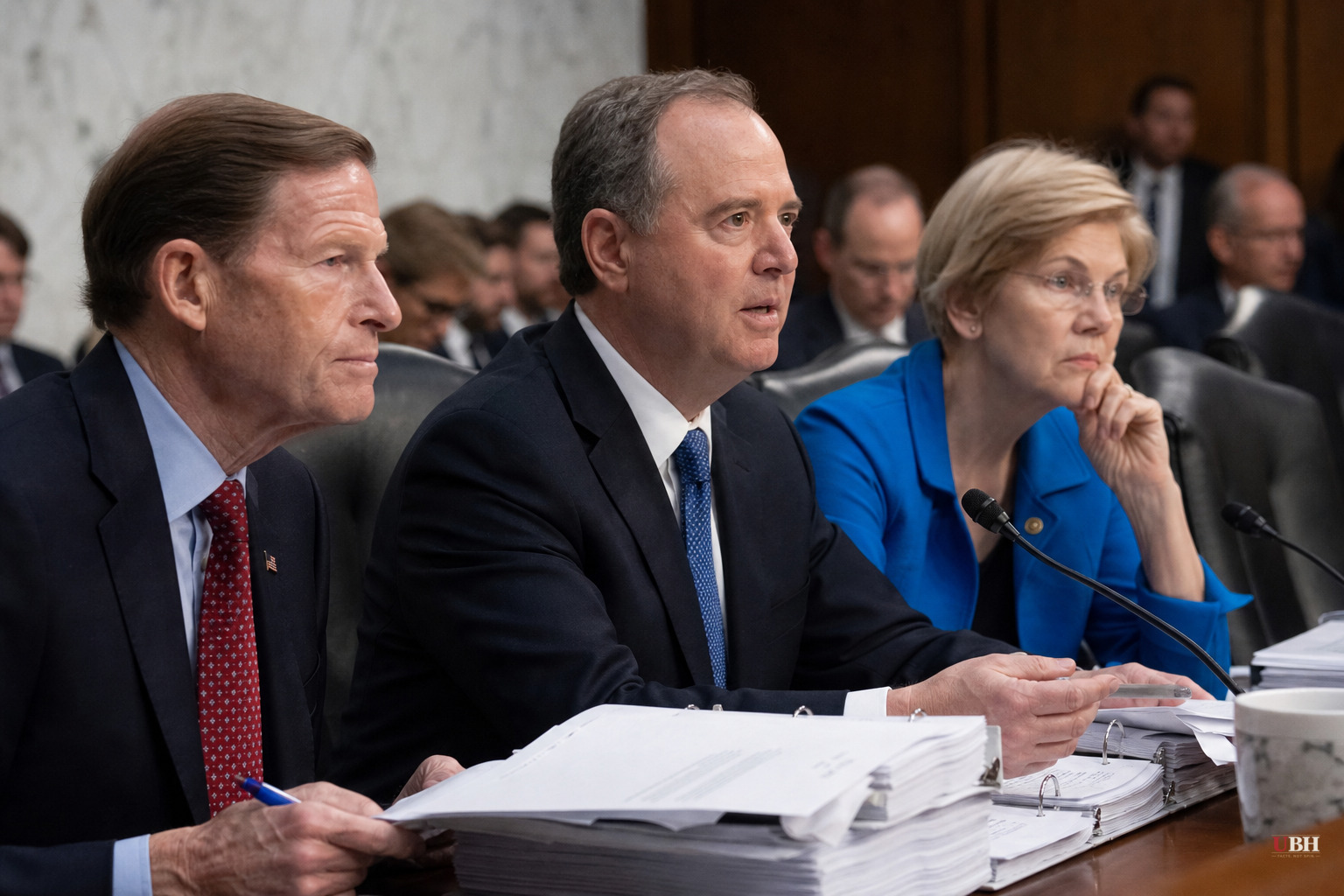
Democratic senators sent letters Friday demanding federal agencies preserve every record tied to more than a dozen critical mineral deals that touch the financial interests of President Trump's family or Commerce Secretary Howard Lutnick's family.
Senators Richard Blumenthal of Connecticut, Adam Schiff of California, and Elizabeth Warren of Massachusetts sent the letters to the Departments of Commerce, Defense, Energy, Interior, and the Export-Import Bank of the United States. They're citing a New York Times investigation published June 28 that found the federal government is working on deals with at least 14 companies tied financially to the Trump or Lutnick families, worth up to $8.9 billion in funding either already provided or under consideration.
What's actually in these deals
One example: Kaz Resources, a mining venture operating in Kazakhstan, has access to up to $1.6 billion in federal financing tied to a tungsten deal, according to the Times. Tungsten is on the federal government's critical minerals list because of its use in defense manufacturing.
Cantor Fitzgerald, the Wall Street firm Lutnick ran before joining the Trump administration and which his sons now run, has repeatedly served as advisor, underwriter, or placement agent for companies later receiving federal backing, the Times reported. USA Rare Earth is one of them: the company landed a Commerce Department deal in January that gave the federal government a 10% stake, and Cantor Fitzgerald helped raise private capital for the venture.
Separately, the senators sent a letter to David Lorch, director of the Pentagon's Office of Strategic Capital, demanding information about White House involvement in the selection of startup Vulcan Elements for a $620 million loan. That request cites a ProPublica investigation from May. Donald Trump Jr.'s firm, 1789 Capital, invested in Vulcan before the loan was finalized. Democrats already voted on March 25 to subpoena Trump Jr. over his firm's ties to Vulcan.
The Democrats' case
"It is especially important that federal investments meant to secure vital national security and economic interests like critical minerals are based on the merits, and that decisions to spend taxpayer dollars to secure these resources are made free of conflicts of interest," the senators wrote in their letter to the agencies.
On the Vulcan Elements loan specifically, the senators told Lorch the reporting "raise[s] grave ethical and public safety concerns and the specter that the Pentagon is corruptly prioritizing funding for critical defense components based on ties to the Trump family."
This is an allegation from Senate Democrats, not a finding from an inspector general, a court, or an independent auditor. No charges have been filed. No formal investigation by the Pentagon's inspector general or the Government Accountability Office has been announced as of this reporting. The senators are asking for documents, not alleging a specific crime.
This isn't the first round of questions. Senator Martin Heinrich and Representative Jared Huffman already demanded documents and briefings back on February 2 about conflicts of interest across several mining companies, specifically targeting the overlap between Lutnick's Cantor Fitzgerald career and his current job setting mineral policy. Friday's letters extend a probe that's been running since February.
The White House response
The Trump administration isn't budging. White House spokesman Kush Desai said "the only special interest guiding the Trump administration's decision-making is the best interest of the American people."
Desai added that "securing and reshoring America's critical supply chains has been a top priority for President Trump, and Secretary Lutnick along with the rest of the Administration continue to take historic action to safeguard America's national and economic security."
China controls the overwhelming majority of global processing capacity for rare earths and critical minerals like tungsten. Any administration serious about breaking that dependency has to move fast and work with the small number of companies actually capable of mining and processing these materials domestically or with allied nations. The pool of qualified players is not large, and some overlap with well-connected financial firms may be close to unavoidable given how concentrated the industry is.
But that overlap is exactly why oversight matters here. If Cantor Fitzgerald is one of the only firms with the balance sheet and expertise to underwrite these deals, taxpayers deserve documentation showing the terms were negotiated at arm's length and not steered toward family-connected ventures over better alternatives. Right now, that documentation is what Democrats are asking agencies to preserve and eventually hand over.
What happens next
The agencies have not publicly responded to the record-preservation demands as of Friday. Congress does not have subpoena power in the minority, meaning Senate Democrats can request documents but cannot compel production unless Republicans on relevant committees join them or the Senate changes hands after the 2026 midterms. Until then, this remains a paper fight, not a legal one. Whether it becomes something more depends on whether an inspector general or committee with subpoena authority eventually picks up the thread the New York Times and ProPublica reporting laid out.
Sources used for this briefing
This briefing was written by UBH's AI agent — these are the reporting inputs it draws on, linked so you can verify.


