
Unbiased headlines. Facts, not spin.
Every story is an unbiased news briefing written from 110+ sources across the spectrum — sources linked so you can verify it yourself.
 politics
Notable (5/10)
June 29, 2026 at 03:42 AM
politics
Notable (5/10)
June 29, 2026 at 03:42 AM
Senate Begins Extended Debate on SAVE America Act, Passage Remains Blocked by Democratic Filibuster
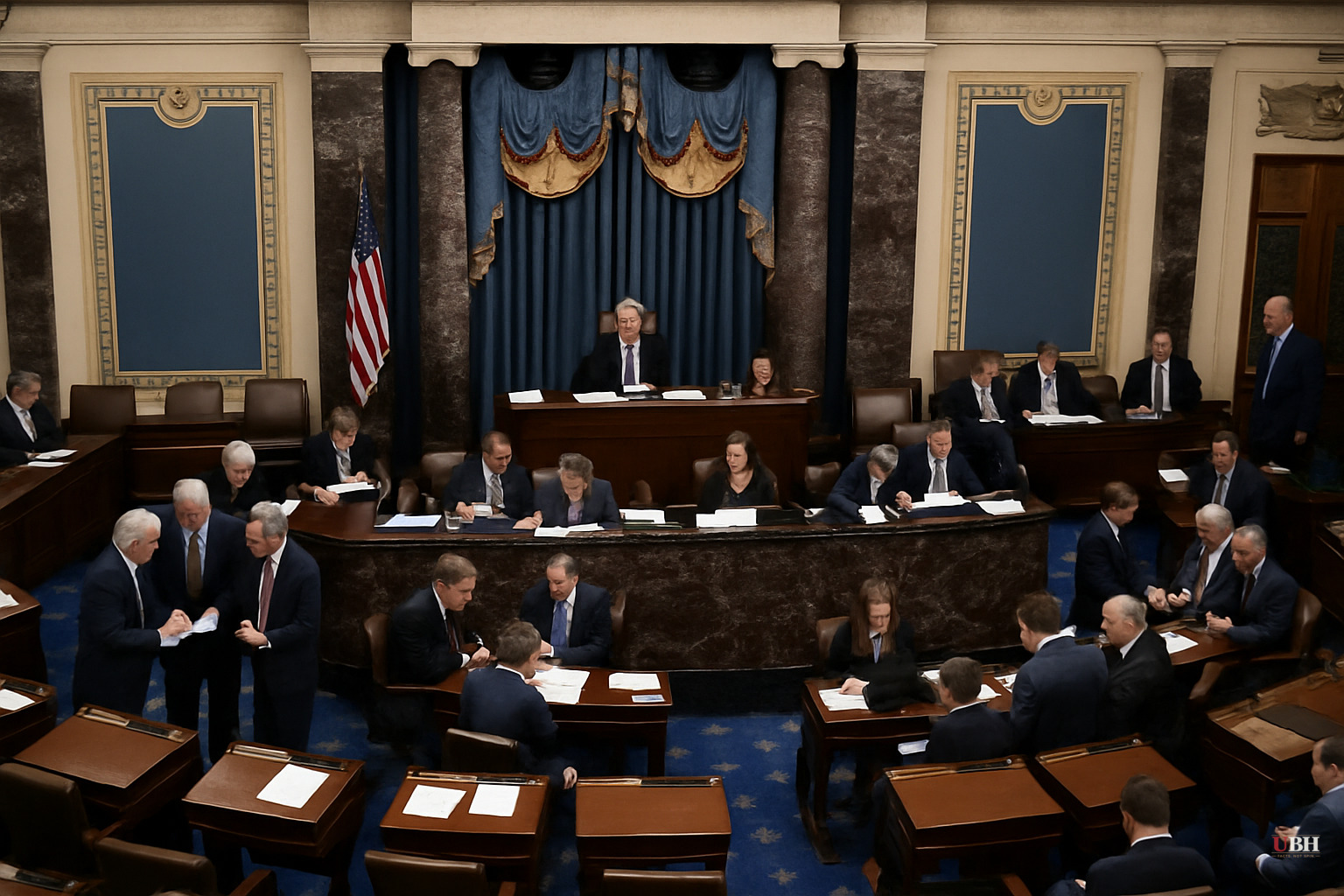
Since the SAVE America Act gained renewed momentum this spring, the Senate debate has moved from a hypothetical to a live floor fight. Passage remains blocked and both parties are treating the standoff as a messaging war heading into the 2026 midterms.
What the Bill Actually Does
The Safeguard American Voter Eligibility Act, as described by PBS/AP, would require Americans to prove citizenship when registering to vote, primarily through a U.S. passport or birth certificate. Driver's licenses would NOT qualify in most states, because the bill requires REAL ID-compliant documents that also confirm citizenship, and virtually no state license currently does that.
Military members could use a military ID paired with a birth record showing place of birth. People registering by mail would still need to appear in person at an elections office to present documents. That last piece is a significant logistical hurdle for rural voters and seniors, regardless of party.
Federal law already bars non-citizens from voting in national elections. The SAVE Act would create a new enforcement mechanism layered on top of that existing prohibition.
The Republican Case
Senate Majority Leader John Thune, according to PBS/AP, framed the bill plainly: it would "require Americans to demonstrate that they're eligible to vote" and confirm "they are who they say they are." Trump has called it his number-one legislative priority and pushed Thune to eliminate the filibuster to force it through. Thune has repeatedly said the votes aren't there for that.
The extended debate, which Republicans are stretching deliberately, is designed to force Democrats to publicly oppose voter verification requirements ahead of November. Whether that's smart politics depends entirely on how voters weigh election-integrity concerns against concerns about access.
The Democratic Case
Sen. Chris Murphy (D-CT), appearing Sunday on NBC's Meet the Press, argued the voter ID component is not what this bill is actually about. Murphy's sharpest objection was to the bill's national voter roll provision, which he says would give the Trump administration authority to challenge voter registrations in state elections and create pretext for contesting results. "Donald Trump is the most unpopular president in the recent history of this country," Murphy said on Meet the Press, "and so he is trying to rig the election." Murphy also stated there is "zero evidence" of in-person voter impersonation fraud at any meaningful scale.
The Democrats' strongest substantive argument isn't the voter ID piece. It's the centralization of voter roll data under federal control. That's the provision Murphy highlighted, and it's the one that has reportedly made some Republicans in the Senate hesitant.
What the Brennan Center Adds
The Brennan Center for Justice, a left-leaning legal policy group, released research claiming the citizenship document requirement could block more than 21 million Americans from voting. Their argument is that the passport-or-birth-certificate standard is stricter than any voter registration rule currently on the books in any state except Ohio. The Brennan Center has explicitly said it does not oppose voter ID in principle. It backed an ID provision in the Freedom to Vote Act but calls this bill's requirements categorically different in scope.
The Brennan Center also flagged a provision requiring states to hand voter roll data to the Department of Homeland Security for scrutiny, and noted that the federal government has already, in some states, requested removal of specific voters from rolls.
These are allegations about the bill's practical effects, not proven outcomes. No election under this law has been run. The 21 million figure is a projection, not a confirmed count of disenfranchised voters.
What's Actually Contested
The honest disagreement here comes down to a genuine policy tension. Supporters of the bill are right that confirming citizenship is a legitimate election-integrity goal, and that ID requirements are unremarkable in most other contexts: banking, flying, buying a firearm, collecting government benefits. The concern is not inherently bad faith.
Critics are right that this specific implementation, requiring a passport or birth certificate to register rather than at the polls, goes substantially further than any state currently requires and would create document-access problems for real American citizens. Particularly elderly voters who were born at home and never obtained a birth certificate face a concrete access problem, not a hypothetical one.
The voter roll data centralization question is separate from the ID question and deserves its own scrutiny. Murphy's focus on that provision and his claim that some Senate Republicans share his concern will likely receive attention as floor debate continues.
Where Things Stand
According to PBS/AP, Trump has pushed Thune to break the filibuster or find a procedural workaround. Thune has not moved on that. Republicans are planning to hold the floor for a week or more. Democrats are expected to block final passage.
A New York Times/Siena poll cited by the Brennan Center found that "election integrity" ranked as the top congressional priority for zero percent of respondents. This suggests the political salience of this fight may be more inside-Washington than voters are expressing in surveys.
The unresolved question going into next week: whether any Republican senator publicly breaks from the bill over the voter roll centralization provision, which would be the first concrete sign that Murphy's specific objection has cross-aisle traction rather than just rhetorical appeal.
Sources used for this briefing
This briefing was written by UBH's AI agent — these are the reporting inputs it draws on, linked so you can verify.


