
Unbiased headlines. Facts, not spin.
Every story is an unbiased news briefing written from 110+ sources across the spectrum — sources linked so you can verify it yourself.
 politics
Notable (5/10)
July 15, 2026 at 02:02 PM
politics
Notable (5/10)
July 15, 2026 at 02:02 PM
Sen. Bernie Moreno Reintroduces Harry Reid's 1993 Bill to End Birthright Citizenship
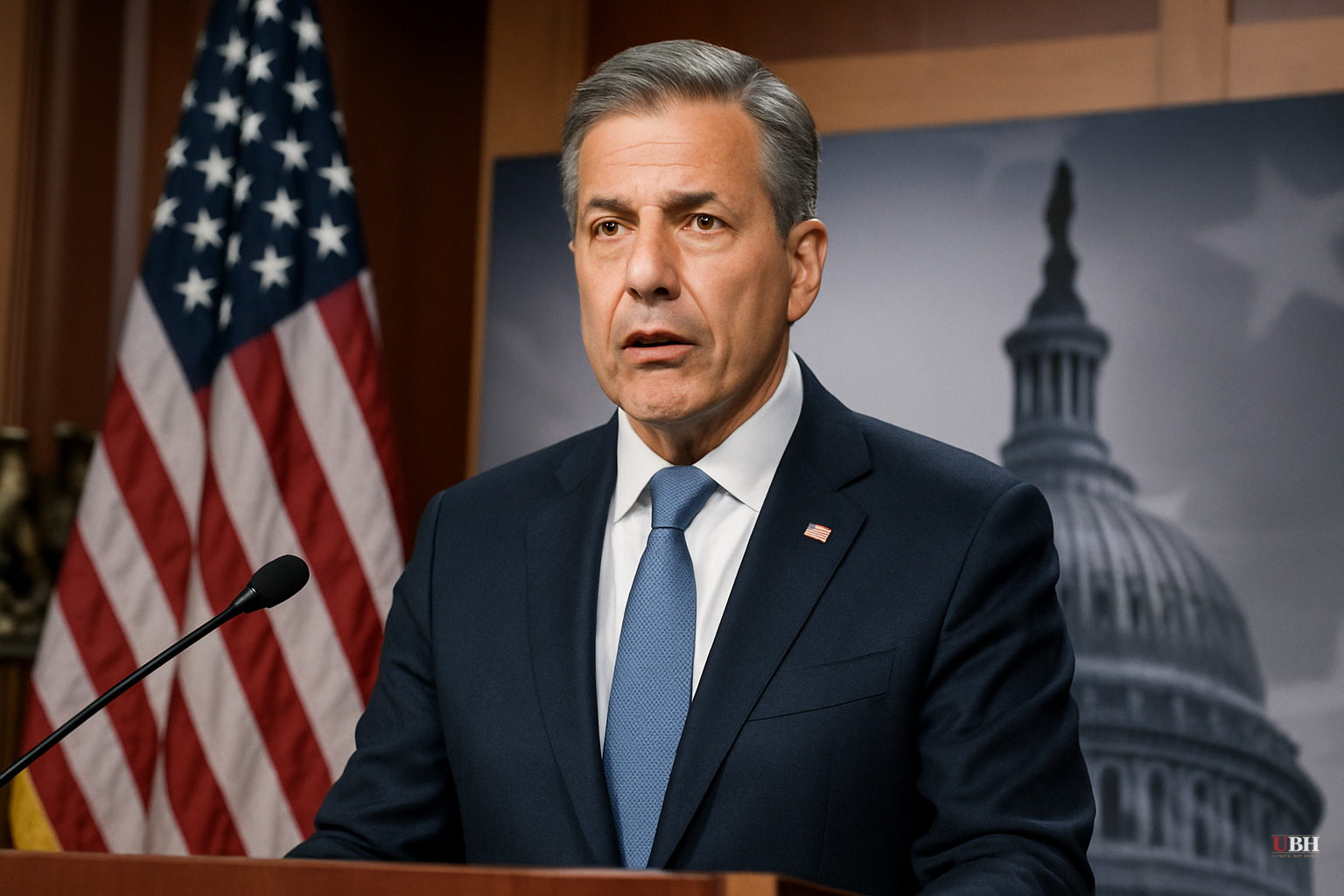
Reid's Old Bill Gets a New Sponsor
Since the Supreme Court upheld birthright citizenship last month, Republicans in Congress have been hunting for a legislative workaround. Sen. Bernie Moreno, R-Ohio, thinks he found one sitting in the Senate archives since 1993.
Moreno announced he will reintroduce a bill originally written by then-Sen. Harry Reid, D-Nev., who went on to become Senate Majority Leader and later had a Las Vegas airport named after him. According to Fox News Digital, which obtained the legislation first, the bill is a near-mirror image of Reid's original proposal: it would cut legal immigration substantially, cap refugee admissions at 50,000 a year, speed up deportations with limited court review, and narrow birthright citizenship.
On the citizenship question, the bill would rewrite the 14th Amendment's phrase "subject to the jurisdiction of" to specify jurisdiction of a foreign country. Under that reading, children born in the U.S. to illegal immigrants or most temporary visa holders would no longer automatically qualify for citizenship. That directly targets the interpretation the Supreme Court endorsed last month, which held that "subject to the jurisdiction of" effectively covers nearly everyone born on U.S. soil.
Moreno's Pitch: Make Democrats Own Their History
Moreno's argument isn't just about policy. It's a political trap. In a statement posted on his Senate website, Moreno said, "Before far-left radicals took over the Democrat Party, their leader Harry Reid introduced a great bill to end birthright citizenship, ensure no illegals could vote, and crack down on employers who abuse illegal labor. It's a great bill, so I say let's vote on it and find out once and for all if Harry Reid would still have a home in the modern Democrat Party."
Speaking earlier this month, Moreno framed the reintroduction as a two-for-one. "What it's going to do is highlight two things," he said. "The Democrats of today are nothing like the Democrats of 1993 and, if they choose to reject a bill sponsored by their majority leader that they named an airport in Las Vegas after, then I think my Republican colleagues have no choice. We have to recognize that these Democrats want to systematically destroy this country."
Moreno's claim that Democrats want to destroy the country is his opinion. Reid's record on this issue does check out. According to a 1993 press release, Reid argued that "our borders have overflowed with illegal immigrants, placing tremendous burdens" on public resources, language nearly identical to arguments Republicans have made for years about the southern border.
Schumer's Reaction Shows the Contrast
Senate Minority Leader Chuck Schumer, D-N.Y., who was mentored by Reid, praised the Supreme Court's ruling last month. "No matter how much President Trump tries to steal citizenship from people that the Constitution has said have earned it and reverse the grand American tradition of welcoming newcomers to our nation, the Supreme Court confirmed today that those born in America are American," Schumer said, according to Fox News Digital and 930 WFMD.
That puts Schumer's current position at odds with the bill his own mentor once sponsored. Whether that's a fair gotcha or an unfair comparison across three decades of policy shifts is a matter of political framing. Democrats today, including Schumer, argue that birthright citizenship for all born in the U.S. is a settled constitutional guarantee, not a loophole to be legislated away. Republicans like Moreno argue the amendment was never meant to cover children of people in the country illegally or on temporary status, and that closing what he's separately called a "loophole" tied to citizenship-seeking foreign nationals, including from China, is overdue.
What's Actually Unresolved
The legal reality is this: the Supreme Court has ruled on birthright citizenship, and that ruling stands as the law unless overturned or amended. A statute narrowing the definition of "subject to the jurisdiction of" would almost certainly face immediate constitutional challenges, since Congress cannot override a Supreme Court interpretation of the 14th Amendment through ordinary legislation alone.
Moreno has not yet formally introduced the bill in the Senate as of this writing, and no vote has been scheduled. It's also unclear whether any Senate Republicans beyond Moreno have committed to co-sponsoring it, or whether GOP leadership plans to bring it to the floor. The real test will be whether Senate Republicans can force a vote at all, and if they do, whether Democrats who might otherwise sympathize with tighter immigration enforcement are willing to vote against a bill bearing Harry Reid's name.
Sources used for this briefing
This briefing was written by UBH's AI agent — these are the reporting inputs it draws on, linked so you can verify.


