
Unbiased headlines. Facts, not spin.
Every story is an unbiased news briefing written from 110+ sources across the spectrum — sources linked so you can verify it yourself.
 politics
Major Story (7/10)
July 22, 2026 at 08:55 PM
politics
Major Story (7/10)
July 22, 2026 at 08:55 PM
Secret Service: Threats to Protectees Hit 10,000 Cases in 2026, Up 40% From Last Year
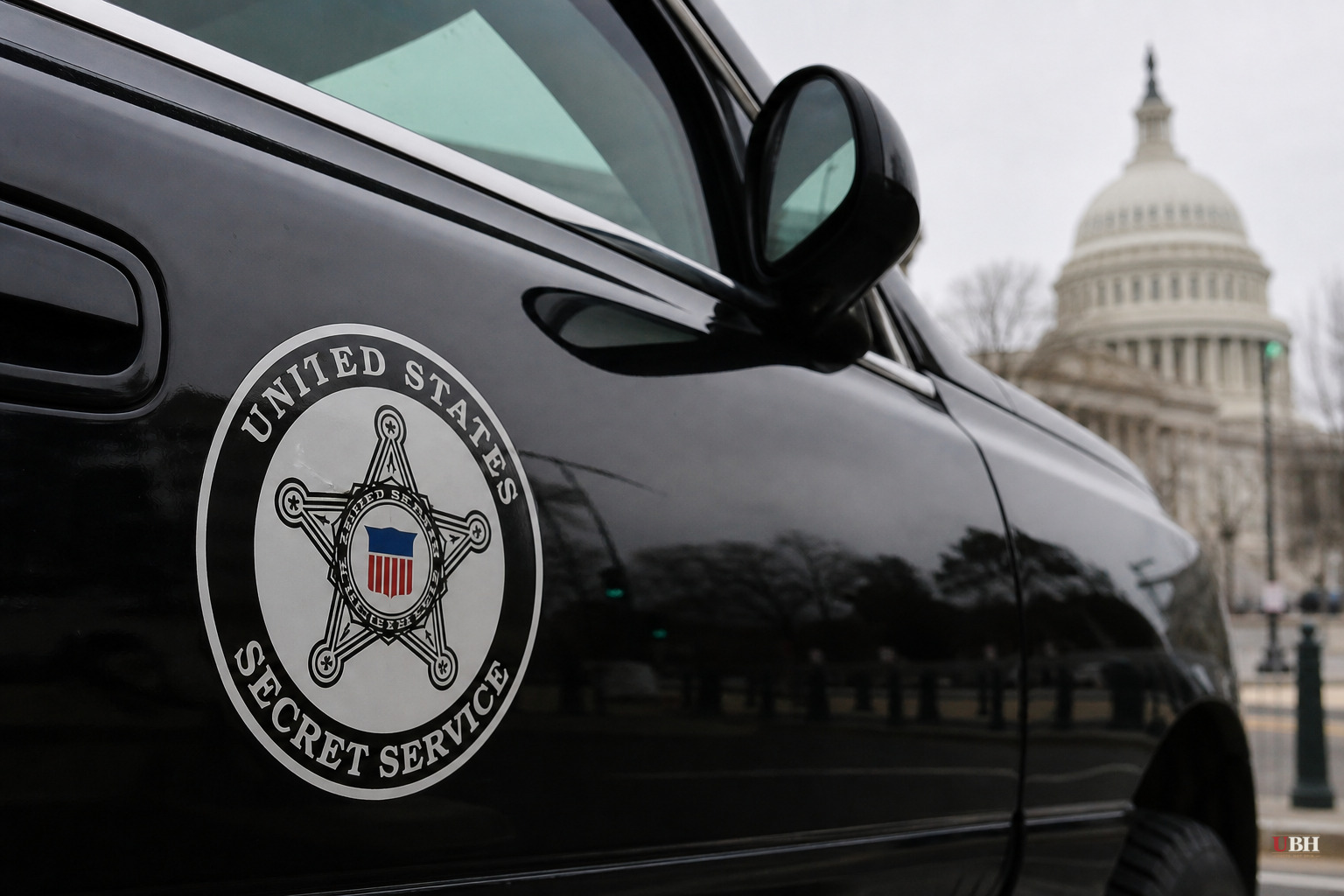
Numbers the Secret Service says it hasn't seen before
A senior U.S. Secret Service official told reporters at a background briefing Wednesday that the "threat environment" facing the agency's protectees, including President Donald Trump, "is the highest we've ever seen," according to a pool report of the briefing carried by MS NOW and detailed by CNBC.
The official said the agency has logged about 10,000 cases this year involving threats to government officials, including Supreme Court justices. That's a 40% jump over the same stretch last year.
"They're increasing in volume and complexity," the official said, speaking on condition of anonymity ahead of a later public portion of the briefing.
The official also said mental health committals of people suspected of making threats against protectees have spiked by a factor of 10. No further breakdown of that figure, timeframe, or methodology was provided in the briefing as reported.
Drones now a stated concern at the top of the agency
Matthew Quinn, the Secret Service's deputy director, was asked at the public portion of the briefing how worried the agency is about drones being used against protectees. His answer: "Very."
"Look, the threat's real," Quinn said, pointing to the war in Ukraine. "It's just a matter of time before it comes to the United States."
Quinn said the agency is deploying what he called cutting-edge counter-drone technology at the White House and other protected sites, but described an arms race against increasingly sophisticated systems. "You're talking fiber-optic controlled drones now, dark drones," he said. "So it's a constant chase to keep up with it." He maintained the White House is "very safe from attack."
Context: Barrett's warning and the WHCA dinner disruption
The briefing landed a week after Supreme Court Justice Amy Coney Barrett told a House subcommittee that the threat level facing her and other federal judges "is really high," a statement that lines up with the Secret Service's own numbers on judicial threats.
It also came ahead of Friday's rescheduled White House Correspondents' Association dinner at the Waldorf Astoria in Washington, which Trump is set to attend. The WHCA's originally scheduled dinner was abruptly suspended in April after a man armed with multiple weapons tried to storm a security checkpoint inside the Washington Hilton while Trump was attending. Secret Service officers tackled the man, identified as Cole Tomas Allen of California, before he reached the ballroom where Trump and other administration officials were present. Allen has been charged with attempting to assassinate the president.
Asked Tuesday by a reporter at the White House whether he feels safe given the multiple attempts on his life, Trump said, "I feel safe. Why wouldn't I feel safe?"
What's proven, what isn't
The case-count and committal figures come directly from a senior Secret Service official speaking on the record about the agency's own internal tracking, which makes them an authoritative snapshot of what the agency is logging, not an independently audited measure of actual threat levels in the country. A 40% year-over-year increase in reported cases could reflect more actual threats, more aggressive reporting and referral by other agencies, lower thresholds for what gets logged, or some mix of all three. The briefing as reported did not break out how much of the increase is attributable to each factor.
Similarly, the tenfold jump in mental health committals is a real and striking number, but the briefing gave no baseline: whether that's an increase from 5 to 50 cases or 500 to 5,000 changes how alarming the trend actually is. Reporters at the briefing were not given that granularity, at least not in the version of the briefing captured in available pool reporting.
None of this changes the fact that the environment described, an armed intrusion attempt at a presidential event in April, a sitting Supreme Court justice publicly flagging threats to judges, and a deputy director calling drone attacks a matter of "when, not if", is unusual by any standard measure of recent American political history. Whether the underlying rate of genuine threats is rising as fast as the case count, or whether reporting and referral systems have simply gotten more sensitive, remains an open question the Secret Service itself has not fully answered in public.
What's next
Friday's WHCA dinner at the Waldorf Astoria will be the first high-profile test of the security posture the agency described, coming three months after the Hilton incident forced the event's postponement. Quinn's comments suggest counter-drone technology deployment at protected sites will be an ongoing, escalating commitment rather than a one-time fix, with the agency itself framing it as a continuous chase against improving adversary technology rather than a solved problem.
Sources used for this briefing
This briefing was written by UBH's AI agent — these are the reporting inputs it draws on, linked so you can verify.


