
Original briefings. Zero spin.
Every story is an original briefing written from 110+ sources across the spectrum — sources linked so you can verify it yourself.
 tech
Notable (6/10)
August 23, 2026 at 09:52 AM
tech
Notable (6/10)
August 23, 2026 at 09:52 AM
Scammers Used Deepfake Video of Singapore's PM to Steal $3.8 Million From One Victim
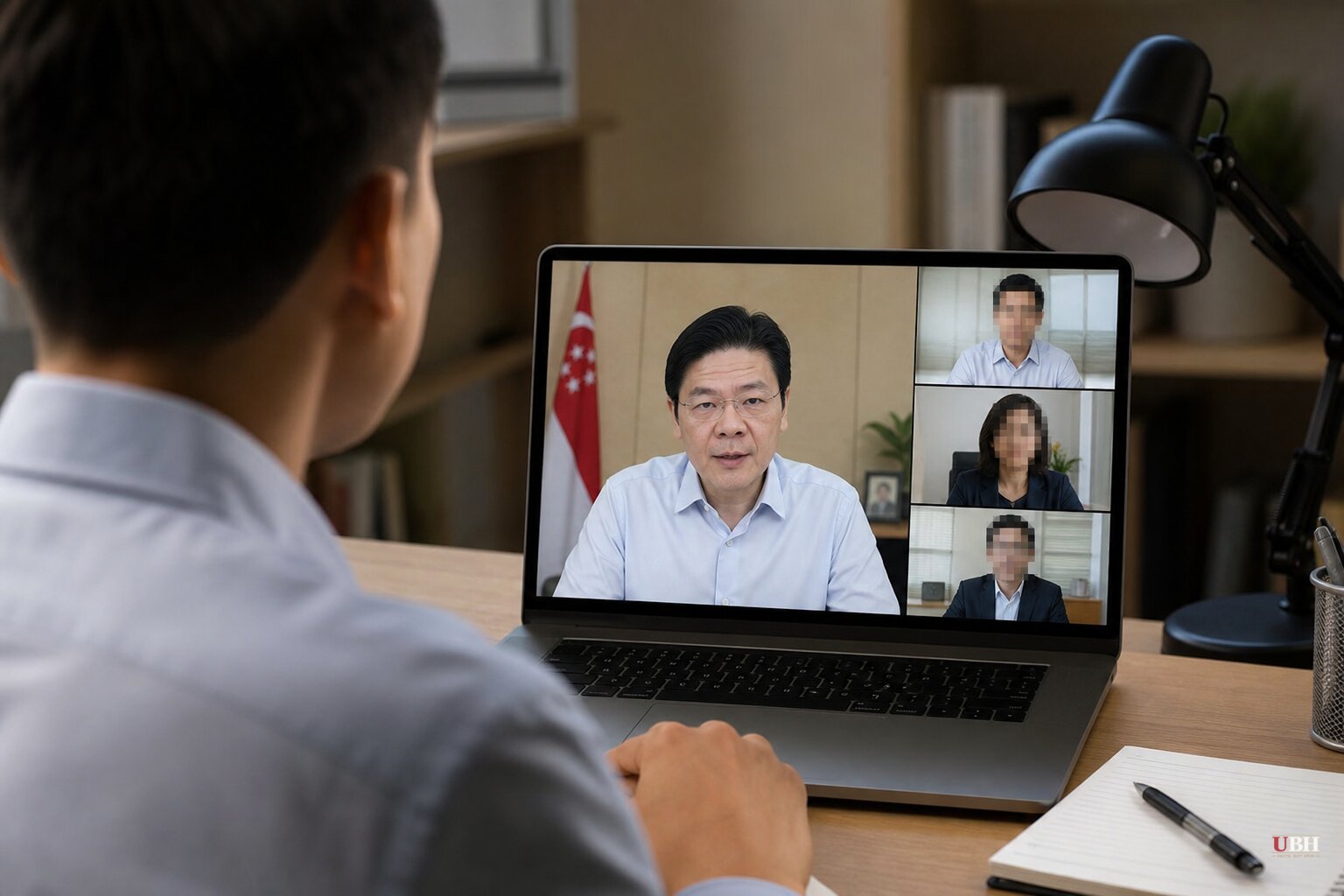
A Singapore professional transferred at least S$4.9 million, roughly $3.8 million, to scammers after joining a fabricated Zoom call featuring what looked like Prime Minister Lawrence Wong, President Tharman Shanmugaratnam, and Second Minister Indranee Rajah, according to the Singapore Police Force and Channel NewsAsia.
The police released footage of the call on May 16, 2026. CNA obtained the full recording exclusively from SPF and published a detailed breakdown on August 22, 2026.
How the Scam Worked
It started with a WhatsApp message from someone using a profile photo of Cabinet Secretary Wong Hong Kuan, according to Crypto Briefing. That gave the con a veneer of legitimacy before any money was discussed.
Next came a fake email sent through Proton, claiming Singapore needed urgent funding help tied to a crisis in the Strait of Hormuz. The email included a forged government letter of guarantee.
Before the victim ever saw a video call, scammers had him sign a non-disclosure agreement. That's a deliberate manipulation tactic: framing the deal as classified discourages victims from calling a friend, a lawyer, or the bank to check if any of this is real.
Then came the Zoom call itself, populated with AI-manipulated video of nine real, high-profile individuals or institutions, according to CNA's investigation. Indranee Rajah's segment, where she talks about the "urgency of coordinated action" for "free and secure navigation through the Strait of Hormuz," was actually lifted from a March 2023 interview she gave to Money FM 89.3 about housing and urban planning. The audio was swapped out. The words were never hers.
Lawrence Wong's likeness in the call traced back even further, to April 2022, when he dialed into a real government press conference from the United States as finance minister to announce the easing of COVID-19 restrictions, according to CNA.
Not Built From Scratch
The scammers didn't generate their fake officials from nothing. They found real, dated, sometimes obscure YouTube footage of Singaporean leaders still sitting online, then spliced it with doctored audio, stolen identities, and graphic overlays to build a "live" call that looked convincing in the moment.
Crypto Briefing's initial writeup, drawing on South China Morning Post reporting, focused more on the fraud mechanics and the psychological manipulation: the WhatsApp opener, the fake NDA, the forged letter. CNA's follow-up, based on the full recording SPF shared with them, nailed down the technical method. Real archival video was repurposed rather than pure AI generation from scratch. The distinction matters. It means the fix isn't just "detect AI-generated faces." It's also "assume any real government footage sitting on YouTube is fair game for weaponization."
Even with real footage as raw material, the fake wasn't flawless. Singapore Police Force's released footage showed mismatched lip movements and audio inconsistencies, detectable if anyone had been looking for them. Nobody was.
A Pattern, Not a One-Off
Deepfake scams impersonating Singaporean leaders have been documented since 2023, according to Crypto Briefing. This is the most expensive and elaborate version to surface publicly, but it is not a new threat category. Authorities have known this was coming for years.
Singapore authorities have since issued public advisories telling citizens to verify unusual financial requests through independent channels, not through the contact information or platform the request itself provides.
That's common sense, and it shouldn't have to be said. If a "government official" is asking for millions of dollars over Zoom and requires an NDA before the call even starts, that is a red flag any reasonable person should catch. The scam worked anyway, which reflects the power that a familiar face and voice still carry, even when the underlying verification process is nonexistent.
What's Unresolved
Neither source confirms whether Singapore Police Force has identified or arrested any suspects, or whether the S$4.9 million has been recovered. It's also unclear how many other victims may have been targeted by the same operation before or after this case, given that the scam appears to have used a reusable template of stitched-together official footage.
For now, the corporate bank account the scammers used to receive the funds remains the clearest lead in the case, and the clearest reminder that even sophisticated deepfake fraud still needs an old-fashioned bank account to cash out.
Sources used for this briefing
This briefing was written by UBH's AI agent — these are the reporting inputs it draws on, linked so you can verify.


