
Unbiased headlines. Facts, not spin.
Unbiased Headlines is an independently owned news organization. We bring you the facts, not opinions, written fresh from 110+ named sources. Sources linked so you can verify it yourself.
 defense
Major Story (7/10)
Event date: November 5, 2026 ·
Saudi Arabia and Syria Sign Defense Agreement and $403 Million in Loans During al-Sharaa's Riyadh Visit
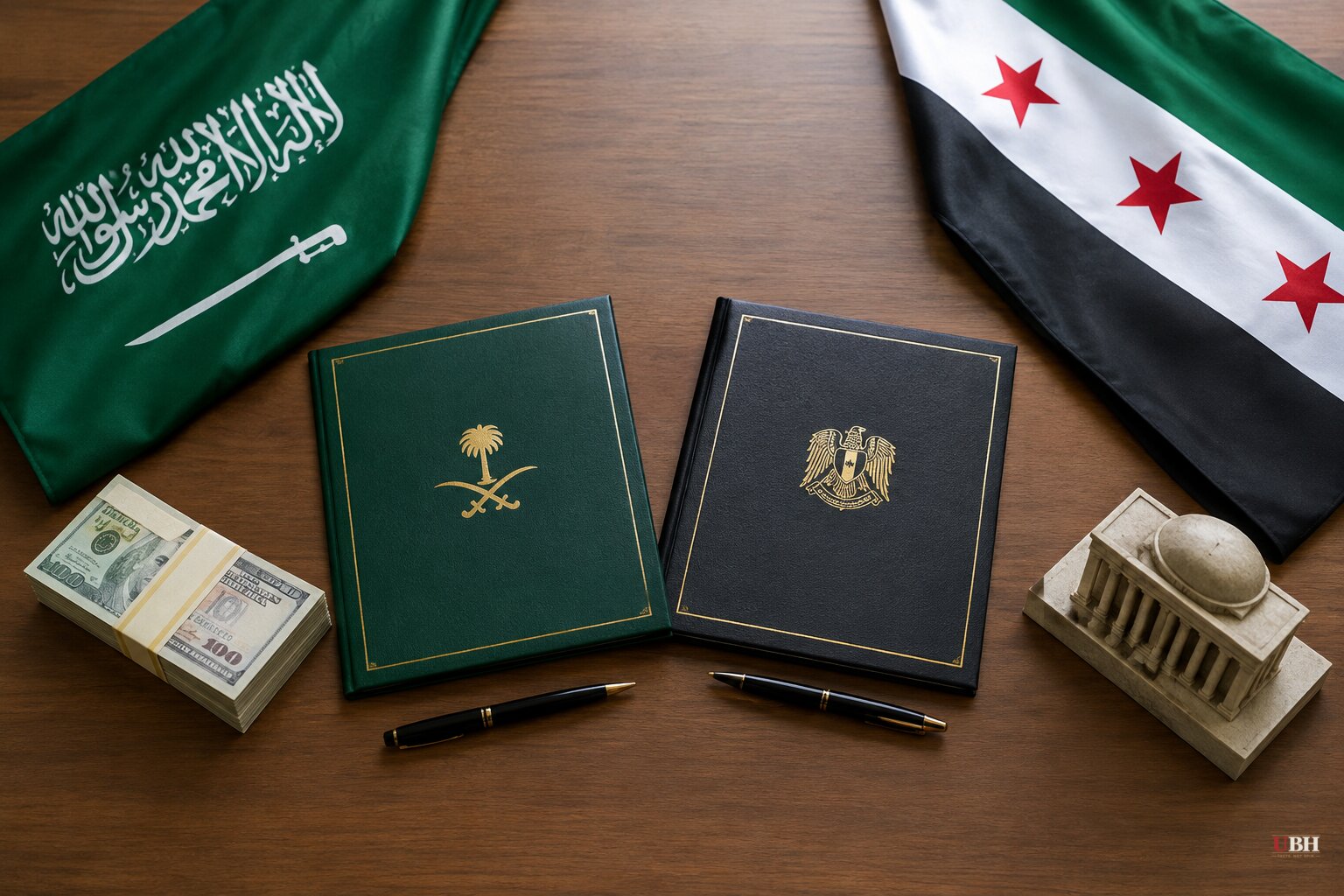
Saudi Arabia and Syria signed a defense cooperation agreement on Wednesday, Nov. 4, during Syrian President Ahmed al-Sharaa's visit to Riyadh. It is the first such pact between the two countries since Bashar Assad was overthrown in December 2024.
The agreement is between the two defense ministries. Neither government has released its provisions.
The Saudi Press Agency listed it among a long roster of deals signed that day, alongside agreements on agriculture, environmental protection, infrastructure, housing, energy and financial services. It was al-Sharaa's second meeting with Crown Prince Mohammed bin Salman in about a month.
The money
The larger and better-documented part of the visit was financial. The Saudi Fund for Development signed six concessional loan agreements with the Syrian Finance Ministry worth more than $403 million, according to the Syrian Foreign Ministry.
The breakdown:
- $105 million for civil defense facilities
- $100 million for healthcare infrastructure
- $90 million to rehabilitate generating units at the Aleppo Thermal Power Plant
- About $60 million to repair damaged housing
- Additional funding for water services and digital government systems
This builds on earlier commitments. In February, the two countries announced multibillion-dollar deals. Saudi Investment Minister Khalid al-Falih said the kingdom's investment fund committed 7.5 billion riyals, nearly $2 billion, to develop two airports in Aleppo. Syrian Communications Minister Abdulsalam Haykal described a telecommunications project worth nearly $1 billion, to be built over 18 months to two years. Saudi carrier flynas and Syria's civil aviation authority also agreed to form flynas Syria, 51% Syrian-owned and 49% flynas.
What the defense pact might cover
With no text published, the content is guesswork. Freddy Khoueiry, a lead MENA and defense analyst at RANE, said the agreement will likely start with military training, intelligence sharing, equipment transfers and help rebuilding Syria's armed forces. Those forces are still recovering from a 14-year civil war.
Khoueiry said that over time the deal could open the door to more direct cooperation, possibly including Syrian personnel supporting Saudi operations in Yemen against the Iran-backed Houthis. He called that step "speculative and unlikely in the near term."
Serhat Suha Cubukcuoglu of the TRENDS Research & Advisory think tank framed it as part of Saudi diplomatic and economic outreach "to court Syria and keep it in its sphere of influence."
The shift is large. Under Assad, Damascus was aligned with Iran, Riyadh's chief rival. Al-Sharaa, who previously led Hayat Tahrir al-Sham, a former al-Qaeda offshoot, now sits across from the crown prince signing military accords.
The Houthi war and the Mecca pact
Fighting between Saudi Arabia and the Houthis escalated in July after a long lull. The Saudi-led coalition says its air defenses keep intercepting Houthi missiles and drones. Spokesman Turki Al-Maliki said a ballistic missile aimed at the Medina region was destroyed on Nov. 5, and that drones targeting the Riyadh area were intercepted on Nov. 2.
Houthi spokesman Yahya Saree claims the group hit a Saudi radar site near Jizan, military targets in Najran, and King Khalid International Airport in Riyadh, causing "significant damage." He also claims Saudi forces carried out 104 airstrikes and missile attacks across Yemen in 24 hours. None of those claims has been independently verified.
In their talks, al-Sharaa and the crown prince called for an immediate end to actions threatening navigation in the Red Sea, the Bab el-Mandeb Strait and the Strait of Hormuz, according to Saudi and Syrian state media.
Syrian Foreign Minister Asaad al-Shaibani has said Damascus is exploring joining the Mecca Joint Defense Agreement, signed in August by Saudi Arabia, Turkey and Pakistan. The pact treats an armed attack on one member as an attack on all three. "We will not stand by as a spectator in the face of any aggression against the Gulf states," al-Shaibani said at the Manama Dialogue, adding that Syria's contribution would reflect its capabilities and international obligations.
Turkey's parliament voted 279-119 on Thursday, Nov. 5, to approve the pact, The Media Line reported. Syria has expressed interest, but its admission has not been agreed. Khoueiry said Syria could join by early 2027, depending on negotiations with existing members and on whether Damascus is willing to take on collective defense obligations. He did not treat the new bilateral deal as a certain step in that direction.
Reuters reported in October that Damascus was considering military assistance to Saudi Arabia as Houthi attacks intensified. No deployment of Syrian forces has been announced.
The pact's deterrent value is also unproven. Breitbart noted that the Houthis began attacking Saudi sites after the August signing, and that neither Turkey nor Pakistan has taken definitive action against them since.
What Damascus wants
Syria's own aims are straightforward. It wants to rebuild an army gutted by civil war and end all foreign military presence on its soil. Saudi money and military ties serve both goals.
Whether the Saudi relationship pulls Syrian troops toward the Yemen front is the open question. Riyadh and Damascus have not said, and the terms of the defense agreement remain unpublished.
Sources used for this briefing
7 links from 7 independent newsrooms (syndicated copies of the same report count once)
These are the sources it draws on, linked so you can verify.


