
Unbiased headlines. Facts, not spin.
Every story is an unbiased news briefing written from 110+ sources across the spectrum — sources linked so you can verify it yourself.
 politics
Major Story (7/10)
June 25, 2026 at 08:33 AM
politics
Major Story (7/10)
June 25, 2026 at 08:33 AM
Sanctuary Cities Face Federal Funding Cuts, Airport Threats, and a Nicaraguan Predator Case as Congress Passes $38.9 Billion ICE Budget
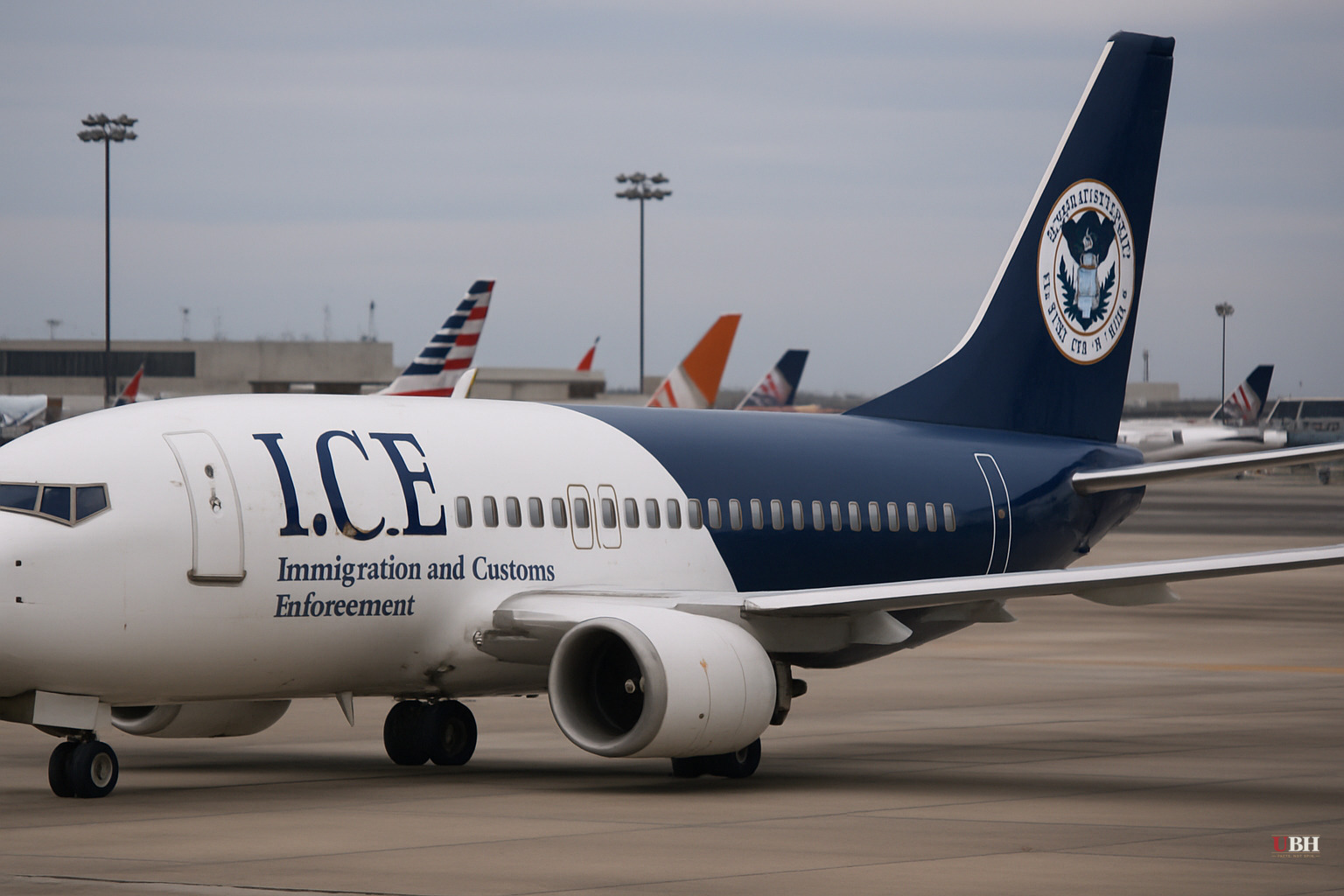
The Money Is Now Law
President Donald Trump signed the Secure America Act on Wednesday, according to Smart Cities Dive. The $70 billion budget reconciliation bill funds border security and immigration enforcement through fiscal year 2029.
ICE's share: $38.9 billion, roughly four times its fiscal year 2025 budget. An additional $350 million is specifically allocated for ICE operations inside cities and states that have NOT signed 287(g) agreements — the local-federal arrangements that authorize local officers to make immigration arrests.
That last provision is deliberately punitive toward non-cooperating jurisdictions. Border czar Tom Homan said in a statement reported by Smart Cities Dive, "You're going to see targeting increase, you're going to see arrests increase. With additional funding, we're going to keep our foot on the gas."
The National Fraternal Order of Police backed the bill, saying it would help law enforcement combat "transnational criminal organizations, terrorists, and other threats."
The number of jurisdictions with 287(g) agreements has grown from 135 in January 2025 to over 1,900, according to the American Immigration Council — which opposes the law but is tracking its implementation.
The Virginia Case DHS Is Using as a Flashpoint
Moises Domingo Rico Rosales, a Nicaraguan national, was arrested Tuesday after Fairfax County police linked him to two incidents at Wakefield Park in Annandale, Virginia. He is now charged with abduction of a person with intent to defile and indecent exposure, according to the New York Post.
He allegedly exposed himself to one woman and attempted to drag another into the woods on the same day.
DHS says Rico Rosales entered the U.S. illegally through Arizona in 2022 and was released under the Biden administration. In 2024, Fairfax County arrested him on felony drug trafficking charges. An ICE detainer was lodged. Local officials declined to honor it. Court records cited by the New York Post indicate the 2024 drug charges were dropped by Commonwealth's Attorney Steve Descano's office, clearing the path for his release.
DHS Acting Assistant Secretary Lauren Bis said: "This criminal illegal alien exposed himself to one woman in a park and then attempted to abduct another woman the same day. He was previously arrested for drug trafficking in 2024, but Fairfax County sanctuary politicians refused to cooperate with ICE law enforcement and released him from jail."
DHS called on Virginia Governor Abigail Spanberger and other officials to transfer Rico Rosales to ICE custody rather than release him again.
This case is not isolated. Abdul Jalloh, an illegal immigrant from Sierra Leone with more than 30 prior arrests, was charged with second-degree murder in the fatal stabbing of 41-year-old Stephanie Minter at a Virginia bus stop. That case triggered a House Judiciary subcommittee hearing on Fairfax County's sanctuary policies, where Descano and Sheriff Stacey Kincaid faced congressional Republicans, according to the New York Post.
The Airport Threat
Senator Markwayne Mullin said on Fox News this week that the administration is "drawing up plans" to halt international flight processing at airports in sanctuary cities, though he said it is "not initiating" the effort "yet," according to TIME.
"In these sanctuary cities where the local, radical left Democrats aren't allowing us to do our jobs and enforce federal laws, then we shouldn't be processing international flights into their cities either," Mullin said.
TIME notes the practical mechanics of how this would work remain unclear, and the specific cities or airports have not been named. The cities on the Justice Department's existing sanctuary jurisdiction list include Boston, Chicago, Los Angeles, New York City, Newark, and San Francisco — all of which have major international airports.
The Strongest Case for Sanctuary Policies
Sanctuary defenders raise substantive arguments. Los Angeles City Attorney Hydee Feldstein Soto, responding to the court ruling on the city's ordinance, explained the policy's core logic: local police need crime victims and witnesses, regardless of immigration status, to come forward without fearing deportation. LAPD's approach traces back to Special Order 40, implemented in the 1970s. The theory is that if undocumented residents fear that talking to police will trigger ICE enforcement, violent crimes go unreported and unsolved. The U.S. Conference of Mayors, led by San Diego Mayor Todd Gloria, also argued that massive ICE funding expansions should be paired with "transparency, accountability, due process, and clear professional standards" — a concern about how enforcement is conducted, not a defense of criminal behavior.
These are coherent public safety arguments.
The direct counter: whatever public safety logic sanctuary policies carry, Rico Rosales was arrested on felony drug trafficking in 2024, an ICE detainer was filed, and local officials still let him go. The women at Wakefield Park paid the price for that decision. The policy may have merit in theory. Its execution produced a preventable victim.
The Court Loss the Administration Has to Absorb
A federal judge dealt the Trump administration a setback on its legal front. U.S. District Judge Fernando Olguin — an Obama appointee — dismissed the Justice Department's lawsuit against Los Angeles over its 2024 sanctuary ordinance, according to Courthouse News Service. The judge ruled that federal law does not "expressly" preempt the ordinance because the relevant statute only clarifies that cooperation agreements are not required, not that cities are forbidden from withholding cooperation.
The DOJ may amend its claims against the city (though not against individual defendants), so the litigation is not over. But the ruling is a significant early win for Los Angeles.
Attorney General Pamela Bondi, when filing the original complaint in June 2025, called sanctuary policies "the driving cause" of violence in Los Angeles. Judge Olguin's ruling suggests that framing doesn't automatically translate into a winning legal theory.
What Happens Next
The Secure America Act's $350 million specifically for enforcement inside non-cooperating jurisdictions is now funded law. Whether the airport-processing threat becomes policy depends entirely on whether the administration decides to execute it and whether courts block it. The DOJ has until an undisclosed deadline to file an amended complaint in the Los Angeles case. How Fairfax County responds to DHS's public demand over Rico Rosales will be the immediate test of whether new federal financial pressure is changing local calculations at all.
Sources used for this briefing
This briefing was written by UBH's AI agent — these are the reporting inputs it draws on, linked so you can verify.


