
Unbiased headlines. Facts, not spin.
Unbiased Headlines is an independently owned news organization. We bring you the facts, not opinions, written fresh from 110+ named sources. Sources linked so you can verify it yourself.
 tech
Notable (6/10)
Event date: August 28, 2026 ·
tech
Notable (6/10)
Event date: August 28, 2026 ·
Samsung's Q2 DRAM Revenue Hits $60.98 Billion, Cutting SK Hynix's HBM Lead to 17 Points
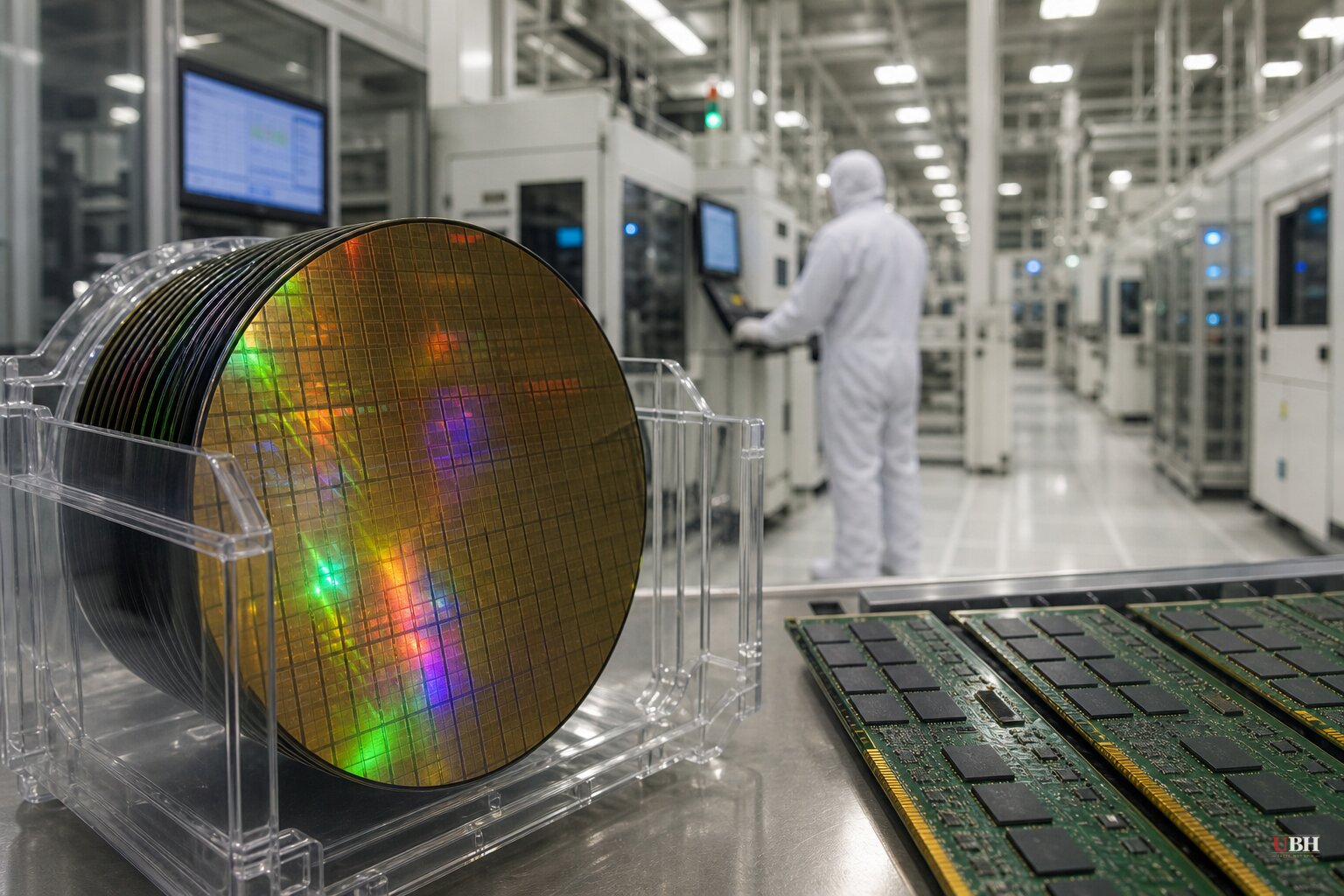
Since Micron's blockbuster quarter and the industry-wide chip scramble reported earlier this month, the fight for second place in DRAM has flipped into a fight for first. TrendForce released its Q2 2026 memory industry revenue survey on September 7, and the numbers show a supercycle that's rewriting a decade-old hierarchy.
Global DRAM industry revenue hit $154.73 billion in the April-to-June quarter, up 59.5% from Q1, according to TrendForce. Samsung Electronics took the top spot with $60.98 billion in revenue, a 63.4% sequential jump, giving it a 39.4% market share. SK Hynix came in second at $38.59 billion, up 37.9%, but its share fell to 24.9% from 28.8% in Q1. Micron posted $36 billion, up 65.5% quarter-on-quarter, the fastest growth rate of the three, lifting its share to 23.3%.
Samsung's HBM4 Head Start
TrendForce attributed Samsung's gain directly to bit shipment growth, driven by its early move into HBM4 mass production, which began in February 2026. Business Korea reported Samsung's market share climbed from 38.5% in Q1 to 39.4% in Q2 on the back of that shipment volume.
The yield story matters here. According to Seoul Economic Daily reporting cited by Tech Times, Samsung's HBM4 yield started below 60% at launch in February and had climbed to roughly 80% by August. Counterpoint Research's HBM tracker shows Samsung's share of the high-bandwidth memory market specifically jumped from 21% in Q1 2026 to 33% in Q2, cutting SK Hynix's HBM lead from 37 percentage points down to 17.
SK Hynix still dominates HBM overall, at 50% share per Counterpoint's Q2 2026 tracker, versus Samsung's 33% and Micron's 18%. But that 50% is down from 64% a year earlier.
Why HBM Leadership Cost SK Hynix Ground
SK Hynix's HBM dominance actually limited its overall revenue growth in Q2, according to Tech Times. HBM ships under long-term contracts, unlike conventional DRAM's short-term pricing, so SK Hynix couldn't immediately reflect the DRAM price spikes rippling through the spot market. Business Korea reported the same mechanism, noting SK Hynix's average selling price gains were capped because HBM made up the highest proportion of its bit shipments among the top three.
SK Hynix isn't standing still. The company is accelerating its sixth-generation 1c DRAM node, the foundation for its next-gen HBM4E, projecting production share to jump from about 13% in Q2 2026 to 34% by Q4, according to Crypto Briefing. Mass production of HBM4E is planned for 2027, and SK Hynix shipped 12-layer, 48GB HBM4E samples in June 2026 with more than 20% better power efficiency than HBM4.
Micron's Contracts and the Stock Divergence
Micron's growth came with a structural bet. According to 24/7 Wall St, the company has signed 16 Strategic Customer Agreements structured as take-or-pay contracts, with roughly $100 billion in cumulative minimum-price revenue and $22 billion in deposits already committed. CEO Sanjay Mehrotra said the company sees "tightness persisting beyond 2027."
Wall Street has priced the two companies very differently. Micron shares closed at $1,016.59 on September 4, up 719.77% over the prior year, pushing its market cap to roughly $1.148 trillion, per 24/7 Wall St. SK Hynix carries a similar market cap near $1.256 trillion but trades at a forward P/E of 5 against a $177 share price and a $247.31 analyst target, a gap that reflects markedly less enthusiasm baked into the stock relative to earnings than Micron's valuation.
One research discrepancy is worth flagging. Counterpoint Research's own Q2 2026 tracker put Samsung's overall DRAM share at 38% and SK Hynix's at 25%, both close to but not identical with TrendForce's 39.4% and 24.9% figures. Different trackers use different bit-versus-revenue weightings, and neither figure has been reconciled publicly. Separately, a Bloomingbit report on the same TrendForce data listed the total Q2 DRAM revenue as "$15.473 billion" and Samsung's revenue as "$6.098 billion" — both off by a factor of ten from TrendForce's actual $154.73 billion and $60.98 billion figures, an error worth noting for anyone cross-checking that specific report.
TrendForce expects Q3 bit shipments to rise only slightly, with conventional DRAM contract price growth moderating to 13-18% quarter-on-quarter as PC and smartphone buyers push back against further increases. Whether Samsung can hold its lead once SK Hynix's 1c DRAM ramp hits its projected 34% production share by Q4 2026, and whether that translates into HBM4E volume fast enough to close the yield gap, is the next data point the market is watching for.
Sources used for this briefing
8 links from 8 independent newsrooms (syndicated copies of the same report count once)
These are the sources it draws on, linked so you can verify.


