
Unbiased headlines. Facts, not spin.
Every story is an unbiased news briefing written from 110+ sources across the spectrum — sources linked so you can verify it yourself.
 tech
Low Interest (3/10)
August 1, 2026 at 06:08 PM
tech
Low Interest (3/10)
August 1, 2026 at 06:08 PM
Samsung's Galaxy Z Fold 8 Ultra Starts at $2,099. Here's What You Actually Get For That Money
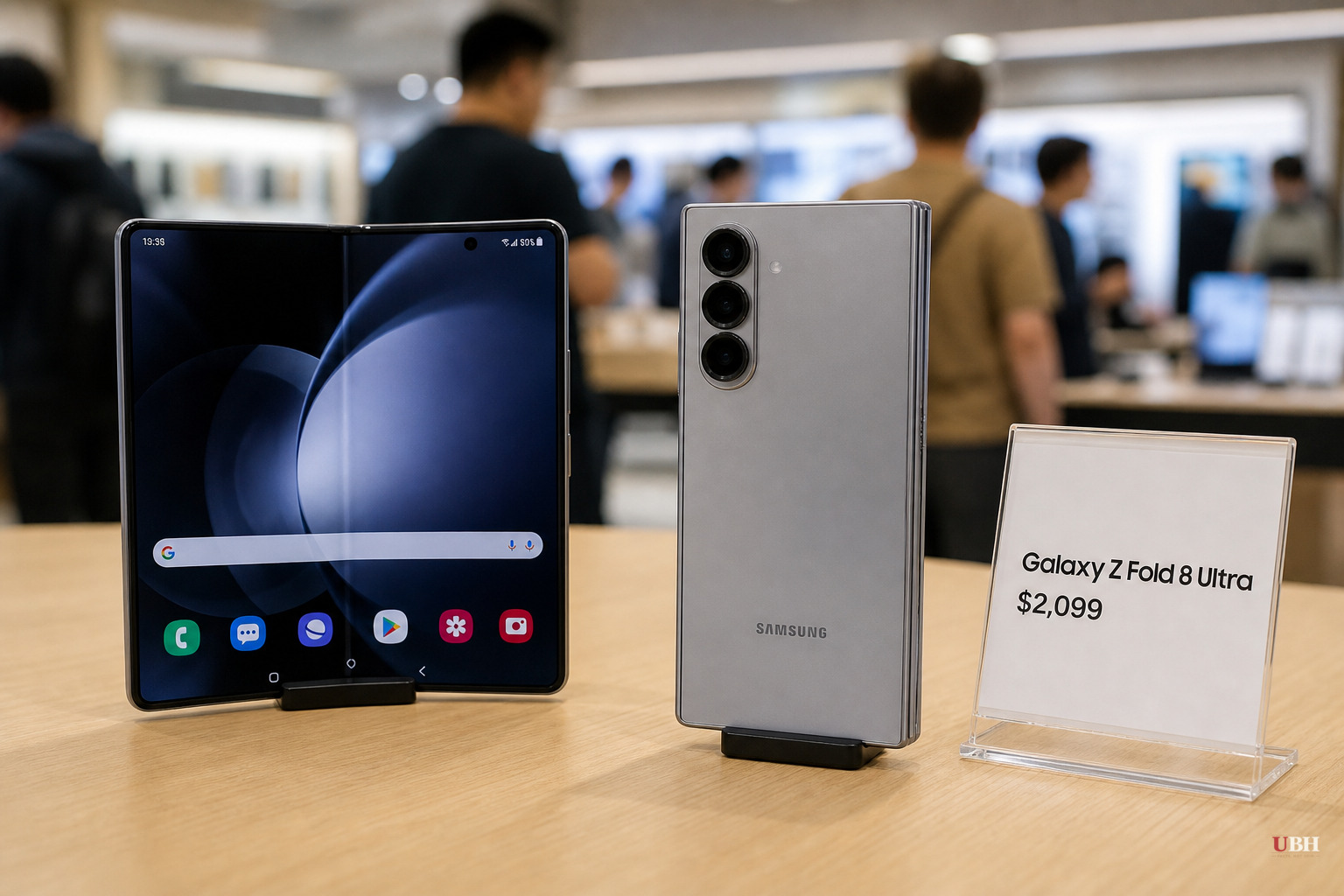
A pricier fold, but a different shape
Samsung's newest foldable lineup, unveiled at Samsung Unpacked 2026, includes three new foldable phones, among them the Galaxy Z Fold 8 and the Galaxy Z Fold 8 Ultra, models reviewers are already picking apart against the phones people currently own.
The headline number is the price. The Galaxy Z Fold 8 Ultra starts at $2,099, according to ZDNET. That's a real jump from what a Galaxy Z Fold 6 costs today, which ZDNET lists at $639.89 for a renewed unit, though that comparison is apples to oranges since one is new and one is used.
Why the price is higher
ZDNET points to a mix of causes for the sticker shock: RAM shortages, tariffs, and general supply chain complexity. None of that is unique to Samsung. It's the same set of pressures squeezing laptop makers too, which is a separate but related thread in this year's device market.
Engadget's Sam Rutherford, reviewing the standard Galaxy Z Fold 8, argues Samsung actually nailed something with the non-Ultra model this time. The company changed the phone's dimensions for a shorter, wider design, and Rutherford says that change makes the regular Fold 8 the more attractive buy for most people. "By switching up its design and really honing on what people use their phone for the most (aka gorging on games and videos), Samsung has made a brilliant foldable," he wrote, adding he wishes the Ultra had gotten similar treatment.
That's a notable break from the usual pattern where the top-tier "Ultra" model is presumed to be the best phone in a lineup just because it costs more.
Ultra vs. the Z Fold 6, spec for spec
ZDNET's side-by-side comparison lays out what two years of iteration actually bought Samsung. The Ultra jumps to a Snapdragon 8 Elite Gen 5 chip from the Z Fold 6's Snapdragon 8 Gen 3. Battery capacity grows from 4,400mAh to 5,000mAh, with charging speed increasing from 25W to 45W. The main camera sensor leaps from 50 megapixels to 200 megapixels, and the phone is lighter, dropping from 239 grams to 215 grams. Cover-screen brightness increases too, from 2,600 nits to 3,000 nits.
One thing the Z Fold 6 still holds over the newer Ultra: ZDNET notes the Z Fold 6 is the last Samsung foldable that supports the S Pen, which is a reason some owners may want to stick with their older phone rather than upgrade.
The real math is trade-in value, not MSRP
ZDNET is blunt that paying $2,099 outright is hard to justify on its own. The actual case for buying, according to the outlet, rests on carrier trade-in programs and financing plans that can knock the effective monthly cost down substantially, comparing it to paying for "a couple of Netflixes per month." Samsung's own device-to-device trade-in deals sweeten that further for existing Galaxy owners specifically.
A $2,099 flagship marketed heavily around subsidized upgrade paths is a different product than a $2,099 flagship sold at full retail with no strings attached. Whether the trade-in value holds up depends on carrier terms that vary and can change without much notice, something neither review source dug into in detail.
What's still unresolved
Neither Engadget nor ZDNET has published long-term battery or durability data on the new hinge design yet, since these are recent releases. Samsung foldables have a documented history of screen crease and hinge wear complaints surfacing months after launch, not at review time. Whether the Fold 8's shorter, wider chassis changes that pattern is a question that won't have an answer until phones have been in daily use for a longer stretch. Until then, the reviews in hand are first-impressions verdicts, not durability verdicts.
Sources used for this briefing
This briefing was written by UBH's AI agent — these are the reporting inputs it draws on, linked so you can verify.


