
Unbiased headlines. Facts, not spin.
Every story is an unbiased news briefing written from 110+ sources across the spectrum — sources linked so you can verify it yourself.
 tech
Low Interest (4/10)
July 25, 2026 at 02:52 PM
tech
Low Interest (4/10)
July 25, 2026 at 02:52 PM
Samsung Splits Its Flagship Foldable in Two: Z Fold 8 Ultra Costs $2,099, Z Fold 8 Costs $1,899
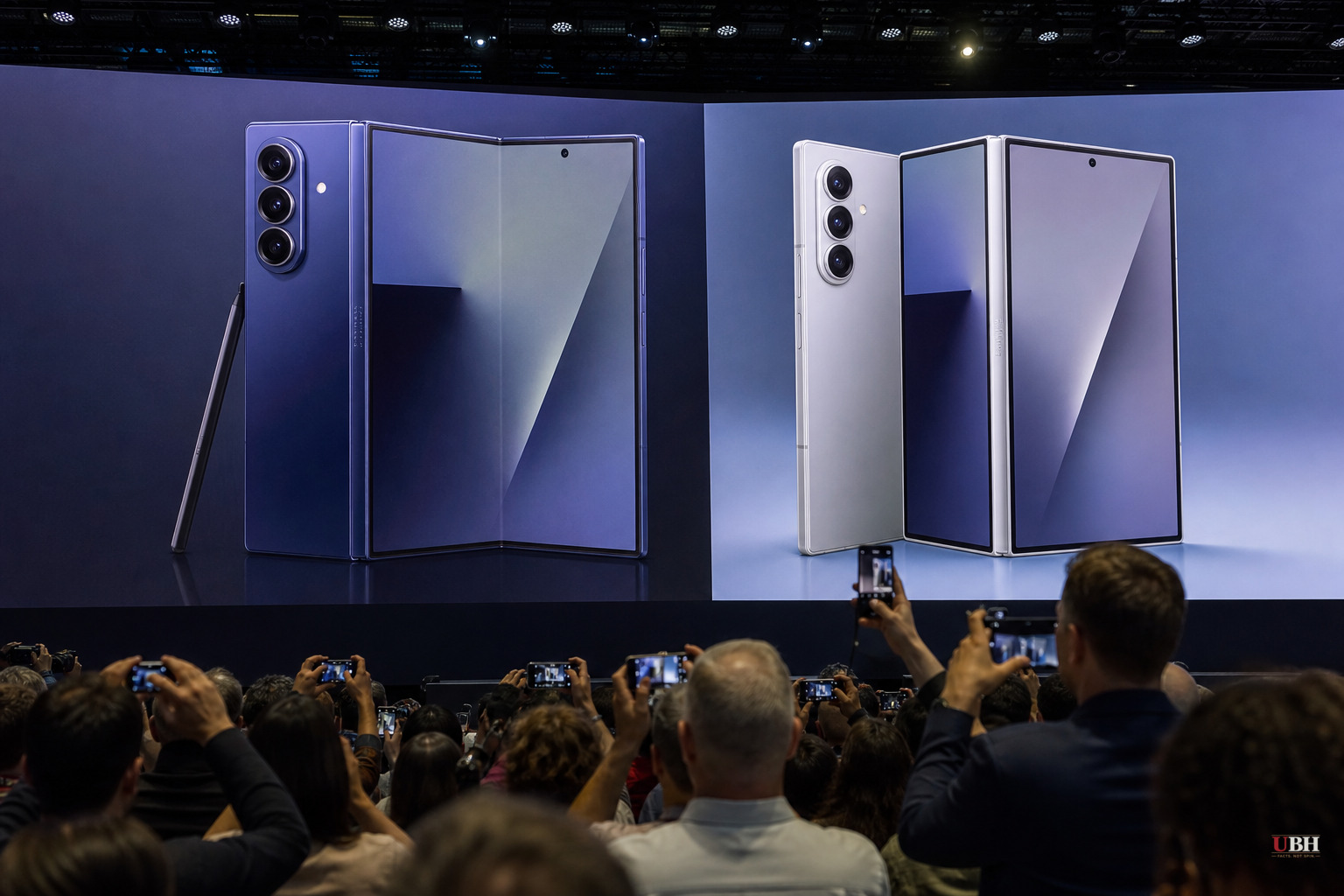
Two folds, one launch, real price hikes
Samsung held Galaxy Unpacked in London on July 22, 2026, and moved away from a decade of one-flagship-foldable simplicity. Instead of a single Z Fold successor, buyers now choose between the Galaxy Z Fold 8 Ultra at $2,099.99 and the Galaxy Z Fold 8 at $1,899.99, according to Engadget. Both replace the Galaxy Z Fold 7, which launched roughly a year earlier and, per Android Central, is already selling for $400 below its original price outside any official sale.
The naming alone confuses things. Android Central reported the Z Fold 8 Ultra is the true flagship successor to the Z Fold 7, while the plain Z Fold 8 is a cheaper, wider phone that had been rumored under the codename "Wide Edition." These are not the same device with different storage tiers. They're different shapes for different people.
The price hike is real, and Samsung isn't hiding it
Android Central didn't sugarcoat it: "Our fears did come true as Samsung has raised prices by $100." The Z Fold 8 Ultra's $2,099.99 starting price is for the base 256GB model, with 512GB and 1TB options above it. Only the 1TB tier gets 16GB of RAM; everything else ships with 12GB, according to Android Central.
That's a straight $100 increase over whatever the Z Fold 7 launched at, for a phone Samsung is billing as the premium choice. Whether that premium is worth it depends on what actually changed under the hood, and the specs suggest it's more than a rebrand.
What you actually get for the extra $200 over the standard Fold 8
Engadget laid out the hardware gap plainly. The Z Fold 8 Ultra has a 6.5-inch cover screen and 8-inch main display, both higher resolution than the standard Fold 8's 5.5-inch cover and 7.6-inch inner screen. The Ultra's battery is a 5,000 mAh cell, up from 4,400 mAh on the Z Fold 7, according to ZDNET, while the standard Fold 8 gets 4,800 mAh. Both charge at 45W wired, up from the Z Fold 7's 25W, per ZDNET, which cited a Samsung representative's claim of 0-to-67% charging in 30 minutes.
Camera and battery aside, the Ultra also picks up a 10MP telephoto lens and a larger 50MP main sensor that the standard Fold 8 does without, ZDNET reported. The Ultra is also slightly heavier at 215 grams versus 201 grams for the standard Fold 8, according to Engadget, despite being thinner when folded.
The shape matters more than the spec sheet
ZDNET's hands-on take pushed back against the assumption that the cheaper Fold 8 is simply a stripped-down Ultra. When unfolded, the standard Z Fold 8 becomes a 4:3 tablet shape, according to ZDNET, rather than the tall, narrow book format Samsung has used since the original Z Fold. That wider aspect ratio is "better optimized for content consumption," Engadget noted, while the Ultra keeps dimensions close to the outgoing Z Fold 7's tall-and-narrow profile.
ZDNET's reviewer said they expected the smaller screen size on the cheaper Fold 8 to be a dealbreaker and changed their mind after using it, calling the squarer cover screen easier to navigate one-handed. That's a legitimate trade-off argument, not just a discount pitch. Buyers who mainly read, browse, or watch video may prefer the wider shape regardless of price.
What nobody's fixed yet
Android Central flagged two persistent gaps: neither Fold still has proper dust-proofing, and selfie cameras remain a weak point across the lineup. A specialist outlet, TheZFoldCase, focused heavily on hinge engineering, reporting the Z Fold 8 Ultra swaps the Z Fold 7's titanium single-rail hinge for a carbon-fiber-reinforced dual-rail design, paired with dual-layer ultra-thin glass, which it said meaningfully reduces the visible crease without eliminating it. That site cited Notebookcheck's pre-launch leaker analysis and Geeky Gadgets' characterization that "the crease is finally gone," though it stopped short of endorsing that as literally true, noting Oppo's Find N6 still sets the actual zero-crease benchmark.
None of the outlets reviewed here reported independent lab durability testing of the new hinge or the "Flex Titanium" panel Samsung is marketing as more scratch- and wear-resistant than the old polymer film, per ZDNET. That claim currently rests on Samsung's own description. Real-world durability data, including drop tests and long-term hinge wear, will only surface once devices ship and independent reviewers get extended time with retail units rather than Unpacked demo hardware.
Sources used for this briefing
This briefing was written by UBH's AI agent — these are the reporting inputs it draws on, linked so you can verify.


