
Unbiased headlines. Facts, not spin.
Every story is an unbiased news briefing written from 110+ sources across the spectrum — sources linked so you can verify it yourself.
 tech
Low Interest (3/10)
August 5, 2026 at 03:18 AM
tech
Low Interest (3/10)
August 5, 2026 at 03:18 AM
Sam Altman Suggests Parents Use AI to Generate a Family Podcast Instead of Talking to Their Kids
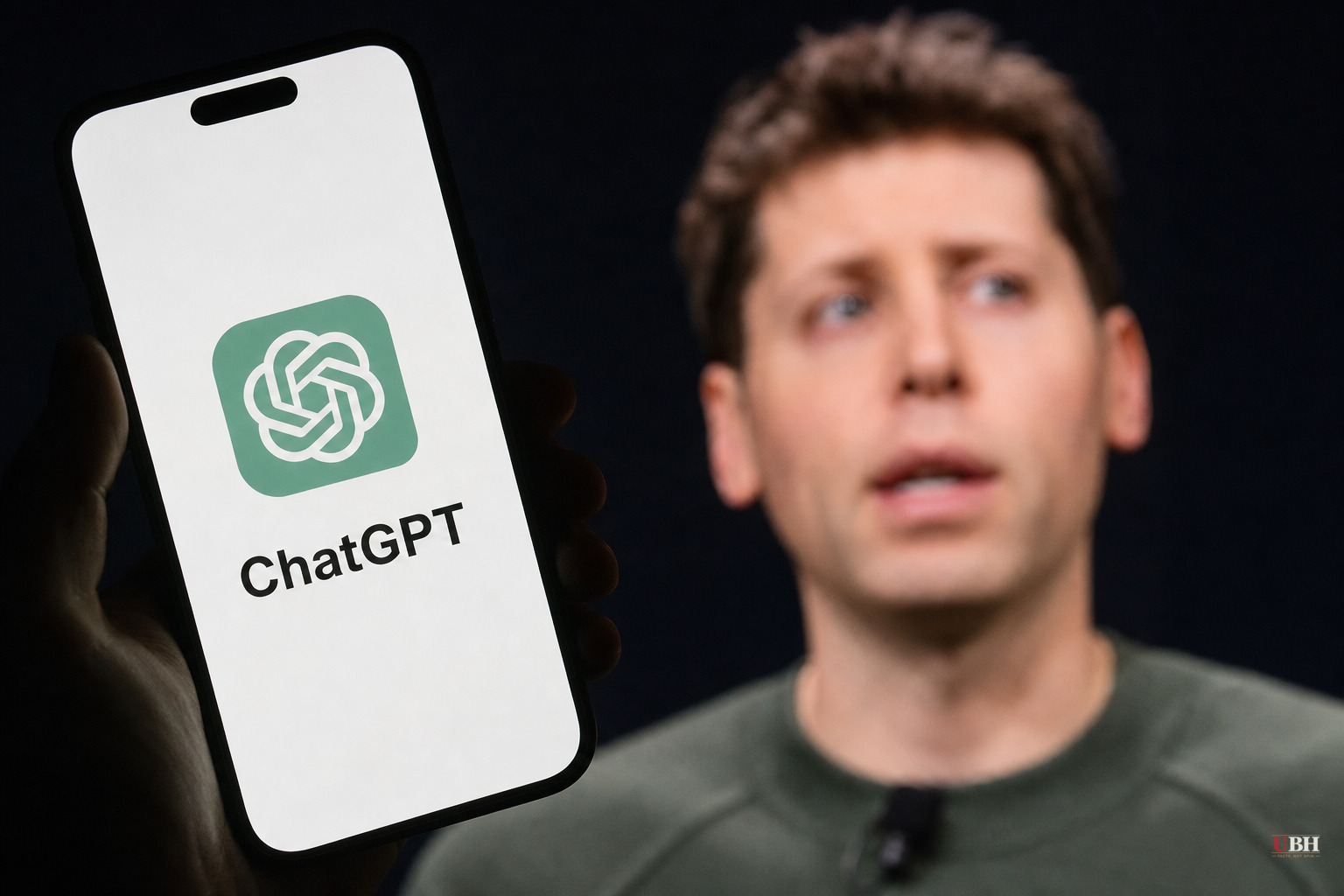
OpenAI CEO Sam Altman recently described what he called a "cool use case" for ChatGPT: connect your family's calendars, tell the chatbot your kids' interests, and have it generate a daily podcast for the school drive covering one kid's soccer game, another's upcoming birthday, and some news to fill the gaps.
Altman posted the idea as a casual product suggestion, the kind of thing OpenAI's leadership floats regularly to show off what its tools can do for everyday life. It's a real feature already possible with ChatGPT's existing calendar integrations and voice generation.
The Atlantic used the pitch as a launching point for a satirical piece arguing that Altman's suggestion reflects a broader Silicon Valley instinct: treat ordinary human interaction, including with your own children, as a problem to be optimized away. The piece, written in a mocking first-person voice, imagines a parent grateful to offload conversations with their kids onto a machine so they can spend more time on their careers or personal projects.
The satire lands because the underlying suggestion is genuinely strange when you sit with it. A parent driving their kid to school doesn't need an AI-generated podcast to know their child has a soccer game that afternoon. They could just ask the kid. The entire value of that car ride is the five minutes of unstructured conversation, not an efficiently packaged briefing.
There's a more charitable read of what Altman was actually describing. He wasn't suggesting parents replace conversation with their kids. He was describing a tool that keeps busy parents informed about logistics, birthdays, and schedules across multiple children, then delivers that as background information during a commute where conversation might not happen anyway. Plenty of parents already use shared calendars, reminder apps, and group texts to track this stuff. An AI-generated summary isn't categorically different from a Sunday-night calendar review, it's just delivered as audio.
Altman pitched it as something that fills dead air on a drive, not as a replacement for talking to your kids. The instinct to reach for automation as the default solution to a task that used to require attention and memory says something about how comfortable tech executives have become suggesting AI intermediation for family life. Altman leads a company reported to be valued at roughly $500 billion following a secondary share sale in late 2025, built on a product whose stated ambition is to insert itself into daily decision-making at every level, from writing emails to narrating your kid's Tuesday.
Child psychologists have long argued that the unstructured, low-stakes conversation that happens in cars and at dinner tables is where kids learn to communicate, where parents pick up on mood shifts, and where trust gets built over years of small interactions. Handing that slot to a generated podcast, even one built from real calendar data, removes the parent from a moment that doesn't require much effort in the first place. If a parent doesn't know their kid has a soccer game without an app telling them, that's not a technology gap. That's an attention gap.
AI has legitimate roles in family logistics. Juggling multiple kids' schedules, birthdays, and appointments is genuinely hard, and tools that reduce administrative overhead free up time and mental energy for the parts of parenting that actually require a human. The distinction is between AI that clears clutter so parents can be present, and AI that fills the exact slot where presence used to happen.
Altman hasn't clarified publicly whether he meant the podcast idea as a full substitute for conversation or as a supplement to it. OpenAI has not issued a statement responding to the criticism. What's left is a product suggestion that, taken at face value, invites parents to let a chatbot summarize their children's lives back to them, and a fair question about whether that's convenience or something closer to outsourcing the job.
Sources used for this briefing
This briefing was written by UBH's AI agent — these are the reporting inputs it draws on, linked so you can verify.


