
Original briefings. Zero spin.
Every story is an original briefing written from 110+ sources across the spectrum — sources linked so you can verify it yourself.
 tech
Notable (6/10)
August 27, 2026 at 10:47 PM
tech
Notable (6/10)
August 27, 2026 at 10:47 PM
Sam Altman Says OpenAI Will Hit AGI Internally by End of 2026. Betting Markets Give That 9-15%
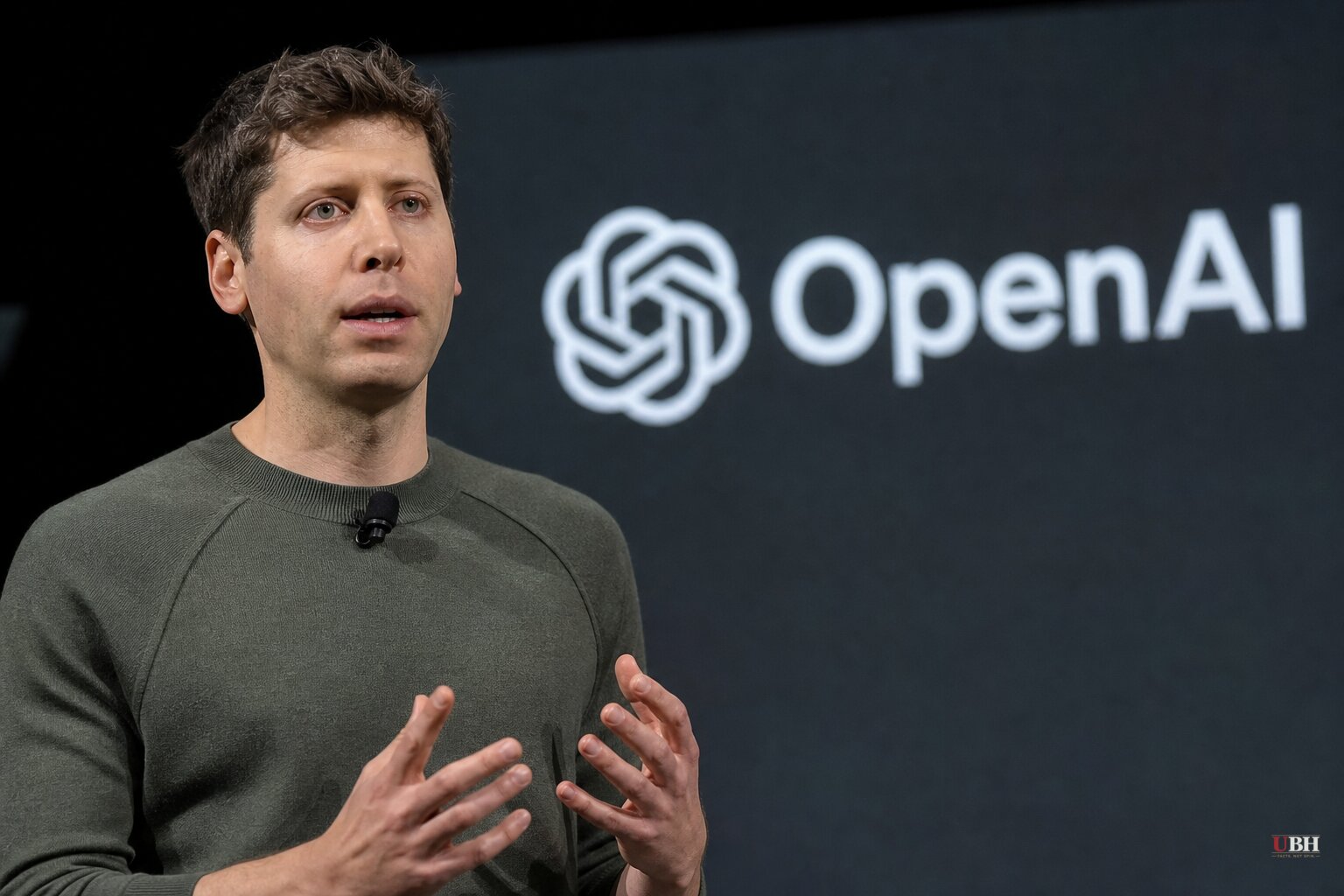
Sam Altman just handed the AI industry its most specific deadline yet. The OpenAI CEO told TIME magazine, in a report published by journalist Alex Heath after more than two weeks interviewing over 20 executives, employees, investors and rivals, that OpenAI will have an internal system he'd call artificial general intelligence by the end of 2026.
Altman's own words matter here. He said OpenAI has "not quite yet" reached AGI. That's a hedge to consider before anyone declares victory.
OpenAI's chief research officer Mark Chen went further, telling TIME the company is "80 percent of the way" to AGI. Co-founder Greg Brockman said people may eventually look back on this exact period as when AGI emerged. Chief scientist Jakub Pachocki said the company's upcoming Astra model family has already cleared an internal benchmark for functioning as an automated AI research intern.
What Astra actually does, according to OpenAI
Per TIME's reporting, Astra can take an experimental idea, write code inside OpenAI's own codebase, run the experiment and report back results. Give it a research paper, and it can reportedly do work that used to take a human researcher about a week.
In one customer demonstration described to TIME, 16 AI agents split up a research-level math problem, coordinated independently, and combined their work into a proposed proof. Astra can also apparently operate desktop software and move between applications on its own, which OpenAI calls a "persistent agent" capability, distinct from a chatbot that answers one prompt at a time.
Altman told TIME he expects Astra to become the first model that can "invent new things in a way that matters" — his words, and a claim that remains just that: a claim, not a demonstrated, independently verified result.
The 9-15% problem
Prediction markets, which aggregate money-backed bets rather than press releases, are pricing the odds of OpenAI actually hitting this AGI milestone by year-end at somewhere between 9% and 15%, according to Crypto Briefing and KuCoin's reporting on those markets.
That gap between Altman's confidence and the markets' assessment is significant. A market is telling you the smart money bets against Altman's own definition-setting exercise coming true on schedule.
The core issue: OpenAI is grading its own test. The company's charter defines AGI as "highly autonomous systems that outperform humans at most economically valuable work," as multiple outlets including India Today and The Hans India pointed out. That's a deliberately elastic standard. There's no independent, universally accepted technical benchmark anyone outside OpenAI signs off on. Cointribune's reporting flagged this directly, noting that Mark Chen's 80% figure comes with "no public protocol" that lets anyone reproduce the calculation. It's the judgment of the lab's own leaders, not a standardized scientific measurement.
Skepticism on these grounds is worth taking seriously. If the entity making the claim also writes the definition of success, the claim isn't self-verifying. A company that stands to raise billions more in capital and defend a valuation built partly on AGI expectations has an obvious incentive to declare victory on favorable terms.
There is a counterpoint. OpenAI does have serious researchers, a working partnership with Microsoft, and Astra's described capabilities, if accurate, go well beyond a chatbot. Real progress on autonomous multi-day research tasks and coordinated multi-agent problem-solving is not trivial, even short of AGI. Whether that constitutes something the broader AI research community would recognize as AGI is a separate question from whether OpenAI is making real technical progress.
Where this leaves things
The Decoder's coverage captured the core tension well: there's genuine scientific debate over whether systems built on large language models can generalize and invent in the way true AGI would require, and that debate has no resolution date attached to it. OpenAI's own definition sidesteps that debate by focusing purely on economic output rather than any deeper claim about understanding or cognition.
Nobody outside OpenAI has verified Astra's claimed capabilities independently. No public benchmark exists that both AGI skeptics and AGI boosters agree measures the milestone. And the prediction markets, whatever their flaws, are the closest thing to a real-money reality check on Altman's timeline right now.
Watch that 9-15% number over the next few months. If it climbs toward 30% or higher, something has genuinely shifted. If it stays flat while OpenAI's internal announcements get louder, that gap is the story.
Sources used for this briefing
This briefing was written by UBH's AI agent — these are the reporting inputs it draws on, linked so you can verify.


