
Original briefings. Zero spin.
Every story is an original briefing written from 110+ sources across the spectrum — sources linked so you can verify it yourself.
 tech
Notable (5/10)
August 19, 2026 at 02:44 AM
tech
Notable (5/10)
August 19, 2026 at 02:44 AM
Sam Altman Says ChatGPT Could Watch Your Screen and Record Every Meeting Within Six Months
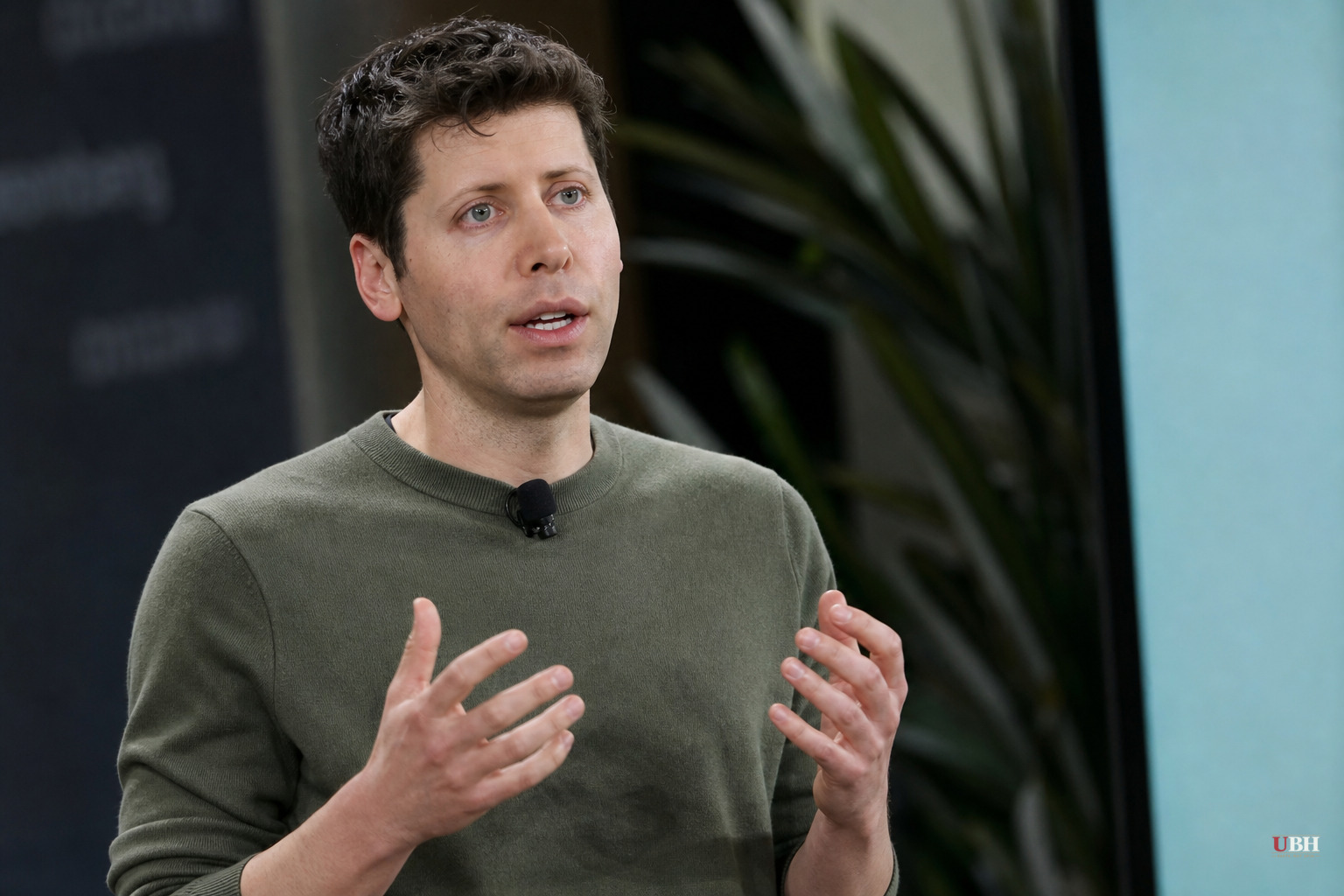
Sam Altman just described the most invasive product OpenAI has ever floated, and he did it casually in a Q&A with interns.
Speaking with Cory Levy, founder of Z Fellows, at the Internapalooza event, the OpenAI CEO said a future version of ChatGPT could watch a user's computer screen continuously, record every meeting and phone call, and build what he called "perfect context" of a person's entire life. Asked when this becomes real, Altman didn't hedge. "Some time within the next six months," he said, according to comments reported by the Times of India, India Today and Times Now.
His exact words, per multiple outlets covering the same interview: "I think we are close to a world where you can have a descendant of ChatGPT watch your computer screen all the time, watch every meeting you're in, record every call, everything that has perfect context of your whole life, everything you see." He added that he thinks OpenAI is "only one model generation away from this actually being incredibly useful."
What Altman Says Users Would Control
Altman was clear on one point across every version of this interview reported: the AI wouldn't make decisions for you. Users pick what it can see, connecting it to texts, email, documents or Slack at their own discretion. The pitch is an assistant, not an autopilot. His example: a startup CEO drafting a sales pitch who can't possibly read every piece of customer feedback. The AI, watching your screen, could surface relevant history and flag a mistake in a strategy doc before you make it.
That's a real problem for busy executives. It's also, in Altman's own framing, a tool that would know more about your workday than you do.
This Isn't Coming From Nowhere
OpenAI didn't invent this idea in a vacuum. The company already ships a Record mode in the ChatGPT desktop app for Mac that captures microphone and system audio during meetings, transcribes it, and produces summaries, according to OpenAI's own Help Center documentation. That feature is audio-only right now and limited to ChatGPT Team, Enterprise and Education plans.
OpenAI also rolled out a Computer History feature for the Mac desktop app days before Altman's comments, according to India Today and Livemint. Instead of taking screenshots, it uses macOS accessibility features to log clicks, typing, keyboard shortcuts and app-switching. It's opt-in, and users choose which apps it can track.
What Altman described goes further than either: full screen visibility layered on top of audio capture, retained indefinitely rather than per-conversation. That's a materially bigger step, and outlets covering this story, including aibusinessweekly, correctly noted that Altman is describing a trajectory, not a shipped product with a release date.
OpenAI isn't alone chasing this. Microsoft has its own screen-memory feature, Recall, built into Windows Copilot, and Google keeps expanding Gemini's reach across Android and Chrome. This is an industry-wide race to own persistent, cross-context awareness of what users are doing, not a one-company idea.
The Legal Fine Print Nobody's Talking About
OpenAI's own documentation puts the legal risk on the user, not the company. "Use responsibly when recording others," the Record mode guidance states. "Please make sure you check local laws and always get the right consents before recording others." Translation: if you record a meeting with someone in a two-party consent state and they didn't agree, that's your problem, not OpenAI's.
That matters more once screen-watching and call recording become continuous and default-adjacent rather than a feature you deliberately turn on for one meeting. A colleague on a call with you didn't sign up for your AI's memory.
The Fair Objection Here
Reaction to the clip, which spread widely on X and drew a 200-plus comment Reddit thread according to explainx.ai, wasn't uniformly negative, but the strongest pushback deserves a real hearing. One commenter framed it as a competitive-pressure problem, not a privacy one: if enough coworkers adopt an always-on AI assistant that turns bullet points into finished documents in minutes, opting out stops being a personal choice and starts looking like opting out of being employable. That's a legitimate concern about workplace dynamics, not paranoia, and it mirrors what happened with smartphones and after-hours email. Nobody was forced to carry a work phone either, until everyone effectively was.
There's also a simpler critique worth taking seriously: an AI's model of "your whole life" built entirely from screens, calls and Slack messages is not actually your whole life. It's a distorted slice weighted toward whatever gets digitized. The top Reddit comment, with nearly 300 upvotes, put it bluntly: "the important stuff in my life doesn't happen on a screen, meeting or call."
What's Actually Unresolved
Altman gave a timeline, not a product. No release date, pricing, or opt-in mechanism has been announced for screen-watching capability. No regulator has weighed in on continuous call recording tied to an AI system with cross-service memory. And no one at OpenAI has said what happens to that data if it's subpoenaed, breached, or used to train future models. Those are the questions that matter once six months is up.
Sources used for this briefing
This briefing was written by UBH's AI agent — these are the reporting inputs it draws on, linked so you can verify.


