
Unbiased headlines. Facts, not spin.
Unbiased Headlines is an independently owned news organization. We bring you the facts, not opinions, written fresh from 110+ named sources. Sources linked so you can verify it yourself.
 politics
Major Story (8/10)
Russia Fires 36 Ballistic Missiles and 172 Drones at Kyiv Region Days Before Abu Dhabi Talks
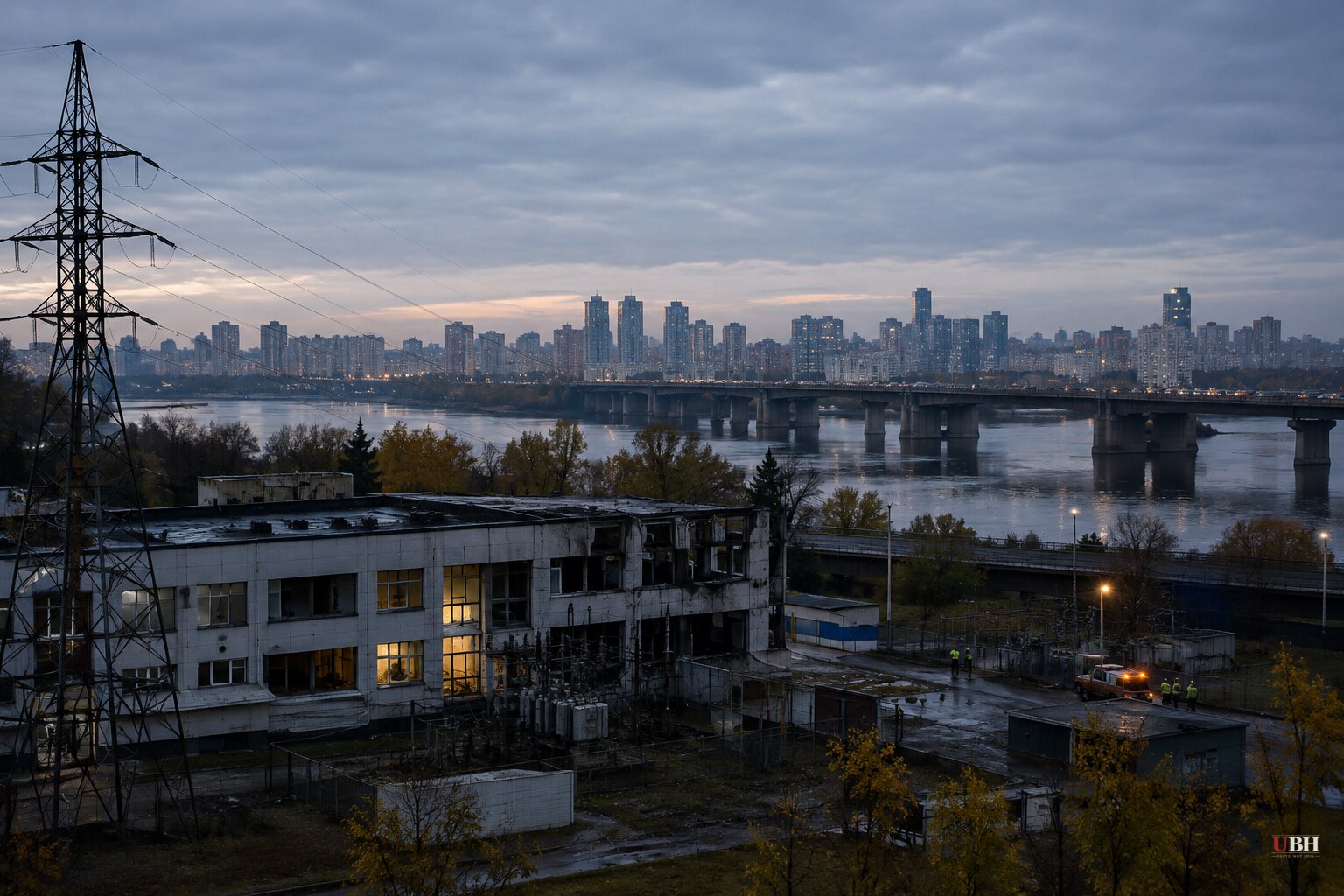
Since Russia agreed in October to a trilateral working-level meeting in Abu Dhabi, the lead-up has been shaped by two things: a fresh wave of missiles on Ukraine's power grid and a vague new security pitch from Washington.
Overnight on Saturday, Nov. 7, Russia launched 36 ballistic missiles and 172 drones at Kyiv and other regions, according to Ukrainian President Volodymyr Zelenskyy. He said all 36 missiles were aimed at Kyiv and the surrounding region.
What was hit
Energy sites took the brunt. Zelenskyy said a substation linking the Rivne and Khmelnytskyi nuclear power plants to Kyiv and central Ukraine was struck. Other substations were damaged in Vinnytsia, Zhytomyr, Rivne, Kharkiv and Dnipro.
Parts of the capital lost electricity, heating and water. Mayor Vitali Klitschko called the energy situation "extremely difficult."
The Northern Bridge over the Dnipro was also hit and temporarily closed in both directions. Klitschko said the blast damaged the road surface, trolleybus power lines and transmission lines, and wrecked five parked trucks. Repairs have begun.
Russia's Defense Ministry confirmed the strike and claimed the bridge was used to move weapons and equipment for the Ukrainian military.
Apartment buildings and a kindergarten were damaged. Five people were injured in Kyiv, including a 14-year-old, according to Ukraine's Air Force and city officials. Ukraine's State Emergency Service said strikes on four districts of Dnipropetrovsk region killed one person and injured four, including an 11-year-old girl. Zelenskyy put the injured at nine in the regions outside Kyiv.
This was not a one-off. Ukraine's energy ministry said strikes earlier this week hit energy facilities in 10 regions, left hundreds of thousands of households without power and cut water to much of Kyiv for more than 16 hours. Zelenskyy told Latin American leaders in Madrid on Thursday that "every power plant in Ukraine has been damaged in one way or another."
"Russia is preparing for trilateral talks by launching ballistic missiles at Ukraine's critical infrastructure," Zelenskyy said. He asked Washington to keep Ukraine a priority and push for stronger sanctions on Putin.
Who is going to Abu Dhabi
The talks are set for Tuesday and Wednesday. They are the first trilateral meeting since February, when negotiators met in Geneva.
Kremlin spokesman Dmitry Peskov said Russia's delegation will include senior military officers and diplomats. Kremlin aide Vladimir Medinsky will lead it again. Deputy foreign minister Sergei Ryabkov joins for the first time, along with General Staff officer Yuri Zhigarlovsky. Deputy foreign minister Mikhail Galuzin and military intelligence chief Igor Kostyukov are also expected.
Ukraine's team is led by negotiator Rustem Umerov and will include Kyrylo Budanov, the former military intelligence chief who has run the Presidential Office since January. Steve Witkoff and Jared Kushner are expected to represent Washington.
Budanov told CBS News on Friday he has "restrained optimism" about progress toward an eventual Zelenskyy-Putin meeting. He said the agenda centers on postwar security guarantees. "These negotiations are not the last," he said.
Witkoff, announcing the round, said the U.S. looks forward to "building on the progress made" toward "a comprehensive, durable peace agreement."
Trump's European deal
On Thursday, Trump disclosed an unscheduled meeting at the White House with Kirill Dmitriev, the sanctioned head of Russia's sovereign wealth fund and a Putin envoy. "It's going to be a big, beautiful agreement," Trump told reporters. "It's going to involve more than Ukraine, and I could even say it might involve all of Europe."
He gave no details. Kushner posted on X that "a broader European security architecture" is needed, and called for "greater military transparency" and "reciprocal measures to reduce escalation risks" between Russia and Europe.
Several European officials told CNN they did not know what Trump was referring to. Zelenskyy, who learned of the framework on a Thursday call with Kushner and Witkoff, told CNN's Jake Tapper: "For me, it's not simple and it can be dangerous." He said ending the war has to come first.
The skeptics
The Atlantic Council argues that Putin wants talks, not peace. Its analysis says Zelenskyy has accepted at least a half dozen Trump proposals since spring 2025 and Putin has rejected or deflected every one, including the plan Witkoff carried to St. Petersburg in October.
The analysis lists recent U.S. steps it says eased pressure on Moscow: finalizing a deal to resume Russian diesel shipments to the U.S., waiving sanctions in the recently passed Graham sanctions bill, and the cutoff of Starlink and Starshield support to Ukraine. It also says Foreign Minister Sergey Lavrov announced Moscow would offer no new concessions, and that naming Medinsky signals the same.
CBS reports that Trump announced the diesel deal in October. It also reports that SpaceX limited Ukraine's Starshield access, disrupting drone operations and some air defenses, before restoring it weeks later. Budanov called the outage "bad" but said it was resolved.
Russia's stated position, per RFE/RL, is that it has rejected a full or partial ceasefire and says fighting will stop only when a comprehensive peace deal is reached.
What comes next
Delegations convene in Abu Dhabi on Tuesday, Nov. 10. Whether Trump's "all of Europe" framework is on the table, and whether Moscow offers anything beyond showing up, are the open questions Zelenskyy has already flagged.
Sources used for this briefing
7 links from 7 independent newsrooms (syndicated copies of the same report count once)
These are the sources it draws on, linked so you can verify.


