
Unbiased headlines. Facts, not spin.
Unbiased Headlines is an independently owned news organization. We bring you the facts, not opinions, written fresh from 110+ named sources. Sources linked so you can verify it yourself.
 politics
Major Story (7/10)
Gaza Media Office Says Rain Flooded 70,000 Tents in 12 Hours; Five Hurt in Collapses
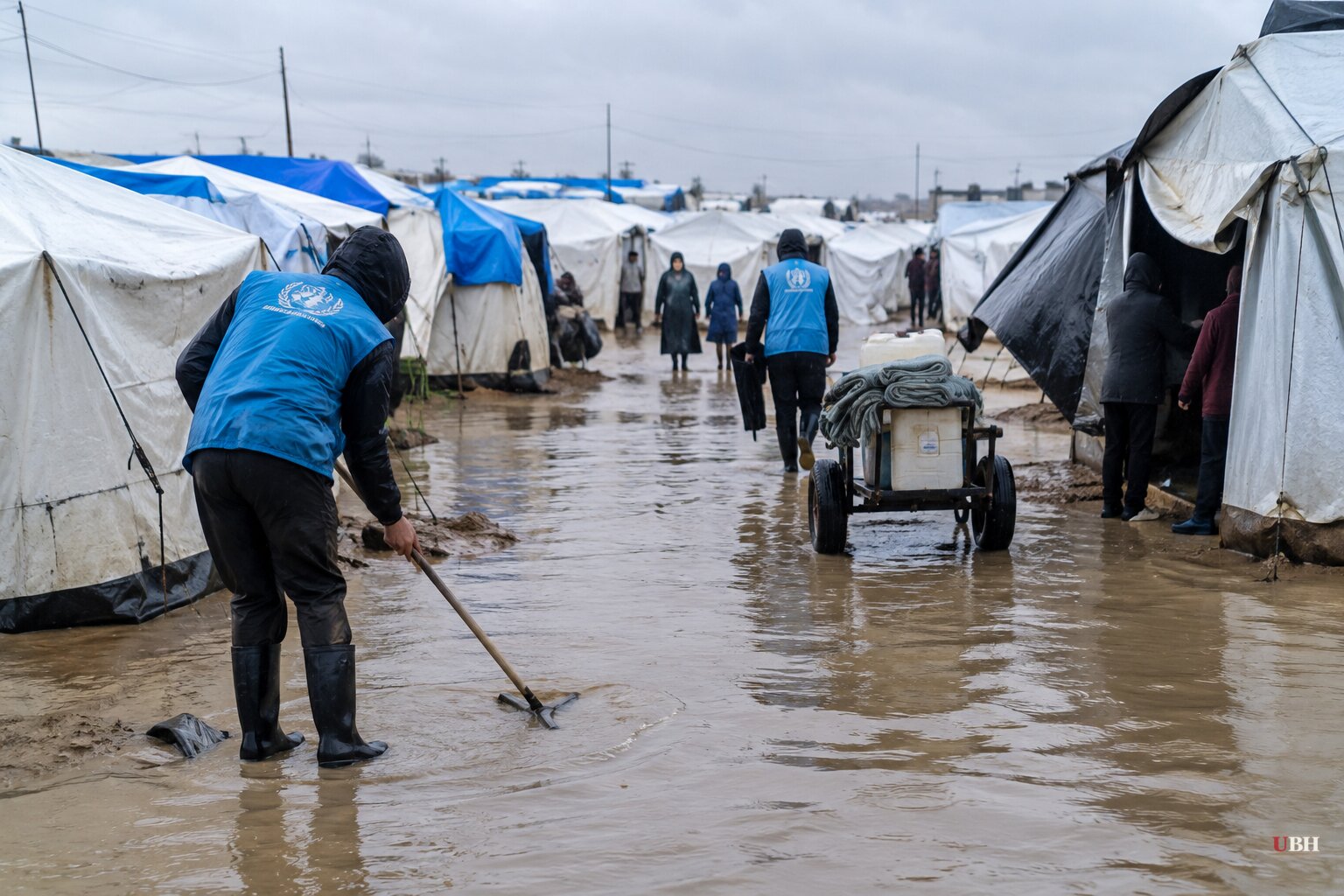
Heavy rain and wind hit the Gaza Strip beginning Friday evening, and by Saturday, Nov. 7, the Hamas-run government media office said at least 70,000 tents sheltering displaced Palestinians had flooded within 12 hours. The office said the storm damaged tens of thousands of people's shelters, caused injuries, and left no confirmed fatalities. It put preliminary direct losses at about $3 million.
The figures come from the Hamas-run authorities and have not been independently verified. The scene on the ground matches the broad outline. Hundreds of families were seen leaving inundated camps in Gaza City and in central and northern Gaza.
Calls for help outrun the response
Gaza's civil defense service said it received 2,166 distress calls since the storm began and could respond to only 218. Spokesman Mahmoud Basal said the agency is working with almost no equipment. Municipal and civil defense officials blame fuel shortages and damaged machinery, and say hundreds of vehicles, including bulldozers and water-pumping trucks, were destroyed during the war.
"We cannot face the consequences of this storm on our own," Basal said, issuing an appeal to the international community and aid groups.
Five Palestinians, including two women, were injured in northern and central Gaza when two walls collapsed and a sheet of corrugated metal fell, according to medical sources. The media office said some injuries were critical.
Civil defense crews also responded to four collapses of buildings already weakened by Israeli strikes. They evacuated residents from a three-story house in the Nuseirat refugee camp, and a roof fell in at Bureij. A four-story building in the courthouse district of Gaza City came down, and another occupied building partially collapsed. Basal said none of those four incidents caused injuries.
Basal warned that more than 2,000 damaged buildings could fall on the people living in them unless crews are allowed to bring in the equipment needed to deal with them.
Families in soaked tents
"This is the first day of rain, and of course we are already flooded," Olfat Magdoub told reporters at a Gaza City encampment. She said that during a storm two weeks ago she slept four days on blankets spread on the floor because the bedding was soaked. "Same now, the mattresses are wet so we sleep on the ground."
Maryam Odeh, 34, in Deir al-Balah, said her children ask where they will sleep tonight and she has no answer. Khaled al-Najjar, 41, said he fears the cold and disease as much as the flooding.
A coalition of Palestinian civil society groups warned of disease outbreaks and called for pressure on Israel to allow aid in without restrictions.
Who is blaming whom
Hamas blamed Israel for not allowing shelters and construction materials into Gaza. Mustafa Qazzaat, a Gaza city council member and an official on the Strip's emergency committee, said Israel has allowed no prefabricated homes since the truce was announced and only limited numbers of tents. He said Gaza urgently needs 200,000 prefabricated homes.
COGAT, the Israeli military agency that coordinates aid, did not immediately respond to those accusations. In a statement Friday, it said it had stepped up efforts to improve sanitary conditions ahead of the expected rain, working with international organizations. It said four more vacuum trucks entered Gaza this week through the International Committee of the Red Cross, joining eight brought in over the past month for sewage pumping, weekly waste removal, and repairs to water and sewage systems.
Twelve trucks over a month, for a territory where most of more than 2 million people live in tents, is the scale of the response COGAT itself describes.
A ceasefire without a rebuilding plan
The U.S.-brokered ceasefire took effect Oct. 10, 2025, after two years of war that began with Hamas's Oct. 7, 2023 attack on Israel. The agreement called for eventual reconstruction, but little has happened. Negotiators have not agreed on terms for Hamas to disarm or for Israel to withdraw its troops, who control about two-thirds of the territory. Residents have been ordered to leave the areas under Israeli control.
The Israeli army continues airstrikes and ground operations in Gaza on a near-daily basis, despite the truce.
That leaves the displaced packed into the remaining third of the Strip. According to figures the media office released in August, more than 2.15 million displaced people were living in poor conditions, including about 867,000 in worn-out tents and more than 1 million in shelters.
Rafiq Ghattas, a displaced resident, stood barefoot in the water and said: "We have no resources, no tarpaulins, no tents and no one is checking on us."
It is unclear whether another storm arrives before pumps, fuel, and shelter materials do. Magdoub's account of a similar soaking two weeks ago suggests it will. Winter, the fourth since the war began, has barely started.
Sources used for this briefing
7 links from 7 independent newsrooms (syndicated copies of the same report count once)
These are the sources it draws on, linked so you can verify.


