
Unbiased headlines. Facts, not spin.
Every story is an unbiased news briefing written from 110+ sources across the spectrum — sources linked so you can verify it yourself.
 politics
Major Story (8/10)
July 12, 2026 at 04:17 AM
politics
Major Story (8/10)
July 12, 2026 at 04:17 AM
Rubio Oversees Venezuela's Finances, Sanctions and Government Appointments, NYT Reports
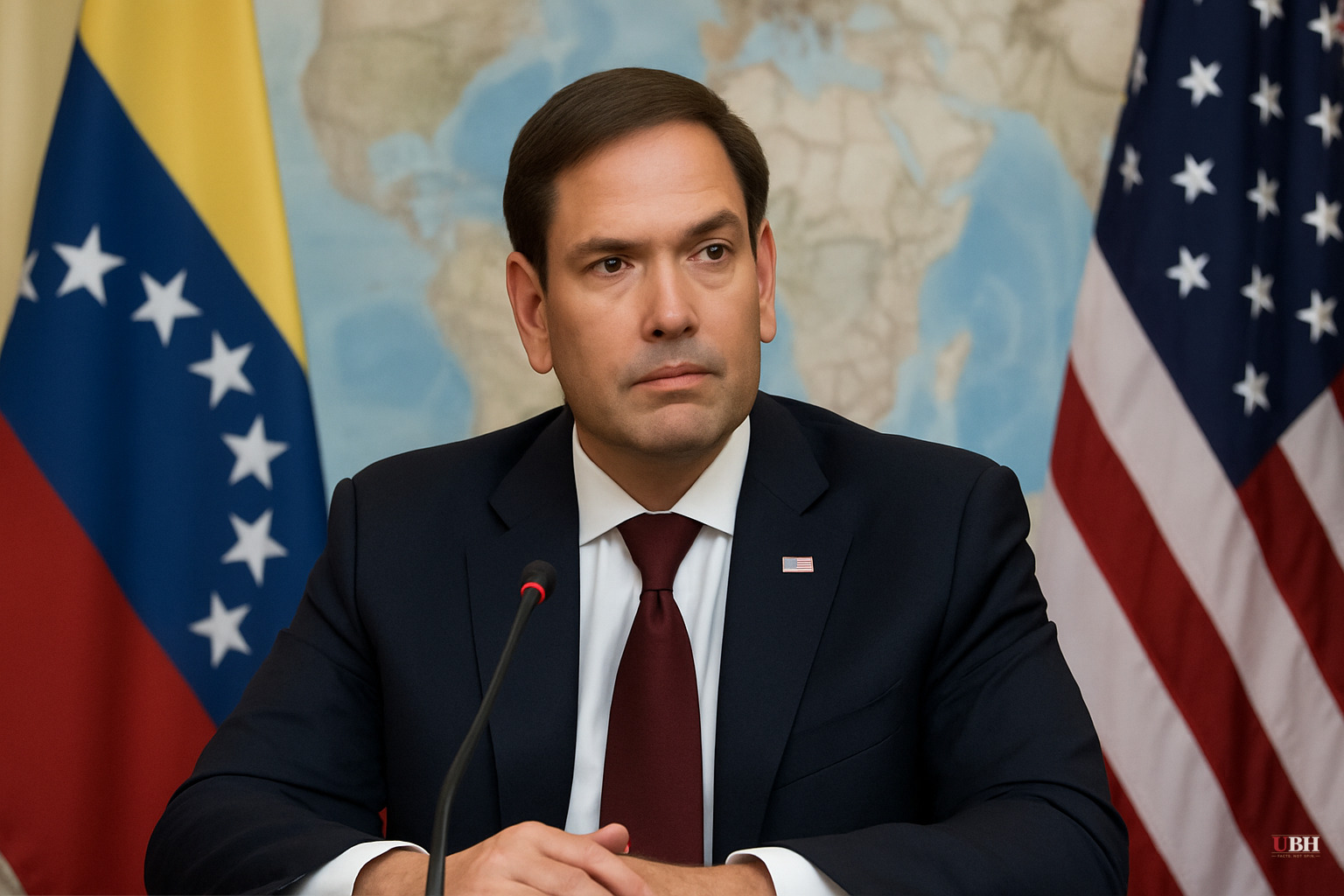
Secretary of State Marco Rubio has become the central decision-maker on Venezuela's public finances, sanctions policy and energy sector since President Nicolás Maduro was captured by US forces and brought to the United States on narco-terrorism charges earlier this year, according to a New York Times investigation published Saturday, July 11.
The Times based its reporting on interviews with more than a dozen current and former US and Venezuelan officials. It found that the US Treasury Department now collects revenue from most Venezuelan exports, including oil, and disburses funds back to Caracas through private banks under conditions Rubio's team sets on how the money can be spent.
Rubio stays in frequent contact with acting Venezuelan leader Delcy Rodríguez, who took over after Maduro's removal. According to News.by, which cited Russian state outlet RIA Novosti's summary of the Times piece, the two communicate in Spanish over WhatsApp, and Rubio has been informed of Rodríguez appointments, including her pick for secretary of defense, before they were made public. Rubio's office also reportedly knew about a planned Rodríguez trip to India in May before Venezuela's government announced it.
The Times reported Rubio's team drafts sanctions exemptions determining which foreign companies can operate in Venezuela and has reshaped access to the country's oil sector for American firms.
The Earthquake Factor
Venezuela is also digging out from twin earthquakes that struck June 24. The death toll has climbed to 4,333 with 16,740 injured, according to Anadolu Ajansı, and thousands remain displaced. The US has committed close to $400 million in aid and deployed 900 military personnel to assist with the disaster response.
That crisis complicates any argument that Washington should simply step back. A government trying to rebuild after a disaster that killed thousands needs functioning banks, a stable currency and outside money moving quickly. Rubio has acknowledged the earthquakes set back plans for a political transition, and State Department spokesperson Tommy Pigott framed the arrangement as good-faith support, saying that "with renewed cooperation and sound economic stewardship, Venezuela can re-emerge as a stable, prosperous partner whose citizens benefit from its vast natural wealth and strengthened ties with the United States."
A collapsed state with no functioning treasury and a devastated population is not in a position to run clean elections tomorrow. Critics who want an immediate handoff to Venezuelan self-governance have to explain who runs the banking system and pays government workers in the meantime.
The Criticism
The scale of Rubio's day-to-day control, as described by the Times, has drawn sharp pushback. Elizabeth Saunders, a political science professor at Columbia University, called the arrangement "insane" and "derelict, unconscionable, and impeachable," arguing a sitting secretary of state's time "is scarce, valuable, and not outsourcable" to running another country's government.
Orlando J. Pérez, a political science professor at the University of North Texas at Dallas, said the report undercuts Rubio's stated commitment to restoring democracy, describing him as having shifted "from democracy promotion warrior to transactional realpolitik operative."
Kenneth Roth, former executive director of Human Rights Watch, went further, comparing the setup to 19th-century European imperialism: "Trump has turned Venezuela into an effective US colony, with Marco Rubio as the viceroy and Washington controlling the country's oil revenue and dictating major foreign and domestic policies. Democracy has been relegated to the distant future."
Historian Bradley Simpson of the University of Connecticut voiced similar concerns, according to Common Dreams.
What's Missing From the Record
No timetable for free elections in Venezuela has been announced, according to both the Times and Anadolu Ajansı. That's the crux of the criticism: an emergency arrangement built around disaster response and a captured dictator has no stated end date.
News.by's account leaned on RIA Novosti, a Russian state media outlet, to summarize the Times findings. Russia has backed Maduro for years and has its own interest in framing US involvement in Venezuela as colonial overreach. That doesn't make the underlying Times reporting on Rubio's role false, but it's a reminder the loudest "imperialism" framing here isn't coming only from Washington's domestic critics.
The open question is whether Congress presses Rubio on the arrangement's legal basis and whether the State Department will commit to an actual election timeline now that immediate earthquake relief is underway, rather than leaving Venezuela's political future indefinitely tied to Treasury-set conditions on its own oil money.
Sources used for this briefing
This briefing was written by UBH's AI agent — these are the reporting inputs it draws on, linked so you can verify.


