
Unbiased headlines. Facts, not spin.
Every story is an unbiased news briefing written from 110+ sources across the spectrum — sources linked so you can verify it yourself.
 politics
Low Interest (4/10)
July 27, 2026 at 08:30 AM
politics
Low Interest (4/10)
July 27, 2026 at 08:30 AM
Rotterdam Makes It a Crime to Be Outside in Part of De Esch at Night, No Excuse Required
A city runs out of options
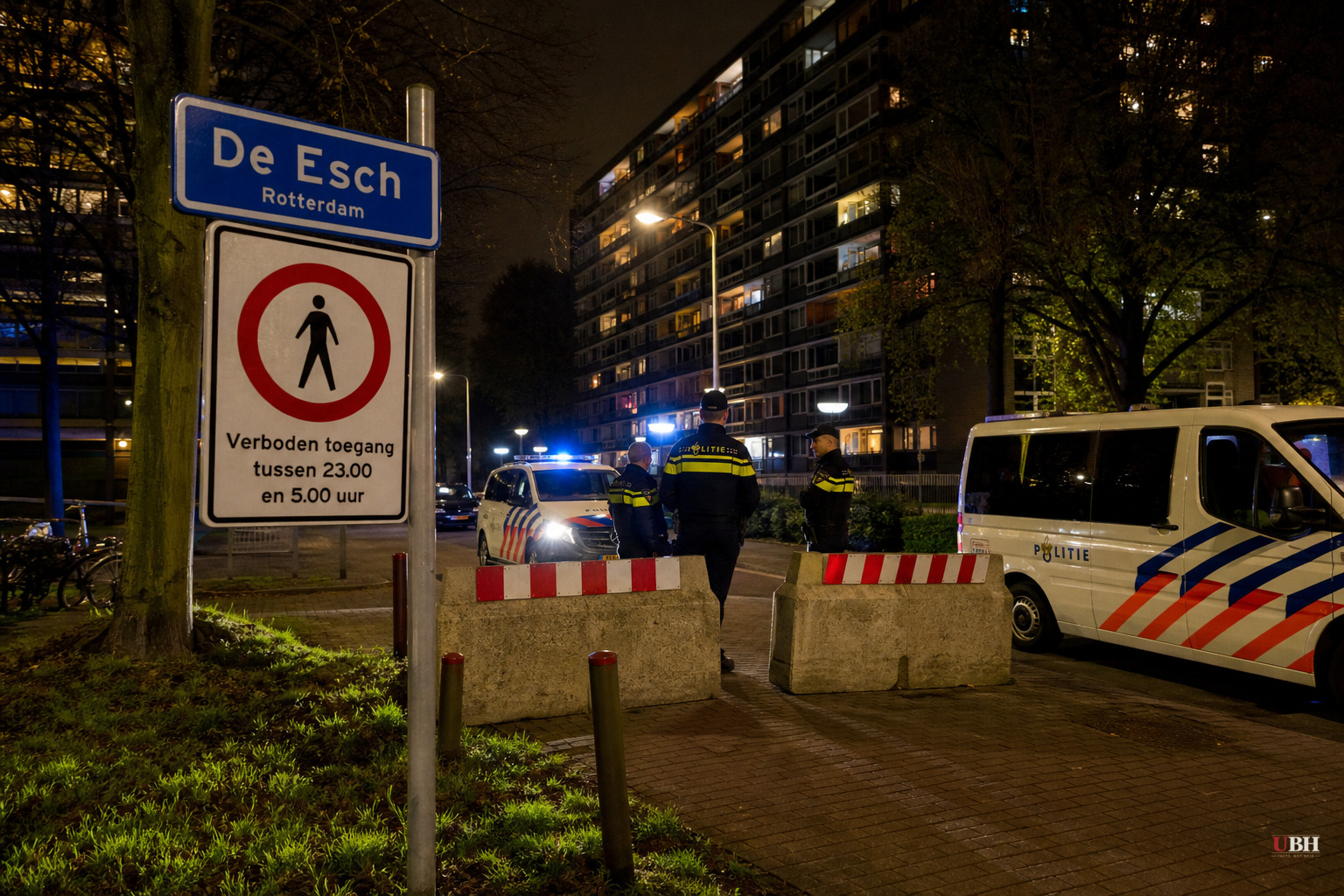
Rotterdam Mayor Carola Schouten activated a nighttime exclusion order across large parts of the De Esch neighborhood, plus stretches along the Kralingen quaysides, starting Thursday, July 23, 2026. Anyone in the zone between 11 p.m. and 5 a.m. who can't explain their presence is now committing a criminal offense and risks a fine, according to DutchNews.nl and Dutch Brief.
This didn't come out of nowhere. Residents told Dutch broadcaster NOS the disruption started shortly after the Covid pandemic and has run for almost three years: street racing, laughing gas and drug use, prostitution, honking, screaming, and litter left behind night after night. One resident said she stopped walking her dog alone after her parents were nearly hit by cars racing each other on the sidewalk.
The city didn't jump straight to a ban. It tried concrete barriers, stepped-up police patrols, and direct talks with the people causing trouble, according to NL Times and dutchnews.nl. None of it worked. Christiaan de Jong, who chairs the local neighborhood council that backed the new measure, said dozens and sometimes hundreds of people pour into the area on weekends, mostly from outside De Esch.
Why police say they needed this
The Dutch police explained the logic to NOS: residents call in disruption, but by the time officers show up, it's over. Officers generally need to witness disorder themselves to act on it. A blanket presence ban changes that. If you're in the zone at night with no good reason, that alone is enough for a fine.
Rotterdam mayors already had power to bar named troublemakers from specific areas. This is different. It doesn't target individuals with a history of causing problems. It applies to anyone, regardless of record, unless they fall into an exempted category.
Who's exempt, who isn't
Residents of the area are exempt. So are their visitors, people who work there, anyone attending a scheduled event, and patrons of local bars and restaurants, according to all four accounts of Schouten's letter to the city council. In practice, a resident's dinner guest is fine. A dog-walker from the next neighborhood over, cutting through De Esch after 11 p.m. for no other reason, is breaking the law.
That's exactly the detail Michel Vols, professor of public order law at Groningen University, flagged to NOS. He said he knows of no other Dutch municipality that has done this, calling it an unprecedented step and, in his words, a severe restriction on freedom of movement. He specifically noted that someone simply walking a dog through the area in the evening would be committing an offense.
First night: quiet, and fines
The measure has already produced numbers. Police issued more than 20 fines on the first night of enforcement, according to ANP as reported by NL Times. Residents describe an immediate, tangible change. One woman told regional broadcaster Rijnmond, "I slept wonderfully." She said she used to hear screaming and honking cars almost nightly, even with earplugs in, and that the street is now, in her words, completely clean.
Another resident described the toll the disruption took before the ban: she said she and her neighbors were "at our wits' end," and that women and children stopped going out at night. One man told NOS the noise sometimes ran until 5 a.m., and that he'd become depressed over it. A woman who once confronted the group responsible for the noise said six eggs were thrown at her window afterward.
The fair concern here
A ban that criminalizes mere presence, without any individualized suspicion or prior warning, is a real expansion of state power over ordinary movement. Vols's point deserves to be taken seriously: this isn't targeting known offenders, it's making an entire category of innocent behavior, like walking through a neighborhood at night, into a punishable act for anyone who can't produce a satisfactory explanation on demand. That's a genuinely unusual legal tool in a country that, like most of Europe, generally restricts area bans to named individuals with documented histories.
No civil liberties group's formal legal challenge is mentioned in the available reporting, and no court ruling on the order's legality has been issued as of this writing. Whether the measure survives a legal challenge, or gets copied by other Dutch cities dealing with similar weekend disruption, remains open.
The order runs for three months before Rotterdam evaluates whether it worked, stays, or gets scrapped, according to dutchnews.nl and NL Times. That review will be the real test: whether 20-plus fines a night settles down once word gets out, or whether outside crowds simply route around the zone and the problem resurfaces somewhere else in the city.
Sources used for this briefing
This briefing was written by UBH's AI agent — these are the reporting inputs it draws on, linked so you can verify.


