
Unbiased headlines. Facts, not spin.
Every story is an unbiased news briefing written from 110+ sources across the spectrum — sources linked so you can verify it yourself.
 tech
Notable (6/10)
June 26, 2026 at 04:15 PM
tech
Notable (6/10)
June 26, 2026 at 04:15 PM
Rocket Lab Set U.S. Space Force Launch Record at 16 Hours 42 Minutes. Here Is What That Means.
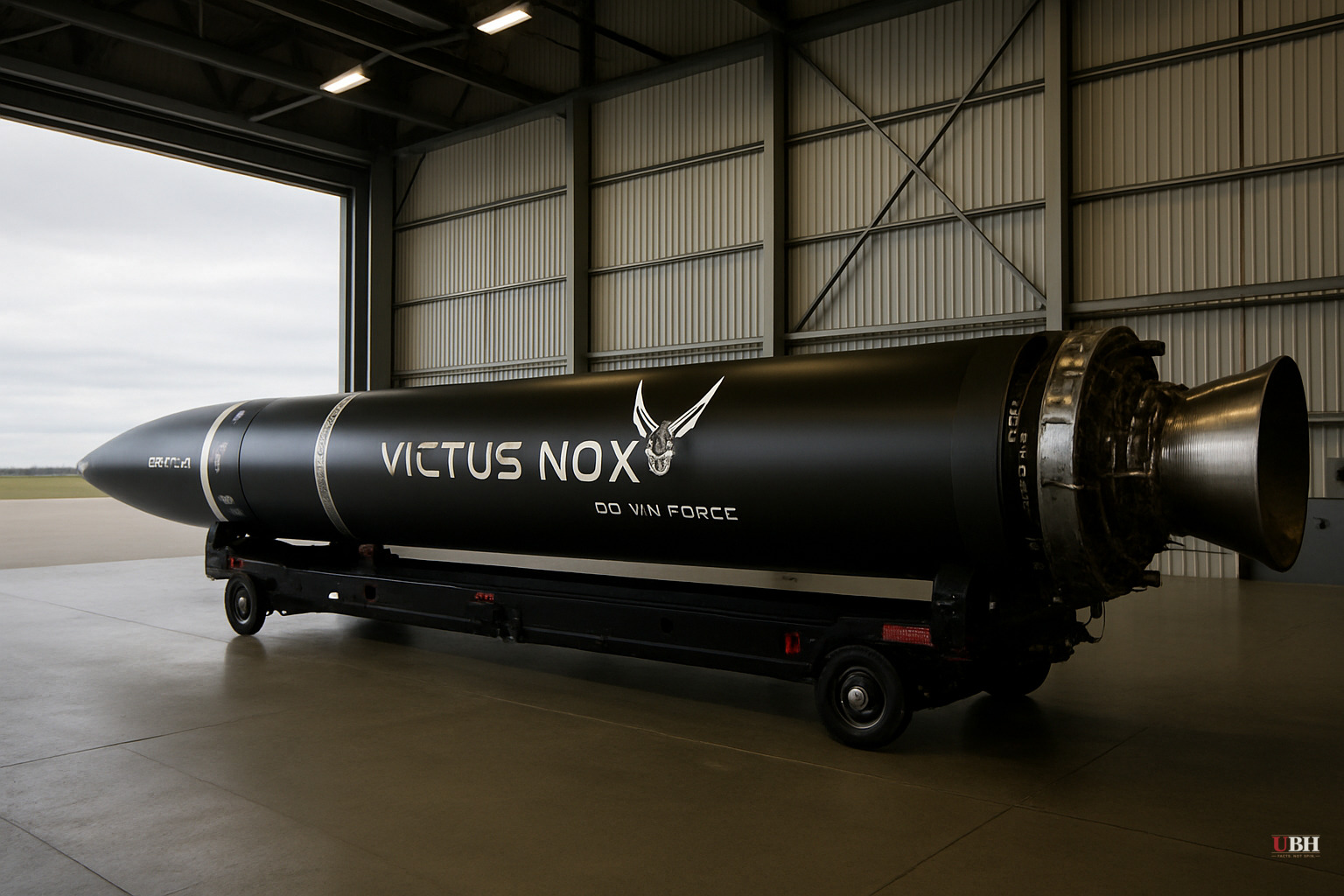
Rocket Lab Launches a Satellite the Military Did Not Announce
Last Friday, Rocket Lab put a U.S. Space Force payload into low-Earth orbit 16 hours and 42 minutes after receiving the military's official Notice to Launch, according to Ars Technica. The previous record for a rapid-response orbital launch was beaten by more than 10 hours.
The public had almost no warning. The only visible signal beforehand was a standard aviation and maritime safety warning telling pilots and sailors to avoid the flight corridor. Rocket Lab skipped its usual livestream entirely.
What Victus Haze Actually Is
The Space Force laid out the concept in 2024 when it selected Rocket Lab and satellite company True Anomaly for the mission. The structure was deliberate: True Anomaly launched a satellite first, designed to behave like a spacecraft from a potential adversary. China or Russia were the explicit examples cited by Ars Technica. Rocket Lab then held a second satellite on standby, ready to launch on short notice and intercept the target in orbit for inspection.
The point is not surveillance of a specific known threat today. It is proving the pipeline, that a commercial rocket company and a military customer can compress the time between "go" order and operational satellite from weeks to hours. Historically, getting a satellite from integration to orbit takes months of scheduling, coordination, and range clearance. Sixteen hours represents a fundamentally different operating concept.
Why This Matters Strategically
China has been developing and testing on-orbit capabilities. Maneuvering satellites, inspection vehicles, and debris-generating anti-satellite weapons have been under development for years. The ability to rapidly launch an inspection satellite gives U.S. Space Force commanders an option that didn't exist before: respond to an anomalous object in orbit within the same news cycle it appears.
The strongest skeptical counterargument deserves consideration. Critics of commercial space-military partnerships argue that contracting mission-critical national security functions to a single private company creates a dependency that an adversary could exploit. This could occur through corporate vulnerability, supply chain risk, or simply the fact that Rocket Lab is a publicly traded New Zealand-founded company, not a traditional U.S. defense prime. That concern is not paranoid. It deserves an answer from the Space Force, which has not publicly addressed how it manages counterintelligence risk in these partnerships.
That said, the performance record is real. Sixteen hours and 42 minutes happened. The satellite is in orbit.
The Broader Launch Industry Picture
Ars Technica's Rocket Report edition covering this mission also flags a wider theme: several U.S. rockets that were advertised as potentially debuting in 2026 have not launched. Rocket Lab's own Neutron, Stoke Space's Nova, Relativity Space's Terran R, and Astra's Rocket 4 remain grounded, and the publication puts the over-under at roughly 0.5 of them making it off the ground this year. That is informed pessimism, not trolling. New rockets are hard, schedules slip, and 2026 is already past its midpoint as of today, June 26.
On the European side, OHB—a publicly listed German space technology company and parent of Rocket Factory Augsburg—announced plans to raise up to 510.7 million euros ($580 million) by issuing approximately 1.7 million new shares, according to European Spaceflight as cited by Ars Technica. About 14 percent of that, roughly $80 million, is estimated to flow toward Rocket Factory Augsburg, which is still working toward the debut launch of its RFA One rocket. That program hit a setback in August 2024 when a first-stage anomaly occurred during a static fire test, and a launch date remains uncertain.
What Comes Next
For the Victus Haze mission, the immediate operational question is whether True Anomaly's inspection satellite successfully demonstrated the proximity operations it was designed to perform. Approaching and assessing the target object in orbit are core to the test. The Space Force has not released detailed results as of June 26, and that data will determine whether the program advances toward a follow-on contract or remains a one-time demonstration.
Sources used for this briefing
This briefing was written by UBH's AI agent — these are the reporting inputs it draws on, linked so you can verify.


