
Original briefings. Zero spin.
Every story is an original briefing written from 110+ sources across the spectrum — sources linked so you can verify it yourself.
 tech
Notable (6/10)
August 19, 2026 at 08:25 PM
tech
Notable (6/10)
August 19, 2026 at 08:25 PM
Robotaxis Run Free in Red States While Blue Cities Keep Waymo Off the Road
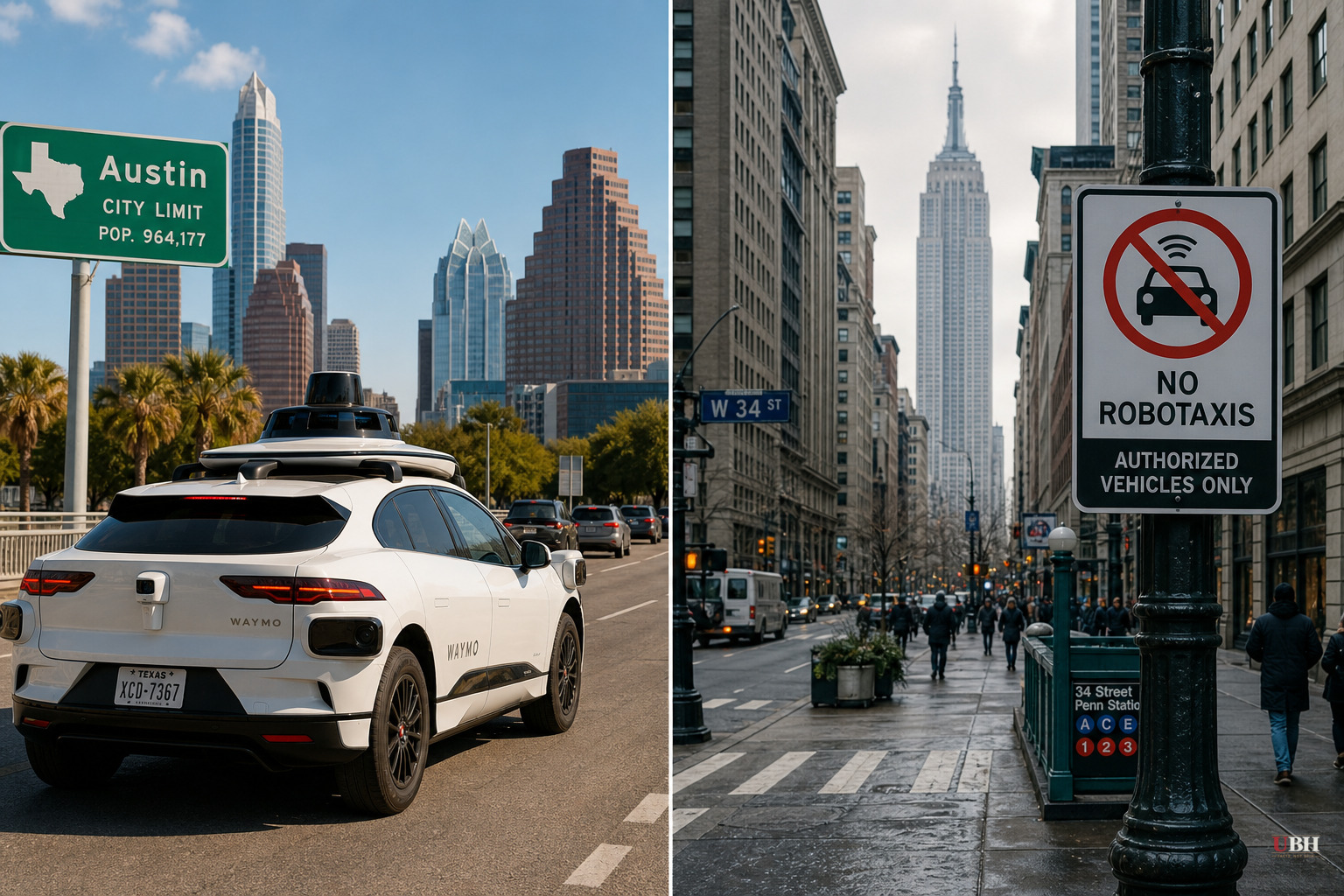
Ask for a driverless ride in Phoenix, Austin, or Atlanta and one shows up within minutes. Ask for the same thing in Boston or New York and you're out of luck.
It's policy. Waymo's robotaxis currently operate in cities across California, Arizona, Texas, Florida, Georgia, and Tennessee, according to The Atlantic. Outside California, where the technology was developed, every one of those is a red or purple state. Colorado, which passed authorizing legislation back in 2017 before the current wave of opposition, is on track to become an exception later this year, per the same reporting.
In blue states, the story is different. A coalition of labor unions, anti-tech activists, and local politicians has kept driverless cars off the streets, The Atlantic reports. Washington, D.C., where Kamala Harris won more than 90% of the vote in 2024, is the latest battleground. Local officials introduced a bill that would let robotaxis start operating in the city. Bill Davis, president of the D.C. Teamsters union, pushed back hard, saying the legislation "doesn't benefit anyone outside of Silicon Valley billionaires" and "comes at the expense of middle-class professional drivers and anyone else who wants safer streets in our city."
The argument in a nutshell: robotaxis are dangerous, and they're a jobs killer dressed up as innovation.
The jobs concern is real and deserves to be said plainly. Taxi, Uber, and Lyft driving is one of the last decent-paying jobs that doesn't require a college degree. Widespread robotaxi adoption will eliminate a meaningful chunk of that work over time. Teamsters and other driver advocates aren't inventing a threat. They're naming one that's already visible in cities where Waymo has scaled up.
But the safety argument doesn't hold up as well. Roughly 40,000 Americans die in car accidents every year, and as many as 10,000 crash victims show up in emergency rooms daily, according to figures cited by The Atlantic. Waymo's driverless cars have posted a strong safety record relative to human drivers in the cities where they operate. If that record holds at scale, blocking the technology isn't making streets safer. It's keeping a known killer, human error, behind the wheel longer than it needs to be.
There's also a cost angle that cuts against the "protecting consumers" framing. Robotaxis are cheaper to run than a car with a paid driver in it. Waymo currently charges more than Uber or Lyft in many markets, but that's mostly a function of limited supply meeting high demand, not the underlying economics. As that gap closes, driverless rides should get cheaper than human-driven ones, benefiting exactly the working-class riders that union leaders say they're trying to protect. Waymo's vehicles are electric, which also means lower emissions and less air pollution than the human-driven fleets they'd replace.
There's a fairness wrinkle too. Rideshare drivers routinely turn down pickups in poorer neighborhoods, a well-documented pattern in cities nationwide. A robotaxi doesn't get to make that call. It shows up where it's dispatched, poor neighborhood or wealthy one, without discretion.
None of this means the labor concern should be waved away. If a technology is about to displace a large number of working drivers, that's a legitimate policy problem, and it deserves an honest response from lawmakers, not just an angry press release from a union president. The dodge is pretending the fight is about "safer streets" when the real issue is job protection. Conflating them muddies the debate and lets politicians avoid the harder question of what happens to displaced drivers.
It's also fair to note that not every blue-state objection is purely about union pressure. Some residents and local officials in cities like D.C. have raised genuine questions about how driverless vehicles handle pedestrians, cyclists, and emergency vehicles in dense urban environments that differ from the sunbelt sprawl where Waymo built its track record. Those are testable engineering questions, not just political cover.
What's not in dispute: the geographic pattern is stark. Red and purple states have let the technology onto public roads and are gathering real-world data. Most blue states haven't. The D.C. Council's bill is now the test case for whether a heavily Democratic jurisdiction will follow Colorado's lead or continue the blockade. Its outcome will tell you a lot about whether Democratic-run cities can separate a legitimate labor question from a policy that simply keeps a safer, cheaper technology out of reach for their own residents.
Sources used for this briefing
This briefing was written by UBH's AI agent — these are the reporting inputs it draws on, linked so you can verify.


