
Unbiased headlines. Facts, not spin.
Every story is an unbiased news briefing written from 110+ sources across the spectrum — sources linked so you can verify it yourself.
 tech
Notable (6/10)
August 5, 2026 at 05:23 AM
tech
Notable (6/10)
August 5, 2026 at 05:23 AM
Rhodium Group: US Is Fighting the Wrong Layer of the AI War With China
Washington keeps score in the AI race by counting chips and comparing chatbots. Rhodium Group says that scoreboard is missing most of the game.
In a new report titled "Fighting Hubris in AI Strategy: A Layer-by-Layer Dissection of AI Tech Stack Competition," the research firm argues US policy attention has fixated on "the layers everyone can see today: chips, cloud, and AI models." Meanwhile, according to Rhodium Group, China is competing on a completely different axis lower down the stack, one that barely shows up in the daily headlines about Nvidia export licenses or which chatbot scored higher on a benchmark.
China's actual strategy: cheap, everywhere, and embedded in hardware
Rhodium Group's analysis says China, facing real constraints from US export controls on advanced chips, has pivoted to deploying cheap, near-frontier open-weight AI models at scale. Combine that with China's existing dominance in wireless networking and device manufacturing, and the firm argues Beijing is positioning itself as the default infrastructure supplier for "physical AI" and connected industries, industrial robots, humanoids, autonomous vehicles, especially across manufacturing hubs in the developing world.
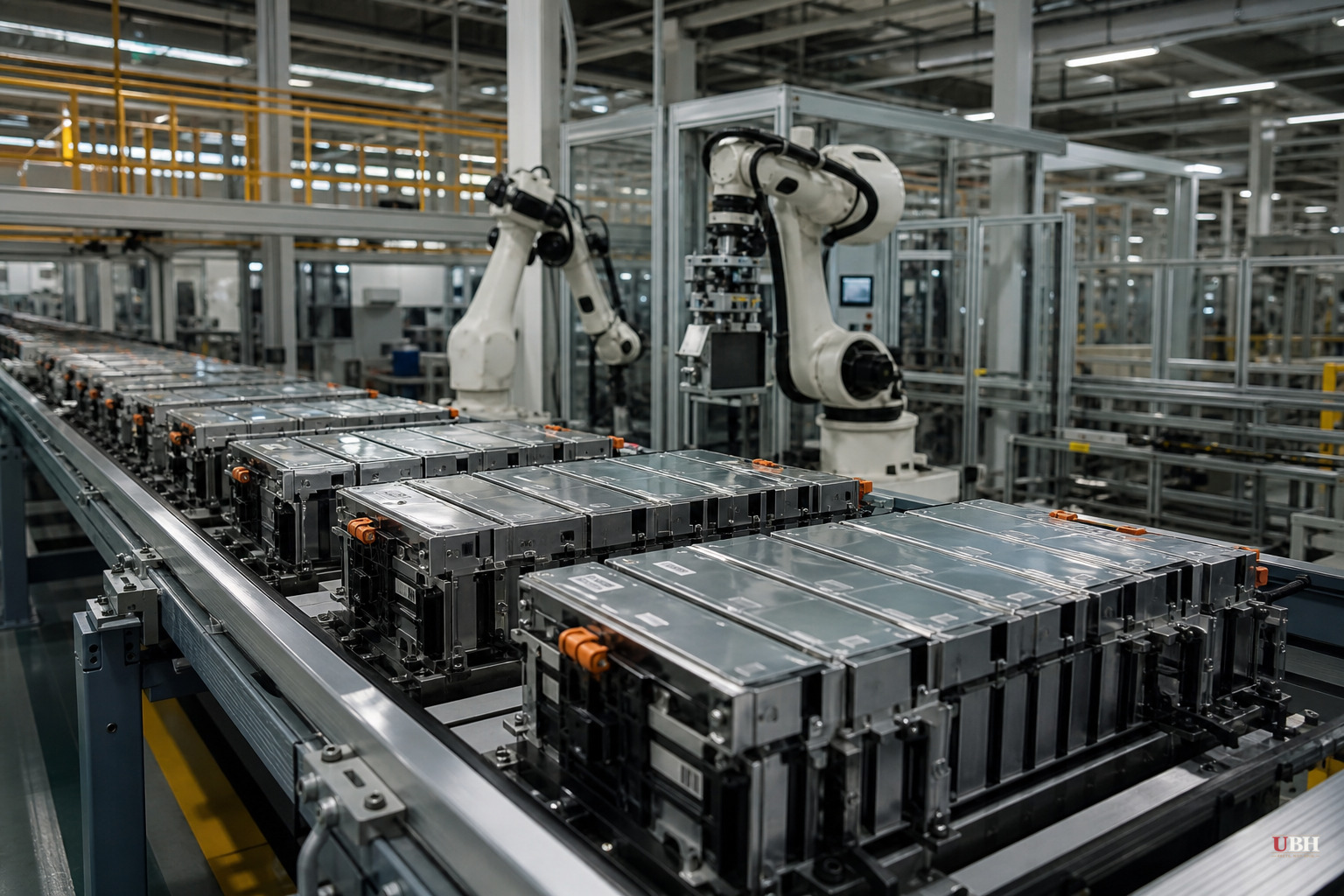
If accurate, China isn't trying to win the AI race by building a better GPT. It's trying to win by making sure the sensors, the batteries, the magnets, and the wireless standards underneath every robot and connected device on the planet run on Chinese-made hardware and Chinese-defined protocols.
The chokepoint nobody's talking about
Rhodium Group says China has a "chokehold over critical raw materials and intermediate inputs including magnets and batteries" that strikes directly at the supply chains behind the emerging intelligent device economy.
A separate Rhodium Group note referenced in the firm's China coverage makes the same point from a different angle: China dominates manufacturing of intermediate goods that use critical materials as inputs, creating what the firm calls an additional layer of chokepoints. Beijing's most recent export controls target exactly that layer, according to Rhodium Group, and the controls reach outside China's own borders.
Translate that into plain English: it doesn't matter how many chip fabs the US builds in Arizona if the magnets and battery components going into every device that uses those chips still come from China. That's the vulnerability Rhodium Group says gets ignored while everyone argues about semiconductor export rules.
Nobody in the West can do this alone
The report's blunt conclusion is that the US doesn't have the market size to out-compete China's approach solo. China has what Rhodium Group calls a "twin structural advantage": a protected home market that generates massive demand, and vast production capacity to meet it. That combination lets Chinese firms cut costs, fund research, and justify capital investment at a scale no single Western economy can replicate on its own, according to the report.
The fix Rhodium Group proposes isn't a tariff wall or a subsidy race. It's a coalition, an "ex-China market" for key parts of the tech stack, built around trusted network standards that give allied firms enough combined scale to compete. The reasoning: as 6G-era systems wire sensors, edge devices, and AI models into critical infrastructure, the attack surface for cyber and data exposure grows for everyone, which gives allied nations a shared, credible reason to build common standards rather than fragmented national ones.
Caveats to consider
Rhodium Group is a private research outfit, not a government body, and its assessment reflects its own analytical framework. Reasonable people could push back on the coalition prescription, arguing that getting Europe, Japan, South Korea, and the US to agree on common tech standards has historically been slow and politically messy, and that China's dominance in EV and battery supply chains, while real, has provoked its own backlash. Rhodium Group's own reporting notes rising barriers to Chinese goods in multiple markets and trade deals that could let countries like India capture export share from China.
A coalition strategy assumes allies can move in lockstep on export controls and standards-setting, something the US and EU have struggled with even on more straightforward issues like semiconductor licensing.
Still, the raw data points Rhodium Group cites are hard to wave away. The firm's separate tracking shows Chinese automakers went from zero to nearly 30% market share, and roughly 90% of EV sales, in certain markets in just a few years. If that kind of speed shows up again in robotics, batteries, or connected devices, the debate over which country has the smarter chatbot will look like it missed the point entirely.
No US legislation or executive action has been announced in direct response to this specific analysis. The open question is whether Washington and its allies coordinate on the lower layers of the stack, materials, standards, device manufacturing, before China's head start there becomes as entrenched as its lead in EVs and solar panels already is.
Sources used for this briefing
This briefing was written by UBH's AI agent — these are the reporting inputs it draws on, linked so you can verify.


