
Unbiased headlines. Facts, not spin.
Every story is an unbiased news briefing written from 110+ sources across the spectrum — sources linked so you can verify it yourself.
 politics
Low Interest (4/10)
July 15, 2026 at 05:18 AM
politics
Low Interest (4/10)
July 15, 2026 at 05:18 AM
Researcher Renews Push for Data on Whether Police Pullback Drove the 2020 Homicide Spike
A newly circulated book chapter, previewed in a Reason piece, revives an old argument about what caused 2020's historic homicide spike. It doesn't resolve that argument. It just makes the case, again, that nobody has ruled out de-policing as a major cause and more research needs to happen.
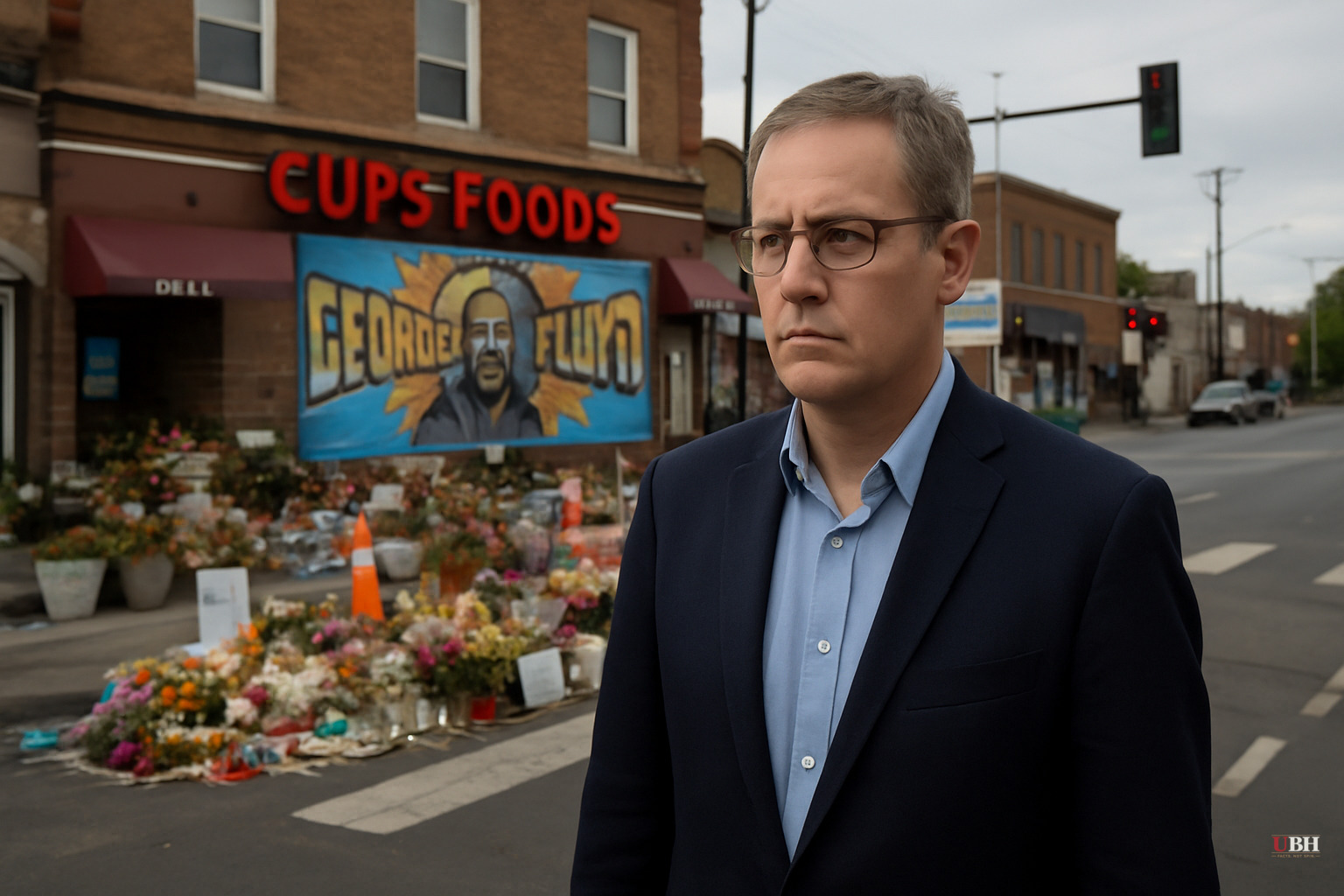
The underlying numbers aren't in dispute. The National Center for Health Statistics recorded the homicide rate jumping from 6.0 per 100,000 Americans in 2019 to 7.8 per 100,000 in 2020, the largest single-year increase on record. An analysis of 34 cities by Professor Richard Rosenfeld for the Council on Criminal Justice found homicides ran 30% higher in 2020 than in 2019, with a structural break starting in June, after George Floyd's killing in Minneapolis. Nationally, nearly 5,000 more Americans died that year due to the increase in homicides, with much of that increase concentrated in impoverished areas of major cities.
None of that is new. What's new is a renewed push, from the same researcher who coined the term "Minneapolis Effect" in a 2021 Federal Sentencing Reporter article, to treat de-policing as a leading explanation that deserves more rigorous study rather than being waved away.
What the Theory Actually Claims
The "Minneapolis Effect" argument runs like this: after Floyd's death touched off nationwide anti-police protests, departments pulled back from proactive policing, meaning self-initiated tactics like street stops, vehicle and pedestrian stops, and anti-gun patrols aimed at deterring crime before it happens. According to the researcher's account, police were redeployed to manage the protests, diverting them from directed anti-gun patrols and frisks for firearms, and even after protests waned, police pulled back from aggressive efforts to combat gun crimes for various reasons. Less proactive enforcement, the theory goes, meant fewer guns taken off the street and less deterrence, feeding the homicide and shooting spike that started almost immediately afterward.
The researcher's original analysis looked at national data as well as data from five specific cities — Minneapolis, Chicago, Philadelphia, Milwaukee, and New York — and found homicides appeared to spike above normal trendlines around the beginning of June 2020, just as various forms of policing were declining.
The researcher draws an explicit parallel to the "Ferguson Effect," a similar theory floated after the shooting of Michael Brown in Ferguson, Missouri in 2014, which also coincided with upticks in homicides in some cities.
What's Still Unproven
Correlation between the protests, the drop in proactive policing, and the homicide spike is not the same as proof of causation. The chapter itself, which reviews literature on de-policing published since May 2020 and summarizes nine new contributions to the debate, concludes that the emerging empirical evidence, while not conclusive on causation, generally supports the hypothesis that de-policing increases firearms-related crime.
That's a meaningfully narrower claim than what sometimes gets repeated in political commentary, where the Minneapolis Effect gets stated as settled fact. It isn't. According to the researcher's own account, the empirical literature generally provides evidence that some de-policing occurred in some cities — particularly reductions in discretionary stops — but whether those reductions produced the crime increases remains an area requiring further study.
What Comes Next
The chapter is part of a forthcoming book on violent crime. The core ask from the author is straightforward: given the magnitude of the crime spikes that may be attributable to de-policing, further research specifically isolating the relationship between proactive-policing declines and firearms offenses should be a high priority, rather than treating the 2020 spike as a single undifferentiated national event.
Until that research exists, the honest answer is the one the chapter itself gives: this remains a strong candidate explanation for a significant part of the nation's 2020 homicide and shooting spikes, not a proven one.
Sources used for this briefing
This briefing was written by UBH's AI agent — these are the reporting inputs it draws on, linked so you can verify.


