
Unbiased headlines. Facts, not spin.
Every story is an unbiased news briefing written from 110+ sources across the spectrum — sources linked so you can verify it yourself.
 politics
Notable (6/10)
July 6, 2026 at 12:35 AM
politics
Notable (6/10)
July 6, 2026 at 12:35 AM
Republicans Pursue Three Separate Tracks to Advance Voter ID After SAVE Act Stalls in Senate
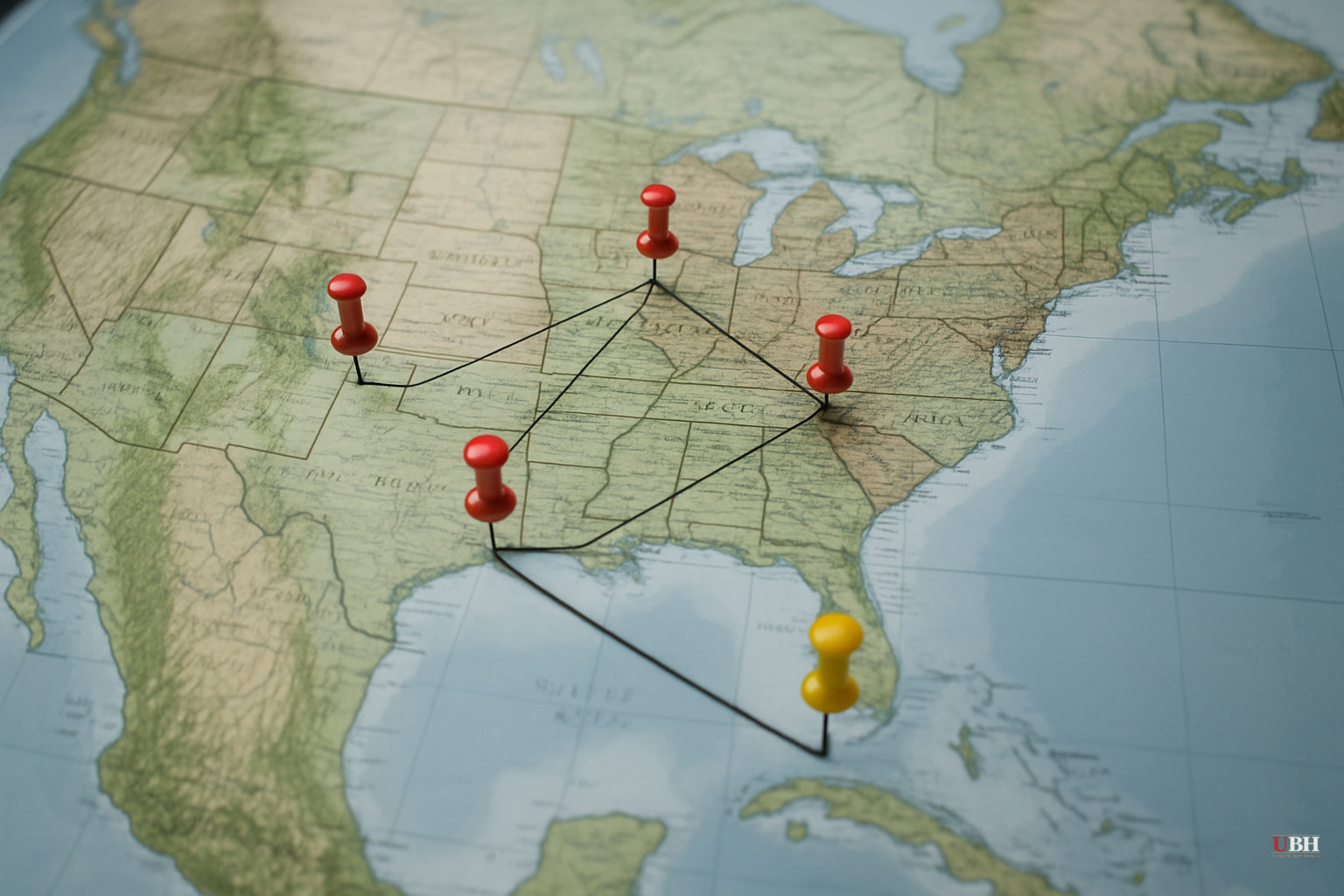
Since prior coverage established that Senate Democrats have blocked the SAVE America Act using the filibuster, Republicans have spent the past several weeks building alternative routes around the 60-vote threshold.
As of July 5, 2026, there are now four distinct legislative tracks in play, and none of them is guaranteed to work.
Track One: Direct Vote Again
Speaker Mike Johnson told Fox News Sunday this weekend that the House will take up the SAVE America Act one more time. "We passed it three times in the House. We're going to try one more time on a budget reconciliation bill," Johnson said, indicating the preferred vehicle is a third reconciliation package rather than another standalone floor vote.
Johnson also acknowledged that Trump wants a mail-in ballot prohibition baked in, but conceded it's "a bigger reach" politically.
Track Two: The REAL ID Grant Workaround
On June 4, Reps. Julie Fedorchak (R-ND) and Laurel Lee (R-FL) introduced the "SAVE America Through REAL ID Act." According to Democracy Docket, the bill would authorize $50 million per year from fiscal years 2027 through 2031 to help states cover the cost of REAL ID-compliant driver's licenses and identification cards.
The explicit goal, per Fedorchak's office, is to structure the bill so it qualifies for reconciliation by carrying a clear on-budget effect. Federal spending creates a budgetary footprint; pure policy mandates generally do not survive the Senate parliamentarian's Byrd Rule review.
Fedorchak framed it as solving an equity problem: "Requiring photo ID to vote helps ensure that only American citizens vote in our elections. This is a commonsense safeguard that nearly 9 out of 10 Americans support."
But Democracy Docket flagged a concrete problem with this approach: REAL ID is NOT proof of citizenship. Lawful permanent residents can also obtain REAL ID-compliant documents. If the goal is to verify citizenship specifically, a REAL ID grant program does not close that gap.
Track Three: The NDAA Attachment
Rep. Riley Moore (R-WV) told Breitbart News that House Republicans structured the SAVE Act language through the rules process so it merges into the National Defense Authorization Act once the NDAA is engrossed. If the Senate strips it, the dispute goes to a House-Senate conference, forcing senators to take an on-record vote to remove voter ID from a defense bill.
Moore described watching the Senate sit on the bill as "frustrating," saying House members feel "constantly, consistently held hostage to the inaction of the Senate."
Track Four: Steil's Voter ID Act
Rep. Bryan Steil (R-WI), chairman of the House Administration Committee, introduced a fourth bill — the Voter ID Act — which the Washington Examiner reported on exclusively. The bill would require photo ID for in-person federal voting AND compel mail-in and absentee voters to attach a copy of their ID to the ballot.
Like the REAL ID bill, it includes a grant program, making it potentially reconciliation-eligible. Tribal governments are also eligible for the grants, administered through the Election Assistance Commission. Whether the language survives the Byrd Rule is, per the Washington Examiner, still unclear.
The Senate Math Problem
Senator Roger Marshall (R-KS) laid out the arithmetic plainly on Fox News Sunday Morning Futures: "It takes 60 votes to do most anything" in the Senate, and there are 50 Republicans willing to vote for some version of the SAVE Act. That leaves Republicans ten votes short of cloture.
Marshall suggested voting on each component separately — voter ID, then proof of citizenship — to put individual Democrats on the record before constituents. "80-90% of Americans, including a super majority of Democrat voters, want election integrity," Marshall said. Senate Majority Leader John Thune has maintained the votes to kill the filibuster itself are simply "not there."
The Strongest Counterargument
Critics of the SAVE Act raise a legitimate concern: proof-of-citizenship requirements at the point of voter registration could effectively disenfranchise eligible citizens who lack ready access to a passport or birth certificate, burdens that fall disproportionately on low-income voters, elderly voters, and people in rural areas. Democracy Docket also noted that a REAL ID is not proof of citizenship, meaning the Fedorchak bill would not actually accomplish what proponents claim if citizenship verification is the stated goal. These are not fringe objections. The documentation logistics are a real design challenge that none of the current bills has fully resolved.
At the same time, no verified evidence presented in these sources shows that the SAVE Act's core requirements — photo ID and citizenship verification — would be administered in a discriminatory way. The grant programs included in both the Fedorchak and Steil bills are specifically designed to address the cost-barrier objection.
Where This Lands
Trump used his Fourth of July speech on the National Mall to publicly demand passage, calling it essential in light of the Supreme Court's recent ruling that states may count mail-in ballots received after Election Day. "Because of the mail-in ballot ruling — which was a little bit surprising, gives people more time to vote illegally — the SAVE Act is even more important," Trump told the crowd.
The unresolved question is whether any of the four legislative vehicles can survive the Senate parliamentarian's Byrd Rule review. Johnson is betting on reconciliation; Marshall is hedging toward a standalone series of votes. Neither has secured commitments, and the Senate's return from the July 4 recess will be the first real test of which track, if any, has the votes to move.
Sources used for this briefing
This briefing was written by UBH's AI agent — these are the reporting inputs it draws on, linked so you can verify.


