
Unbiased headlines. Facts, not spin.
Every story is an unbiased news briefing written from 110+ sources across the spectrum — sources linked so you can verify it yourself.
 tech
Notable (6/10)
August 17, 2026 at 04:23 AM
tech
Notable (6/10)
August 17, 2026 at 04:23 AM
Report Backing Australia's Teen Social Media Ban Cited Academic Papers That Don't Exist
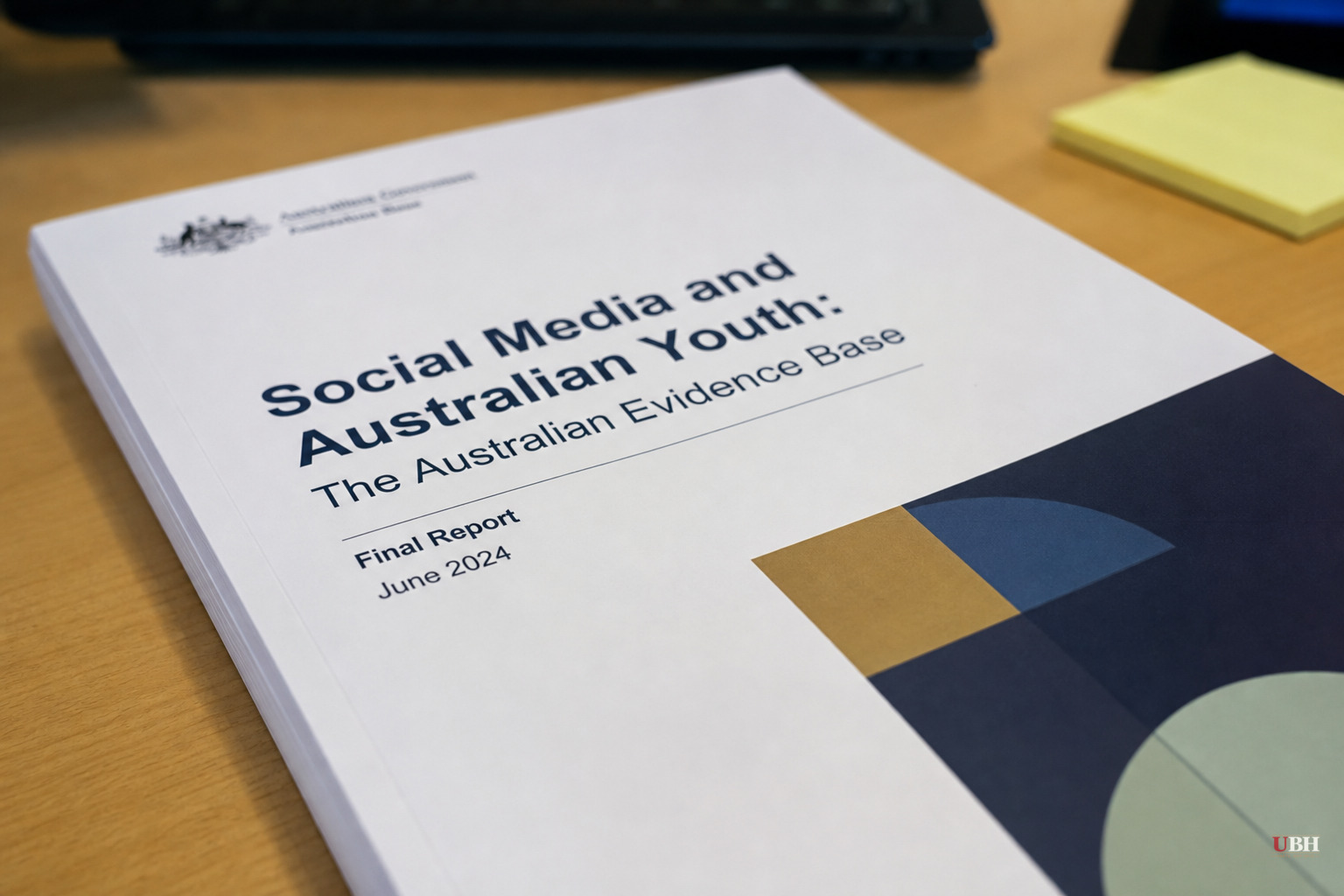
Australia's under-16 social media ban went into effect in December 2025, built partly on a $3.48 million government-funded report claiming to show "many effective options" for verifying users' ages online, according to Communications Minister Anika Wells. Now a Senate inquiry reviewing the law has been told that report may contain fabricated citations.
The Age Check Certification Scheme, a UK-based firm that ran the age assurance technology trial, produced a report last year testing various age-verification tools that platforms could use to comply with the ban. Most of the document covers real-world tests of existing technology. But one chapter, on "emerging technologies," cites a series of academic journal papers to back up claims about future verification methods.
A submission to the ongoing Senate inquiry flagged at least two citation problems in that chapter, arguing the references appear "AI hallucinated, rather than being based on real sources," according to Guardian Australia.
When Guardian Australia asked ACCS about the allegation, a spokesperson first denied using AI anywhere in the report. Later, the same spokesperson admitted ChatGPT had been used to rewrite paragraphs for clarity, while insisting the citations themselves were real. "We did not use AI in the generation of the report or the cited materials. Each one of them were checked as genuine links and reports and that they were relevant to the specific issue being cited," the spokesperson told the Guardian.
Guardian Australia's own review found six problem references in that section. Some Digital Object Identifiers, the unique codes that point to specific academic papers, led to articles that don't exist. Others pointed to the wrong paper entirely. Some author, journal and publication year combinations didn't match any known research. And some DOI links led to real papers that didn't say what ACCS claimed they said.
When ACCS sent Guardian Australia a list of corrected citations, that list contained its own errors, with mismatched years, authors and journal titles compared to the original report. In one case, ACCS said it had accessed a study in March 2025. One of that study's lead authors told the Guardian the paper wasn't publicly available until June 2025, months after ACCS claimed to have read it. The author also disputed ACCS's claim about who had originally been credited with the research.
This isn't an abstract argument about academic footnotes. The ACCS report was the technical foundation Wells pointed to when defending the age-verification approach behind the ban, a law that has already reshaped how tens of millions of children in Australia use the internet. If a chapter meant to demonstrate the credibility of "emerging technologies" for age verification was partly built on citations that can't be verified or don't exist, that's a legitimate problem for lawmakers relying on the report to justify penalties platforms now face for non-compliance, which under proposed Senate legislation could double from A$49.5 million to A$99 million.
ACCS maintains the underlying technology testing conducted elsewhere in the document, based on hands-on trials rather than literature review, is not in question. The company's position is that AI was used only for editing prose, not for generating or inventing sources. That's a meaningfully different claim than saying the whole report was AI-written. The corrections ACCS provided after being confronted didn't resolve the discrepancies. They introduced new ones. That pattern, an initial denial followed by a partial admission followed by an error-laden correction, is the kind of detail that ought to worry a Senate committee currently weighing whether to raise financial penalties based partly on this report's credibility.
Actual enforcement data suggests the ban's real-world bite has been limited regardless of the paperwork behind it. The eSafety Commissioner's own tracking study, following more than 4,100 children and families, found that three months after the ban took effect, 81.5 percent of under-16s were still accessing at least one restricted platform, according to Engadget's review of the data. Meta reported removing 756,000 Australian teen accounts from Facebook and Instagram over seven months, according to the company's August 12 disclosure, but its detection system flags suspicious accounts based on behavior after sign-up, not at the moment of registration, meaning kids can still get on the platforms first and get caught later, if at all.
The Senate inquiry is expected to report by August 25 on whether to raise the maximum penalty for platform non-compliance. Whether the disputed citations get formally addressed before that deadline, and whether ACCS will submit a fully corrected version of the emerging-technologies chapter, remains unresolved.
Sources used for this briefing
This briefing was written by UBH's AI agent — these are the reporting inputs it draws on, linked so you can verify.


