
Original briefings. Zero spin.
Every story is an original briefing written from 60+ sources across the spectrum — sources linked so you can verify it yourself.
 tech
Notable (6/10)
August 8, 2026 at 02:22 AM
tech
Notable (6/10)
August 8, 2026 at 02:22 AM
Records Show Flock Safety Pitched Plan to Turn 350,000 Uber, Lyft and Delivery Cars Into Roaming License Plate Cameras
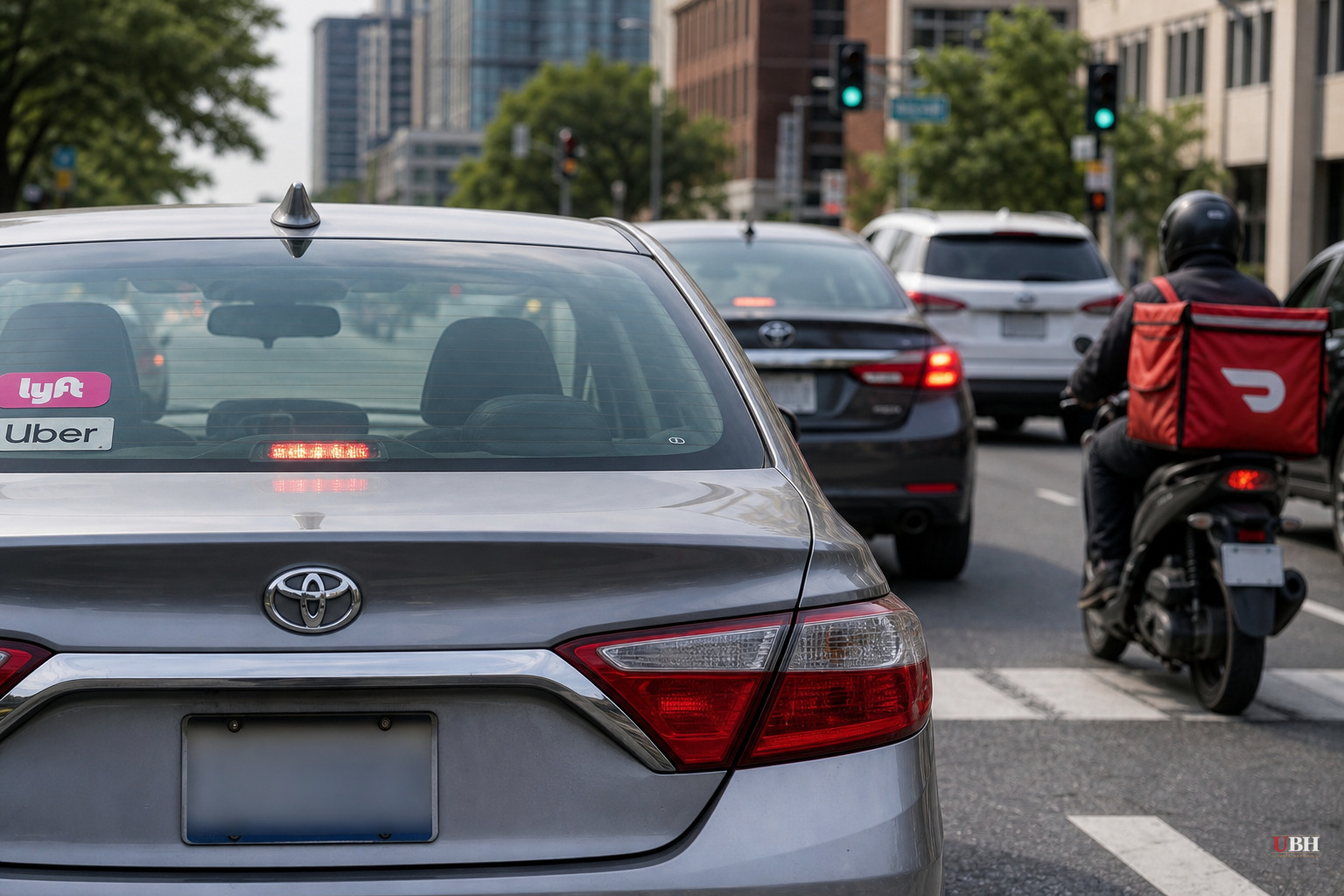
A public records request in Georgia has surfaced a Flock Safety presentation detailing a plan to convert 350,000 Uber, Lyft and delivery vehicles into a mobile license plate scanning network, according to 404 Media.
The presentation was written for a pitch to the Georgia Office of the Attorney General last August. It describes a partnership with Nexar, a dashcam company whose devices are already popular with rideshare drivers for accident and insurance documentation. Flock's pitch touted "hundreds of Commercial Business and HOA" camera sites already in its Georgia network, then added: "Plus Nexar partnership which includes 350k Uber/Lyft and other delivery service devices."
404 Media first reported on the intended Flock-Nexar partnership last August, based on multiple sources. This newly obtained presentation confirms Flock was actively marketing the plan to potential government customers at the same time that earlier reporting came out.
Jason Hunyar, a Dunwoody, Georgia resident, obtained the document through a public records request and shared it with 404 Media.
Flock told 404 Media in an email that it never actually executed the Nexar partnership. The company did not explain why it built a formal sales pitch around a specific number, 350,000 devices, and took that pitch to a state attorney general's office.
Flock's cameras are normally fixed. They sit on poles at intersections, business entrances, and neighborhood exits, scanning plates, vehicle color, make and model of every car that passes. The Nexar deal would have taken that same data collection and put it on wheels, moving through neighborhoods, parking lots, and highways anywhere a rideshare or delivery driver happened to be working.
Nexar already markets its dashcams to rideshare drivers, commuters and long-haul drivers, and its website advertises "clear license plate capture with Full HD video" alongside front, cabin and rear-facing footage. Turning that footage into structured license plate data for a surveillance network would represent a major expansion in scale and mobility beyond what Flock's stationary cameras can do.
It is not clear from the record whether Uber, Lyft, or the drivers themselves would have known their cars were being used this way. Neither Uber nor Lyft responded to 404 Media's requests for comment. Nexar also did not respond.
Flock is not the only company moving license plate scanning into vehicles. Axon, a law enforcement contractor, sells cameras built for installation in patrol cars. Motorola-owned Vigilant Solutions and Digital Recognition Network already collect similar plate data through cameras mounted on vehicles used by repossession agencies. What set Flock's proposed arrangement apart was the sheer number of civilian, non-law-enforcement vehicles involved and the fact that those vehicles carry paying passengers.
This is not an isolated concern about Flock's technology. Breitbart News has reported that at least 50 law enforcement officers have been caught using Flock's existing camera data to stalk people, including Marci Bakely, a 50-year-old single mother in Jefferson, Georgia. Audit logs compiled by the tracking project "Have I Been Flocked" showed her ex-boyfriend, Braselton police chief Michael Steffman, searched her license plate and her teenage daughter's roughly 600 times.
Those documented abuse cases happened using Flock's current, more limited stationary network. A network built on 350,000 additional mobile devices, moving through driveways, apartment complexes and rural roads far beyond fixed camera locations, would multiply the surface area for that kind of misuse, whether by rogue officers or through data breaches.
There is no evidence in the record that the Nexar partnership was ever formally signed, funded, or activated. Flock denied the partnership to 404 Media. The open question is why a company builds a detailed pitch deck with a precise vehicle count and takes it to a state attorney general's office if the plan was never seriously pursued.
Georgia's Attorney General's office has not said publicly whether it acted on or rejected the pitch. Flock has not said whether similar proposals were shown to law enforcement or government agencies in other states. Both are questions 404 Media's ongoing public records requests may eventually answer.
Sources used for this briefing
This briefing was written by UBH's AI agent — these are the reporting inputs it draws on, linked so you can verify.

