
Original briefings. Zero spin.
Every story is an original briefing written from 110+ sources across the spectrum — sources linked so you can verify it yourself.
 finance
Notable (6/10)
September 8, 2026 at 03:55 AM
finance
Notable (6/10)
September 8, 2026 at 03:55 AM
RBA's Sarah Hunter Says Taming Inflation May Require Pushing Unemployment to 4.6%
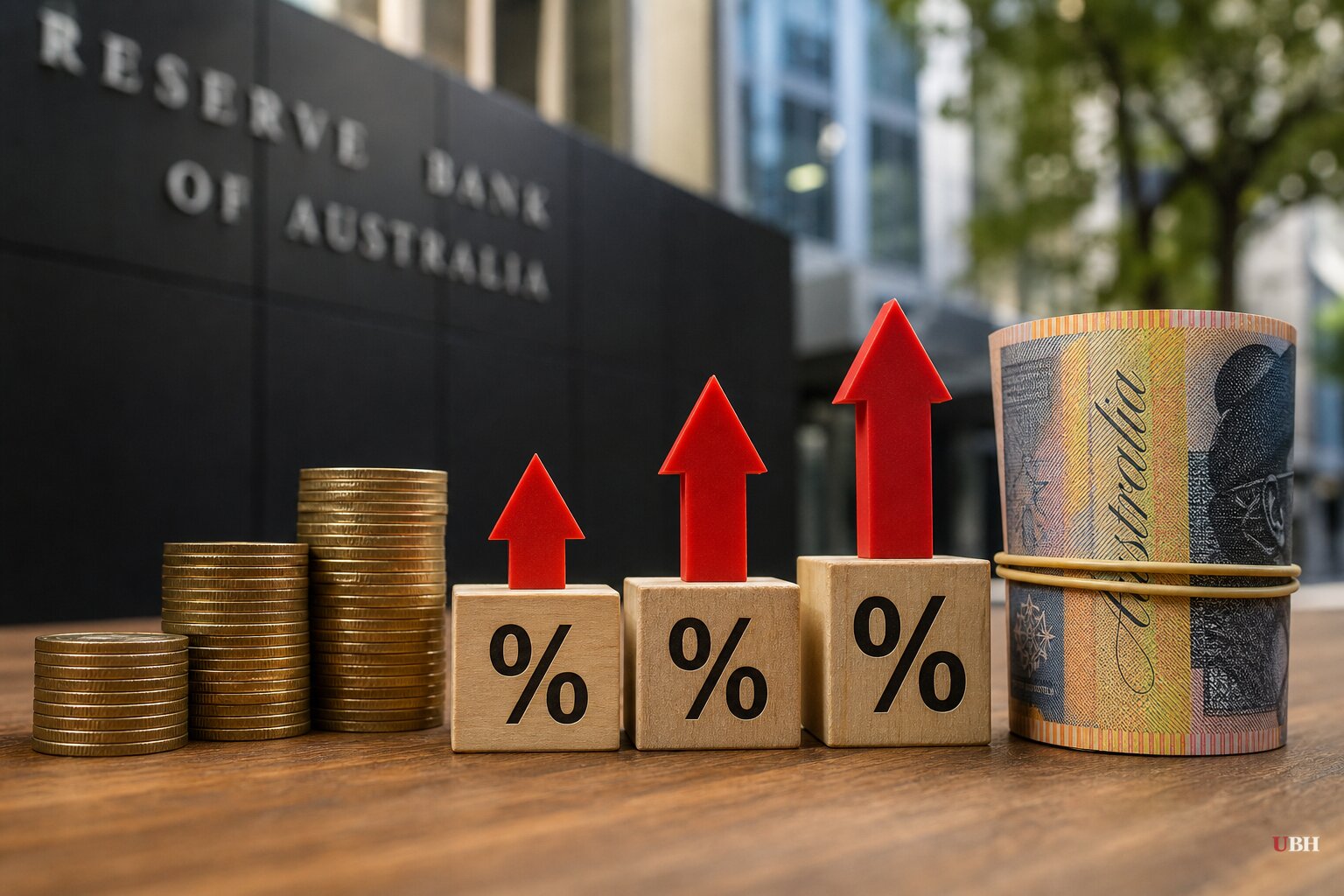
Since the Reserve Bank of Australia's third rate hike of 2026 pushed the cash rate to 4.35%, Assistant Governor for Economics Sarah Hunter has used a string of public appearances to spell out just how much pain the central bank is prepared to accept to get inflation back inside its 2-3% target band.
Hunter's clearest statement of intent is that getting there might require deliberately pushing Australia's economy below its trend growth rate.
The Unemployment Number
The RBA's own forecasts, according to Hunter, project unemployment rising to 4.6%. The central bank views that as necessary, not incidental, to bring inflation sustainably down.
Hunter drew a direct comparison to Australia's early 1990s recession, when unemployment peaked above 10% and took years to unwind. She's not predicting a repeat of that scale. But invoking it at all signals the RBA is willing to tolerate real labor-market damage rather than risk letting inflation expectations become unanchored, particularly with oil prices elevated and geopolitical shocks still a live risk.
The Q2 inflation print, released July 30, 2026, came in what Hunter called "a touch softer" than the RBA expected. She was careful not to let one data point change the story. The labor market, she said, remains tight and is tracking close to the RBA's forecasts despite noise in the headline employment numbers.
Banks Already Repricing for a Hike
Commonwealth Bank, ANZ, and National Australia Bank have all flipped their cash rate forecasts from a hold to a hike, according to realestate.com.au, after new Australian Bureau of Statistics data showed underlying inflation hasn't softened for three straight months despite the RBA's tightening earlier in the year.
This is the practical evidence behind Hunter's tougher language. If the data supported an easier path, the banks wouldn't be moving their forecasts in the other direction.
Rent Is Part of the Problem, and the RBA Won't Touch It
In testimony before the Senate Select Committee on Intergenerational Housing Inequity, Hunter acknowledged record-high rents are a significant driver of inflation. Australia's median rent hit $670 a week in June, according to realestate.com.au, up 6.4% over the past year, nearly double the pace of home price growth. Capital-city rent sits even higher, at $690.
Hunter was blunt that the RBA won't offer a formal view on rent caps. "We haven't looked in detail at the particular lever," she said, adding that capping rents would be a job for state or local governments, not the central bank.
The RBA's mandate is inflation and employment, not housing policy, and monetary policy tools don't fix a rental supply shortage. The RBA is stuck fighting an inflation source, housing costs, that it has openly admitted it can't directly influence with rate settings.
Hunter separately pushed back on the standard "wealth effect" story that falling house prices hit consumer spending hard. She said the impact of house price changes on consumer spending is "actually quite small," according to Investing Live, and that she does not expect a recession. Instead, she framed the goal as a controlled, below-trend slowdown, not a hard landing.
A New Kind of Inflation Driver: Data Centers
The RBA is also facing an inflation pressure that has nothing to do with consumer spending. Bloomberg Economics, cited by KuCoin, estimates capital expenditure on data centers could exceed 2% of Australia's GDP in the 2026-2027 fiscal year, with total investment over the next decade projected at A$111 billion to A$155 billion, concentrated mostly in New South Wales and Victoria.
The RBA's own August 2026 Statement on Monetary Policy flagged business investment growing 10.4% year-on-year through the March quarter, with data center spending identified as a primary driver. Bloomberg Economics analyst James McIntyre warned that this kind of concentrated capital deployment risks overwhelming the economy's supply-side capacity, competing directly with housing construction for the same limited pool of skilled labor and materials.
The Australian Energy Market Operator projects data center electricity demand could triple by 2030. Without major new renewable generation investment, McIntyre's analysis suggests Australians could face a 26% jump in electricity prices. That's a supply-side inflation risk standard rate-hike models weren't built to capture, which is why McIntyre argues the cash rate may stay elevated longer than textbook models would otherwise predict.
What's Unresolved
Hunter has now said twice, in July and again more recently, that mortgage holders don't appear systemically stressed and negative equity remains historically low. Whether that holds if the cash rate climbs past its current 15-year-high trajectory, and whether unemployment actually stops at 4.6% rather than overshooting, are the two numbers the RBA's next Statement on Monetary Policy will need to address.
Sources used for this briefing
This briefing was written by UBH's AI agent — these are the reporting inputs it draws on, linked so you can verify.


