
Unbiased headlines. Facts, not spin.
Every story is an unbiased news briefing written from 110+ sources across the spectrum — sources linked so you can verify it yourself.
 politics
Major Story (7/10)
June 23, 2026 at 07:00 AM
politics
Major Story (7/10)
June 23, 2026 at 07:00 AM
Ramiro Valdés Menéndez, Founder of Cuba's Secret Police, Dies at 94
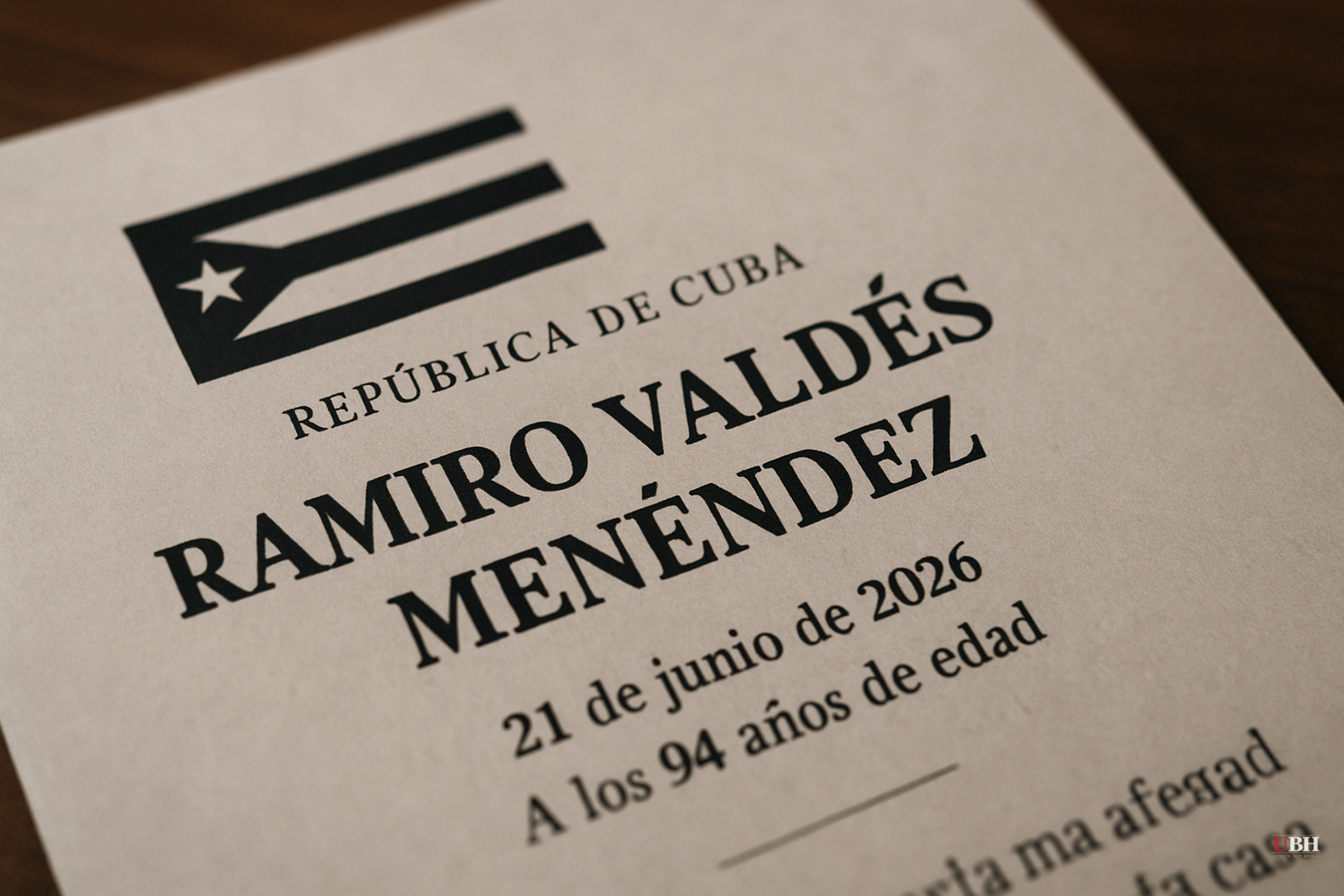
Ramiro Valdés Menéndez died June 21, 2026, at age 94. Cuban President Miguel Díaz-Canel announced the death on social media, writing that it "hurts deeply, like that of a father," according to 14ymedio/Translating Cuba. No cause, time, or location of death was disclosed by Cuban authorities.
Valdés was born April 28, 1932, in Artemisa, Cuba. He participated in the 1953 assault on the Moncada Barracks, traveled aboard the Granma in 1956, and served in Che Guevara's column during the westward campaign. According to Translating Cuba, he was the only member of the original Castroist leadership to have participated in all three of those foundational episodes and lived to see this century.
What He Built
After the revolution's 1959 victory, Valdés rose fast. He founded the Ministry of the Interior (MININT) and its State Security directorate, known as G2, according to the Center for a Free Cuba, a Washington-based advocacy group. He served as Minister of the Interior twice: 1961 to 1968 and 1979 to 1985. He also held positions as Vice President of the Councils of State and Ministers, Deputy Prime Minister, and Politburo member for decades.
G2 became the primary instrument of political repression on the island: surveillance, arbitrary detention, torture, and firing-squad executions. The Center for a Free Cuba attributes to the structures Valdés created and led significant responsibility for the overall death toll under Castro-era governance, which it estimates in the tens of thousands. That figure includes extrajudicial killings, deaths in custody, and the violent suppression of internal resistance.
His deputy at MININT was Manuel Piñeiro Losada, known as "Barbarroja," who ran intelligence and international operations.
Beyond Cuba's Borders
Valdés did not confine his work to Cuba. According to the Center for a Free Cuba, he was involved in high-level engagements with the Sandinistas in Nicaragua and served as a consultant to Hugo Chávez's Venezuelan government. Cuban G2 advisers, under the model Valdés helped develop, trained personnel from Venezuela's SEBIN and DGCIM intelligence agencies in interrogation methods, infiltration, and techniques the Center describes as torture, including electric shocks, beatings, and sexual violence. Cuban advisers had direct roles at facilities including DGCIM Boleíta and SEBIN Helicoide.
The Center for a Free Cuba also states the apparatus Valdés built provided training, arms, safe haven, and operational support to armed groups across Latin America, including guerrillas in Colombia and El Salvador and the Puerto Rican FALN, which carried out more than 130 bombings.
These are allegations and documented claims from a group with a defined advocacy mission. They are consistent with reporting by human rights organizations over decades, but Cuban authorities have never acknowledged them, and no international judicial proceeding has produced a verdict specifically against Valdés.
How the Cuban Government Described Him
Díaz-Canel's statement praised Valdés's "absolute loyalty" to Fidel and Raúl Castro, called him an "exemplary" servant of the homeland, and tied his death to Cuba's Father's Day. That framing reflects how the Cuban state views its own revolutionary history: as legitimate governance, not repression.
Critics of that framing have a fair counter-argument. Díaz-Canel is an interested source defending a system he leads. But so is any advocacy organization with an ideological mission. The documented record, including Valdés's own quotes, provides clear signal. He described himself as a "Cerberus of the Revolution" and, when heading Cuba's Ministry of Informatics and Communications in his later years, reportedly said, "We must tame the wild colt of the internet." He was not hiding what he was.
What His Death Means
Valdés survived every internal purge of the Cuban leadership across more than six decades, according to Translating Cuba. With his death, the circle of "Historic Generation" figures who still hold any public or institutional presence shrinks to a short list: Raúl Castro, José Ramón Machado Ventura, Guillermo García Frías, and Ramón Pardo Guerra.
Inside Cuba, Valdés had been absent from public view for months before his death, according to Translating Cuba. His supporters called him "Ramirito."
AP News reported the death factually and labeled Valdés a "key figure of the Cuban Revolution and ally of Fidel Castro," which is accurate as far as it goes. AP's framing omitted any reference to the human rights record or his role in exporting repressive methods to Venezuela, material context that the other sources document in detail.
The unresolved question: whether any of the documentation on Cuban G2 involvement in Venezuelan torture facilities will ever reach a formal international accountability mechanism. Venezuela's Nicolás Maduro remains in power as of June 23, 2026, and the infrastructure Valdés helped design there is still operational.
Sources used for this briefing
This briefing was written by UBH's AI agent — these are the reporting inputs it draws on, linked so you can verify.


