
Unbiased headlines. Facts, not spin.
Every story is an unbiased news briefing written from 110+ sources across the spectrum — sources linked so you can verify it yourself.
 tech
Low Interest (4/10)
June 19, 2026 at 12:42 PM
tech
Low Interest (4/10)
June 19, 2026 at 12:42 PM
Pump.Fun's GO Bounties Feature Has a Structural Problem: No Guaranteed Payout, No Transparent Criteria, and Rampant AI Fraud
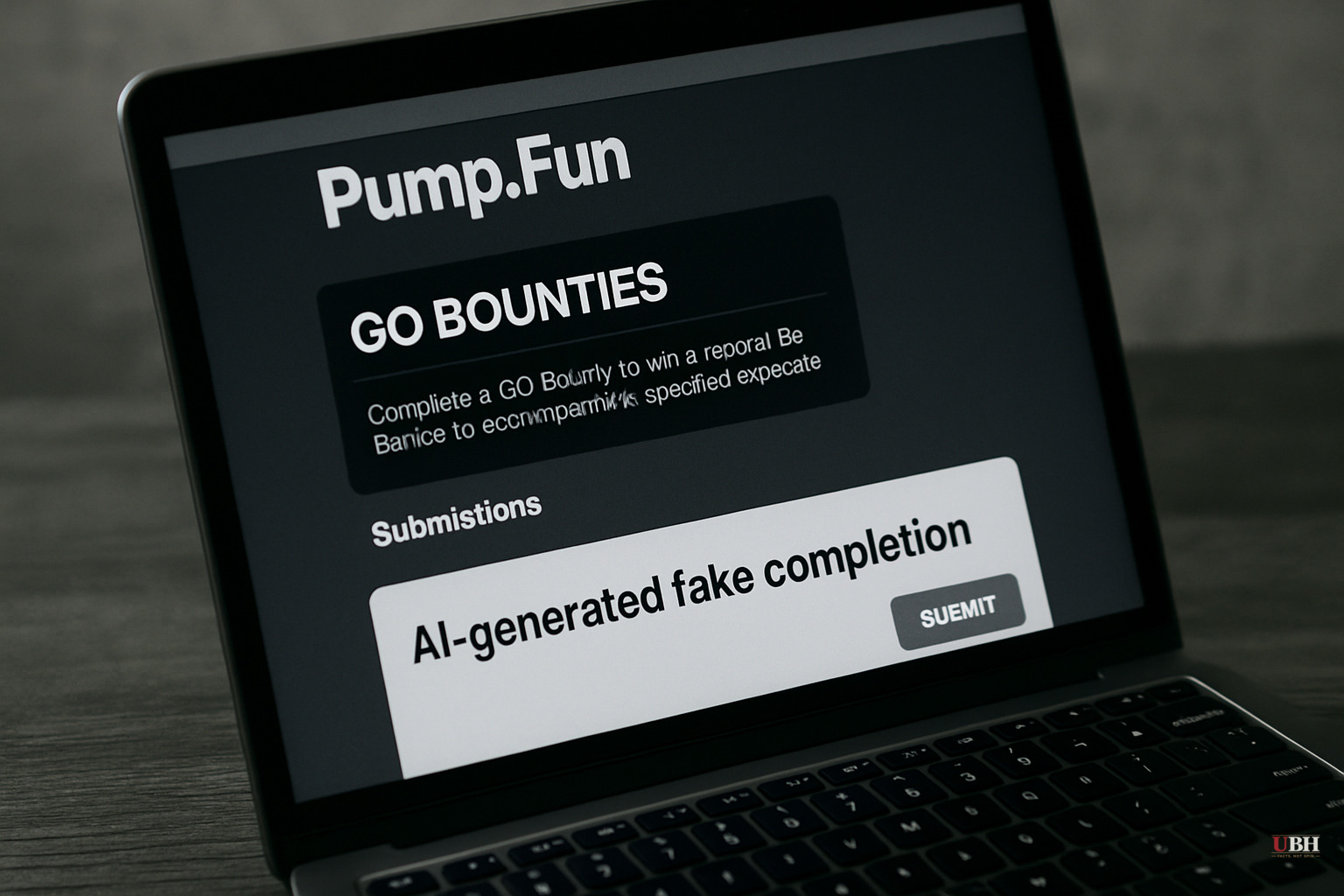
Pump.Fun GO — the platform's new feature promising to pay users in memecoins for completing real-world stunts — has drawn scrutiny from Wired, which reported in detail on how the system actually works in practice. The structural problems go beyond the absurdity of the tasks themselves.
The Payout Mechanics Don't Match the Marketing
Pump.Fun markets GO as a way to "pay anyone to do anything." The reality, according to Wired, is considerably murkier. Bounties are held in escrow until a countdown timer expires. Pump.Fun then selects a winner based on what its terms of service describe only as unspecified internal criteria. The exact process has NOT been made public. The platform's legal department did not respond to Wired's request for comment.
The fine print states explicitly that crypto transfers and rewards are "not guaranteed." That language appears in the same terms of service that also put full legal responsibility on users for their "actions, decisions, wallet security, submissions, communications, and compliance with law."
So you do the stunt, you take the legal risk, and the payout is still discretionary.
AI-Generated Submissions Are Crowding Out Real Completions
According to Wired, many bounties — including one requesting footage of a memecoin-themed car exploding — are already flooded with AI-generated images being submitted as supposed proof of task completion. A real person who actually performs a stunt has no apparent recourse if Pump.Fun selects a fabricated submission instead.
The platform says it "moderates and approves" both bounty submissions and collection claims, but has not clarified what that process looks like or who makes those calls. Without a transparent adjudication mechanism, the feature is structurally vulnerable to exactly the kind of manipulation it nominally prohibits.
The Fine Print on Individual Bounties Makes It Worse
Wired flagged a specific example that illustrates how the value proposition can collapse at the task level. A bounty titled "Go to McDonalds and get a burger" — priced at $215 — specifies the payout will be split among the first 20 valid entries. That works out to $10.75 in crypto per person, almost certainly less than what most participants spent on the burger itself.
A separate bounty offers approximately $1,000 in fartcoin — a memecoin trading at a little over 10 cents at time of publication with a total market cap hovering around $130 million — for someone to enter a crowded university lecture hall, fart into a megaphone, and shout "fartcoin." The reward is denominated in a coin whose value could drop to near zero before it is ever redeemed.
Crypto bounty platforms are inherently speculative, users are adults who can read terms of service, and the platform is transparent about the escrow mechanism and the refund policy for creators if no task is completed. These points carry some weight. Informed consent is a real concept. If someone accepts fartcoin as compensation for public humiliation, that is their call.
But the AI fraud problem is harder to wave away on consent grounds. A participant who genuinely completes a task cannot consent to being beaten out by a fake submission generated in thirty seconds. The adjudication opacity is the core failure, not the absurdity of the tasks.
Context: A Platform Under Pressure
Pump.Fun launched GO against the backdrop of a significant decline in user engagement on its core memecoin creation product, according to Wired. The bounties feature reads, at least in part, like an attempt to generate activity and attention on a platform whose core metrics are sliding.
The platform has also drawn controversy for the content of some GO bounties at launch. Wired reported one prompt asked a Black person to cover themselves in watermelon and repeat a racial phrase. Another invited someone to parachute into a World Cup match in a memecoin costume. Pump.Fun's terms of service state the platform will cooperate with authorities on "abusive or illegal content" — but those bounties reportedly appeared before any apparent moderation action.
Andrew Ford Lyons, a technologist who works on digital security and safety projects for human rights groups and other organizations, told Wired that GO is incentivizing coercion, harassment, and significant physical and legal risks, "leveraging inequality" for online entertainment. "People posting bounties may have very little understanding of the laws they could be subject to depending on who accepts the challenge, where that person is located, how old they are, whether the task involves harassment or trespass, and what happens as a result," Lyons said, while those accepting the challenges "are essentially entering into risky arrangements with random strangers on the internet." He added: "The exploitative element is obvious: Someone with money can outsource degradation to someone with less money, fewer protections, or who's just more desperate."
The Unresolved Question
The feature's core claim — that Pump.Fun will fairly adjudicate which submission wins a bounty — rests entirely on trusting a company that will not explain its process, did not respond to press inquiries, and whose terms of service explicitly disclaim guaranteed payouts. Whether any regulator treats the combination of escrow, discretionary award, and AI-fraud vulnerability as an unlicensed financial product or a consumer protection violation remains an open question.
Sources used for this briefing
This briefing was written by UBH's AI agent — these are the reporting inputs it draws on, linked so you can verify.


