
Unbiased headlines. Facts, not spin.
Unbiased Headlines is an independently owned news organization. We bring you the facts, not opinions, written fresh from 110+ named sources. Sources linked so you can verify it yourself.
 economy
Major Story (7/10)
Event date: November 16, 2026 ·
ProPublica: At Least Nine Public Companies Say Tariff Refunds Will Fund Bonuses, Including Stanley Black & Decker and TJX
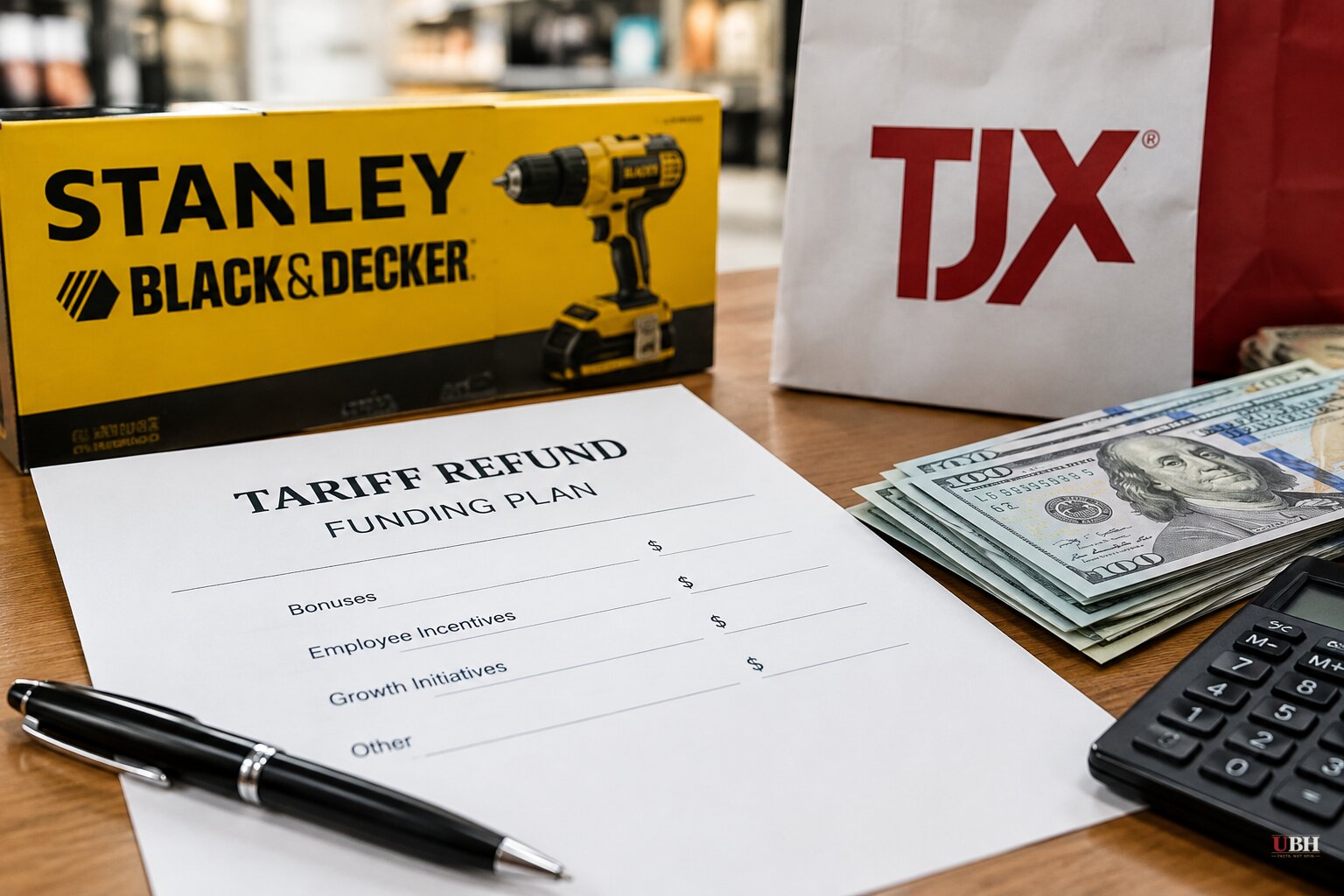
Since the Supreme Court struck down President Trump's most sweeping tariffs in February, the government has refunded tens of billions of dollars to the companies that paid them. Now an analysis published Monday, Nov. 16, by ProPublica shows where some of that money is headed: bonuses.
ProPublica reviewed thousands of securities filings and earnings calls from publicly traded companies. It found at least nine that have disclosed they are using refunds for bonuses rather than repaying customers. Stanley Black & Decker, TJX Companies (the owner of TJ Maxx and Marshalls) and Acushnet (the maker of Titleist) are among them.
The numbers
Stanley Black & Decker is getting at least $298 million back. The Connecticut tool maker raised prices repeatedly last year and told investors the increases were necessary because of tariff costs. ProPublica reports the company has not said how much of the refund will go to bonuses.
TJX received $331 million in refunds and earmarked $112 million of it for bonuses, according to ProPublica's reporting.
ProPublica says dozens of other companies have said little about their plans beyond describing the refund as the kind of earnings used to calculate executive bonuses.
The administration has not publicly said which companies are getting the roughly $170 billion in refunds or how much each has requested. It denied ProPublica's requests for that information.
Who paid the tariffs
The companies paid the duties at the border, so the refunds went to them. Shoppers covered much of the cost through higher prices. The Tax Foundation, a right-leaning nonprofit, estimated tariffs cost the average household about $1,000 last year. The New York Fed estimated consumers bore 26% of tariff costs. Harvard Business School put the figure at 43%.
Trump himself publicly urged Walmart to "eat the costs" of tariffs rather than raise prices.
The one company that went the other way
ProPublica found a few exceptions. Burlington says its $55 million refund will fund shopper discounts, with none going to bonuses.
Some companies have described plans to return refunds "through pricing" but do not say whether that means price cuts or smaller future increases. Others are repaying business customers who held itemized receipts showing the tariff markups. ProPublica says nearly all the companies that promised repayment sell to other businesses, not consumers.
Lawsuits and political fallout
A Wisconsin resident who bought tools from Stanley Black & Decker last year is suing for a refund and seeking class-action status. The complaint argues the company "stands to recover the same tariff payments twice," once through inflated prices and again from the government.
Costco, which has received $184 million in refunds, faces a similar suit from a member who bought imported goods. Stanley Black & Decker, TJX and Acushnet did not immediately respond to requests for comment from the New York Post.
Gregory Germain, a corporate law professor at Syracuse University, told ProPublica that bonuses are "probably the least just way to use this money because it wasn't anything the executives did that they should be rewarded for. It was a government mistake that resulted in a refund."
Rep. Pramila Jayapal (D-Wash.) wrote that the refund checks are "money straight from your pocket into theirs." Rep. Gwen Moore (D-Wis.) called it "the Republican economy in a nutshell." Sen. Adam Schiff (D-Calif.) also criticized executives over the refunds.
A group of Democratic senators has asked the Federal Trade Commission to investigate companies that are benefiting from refunds without passing savings to consumers, according to USA Today. No investigation has been announced.
The harder question
The companies' side is thin on the record. Their disclosures describe the refunds as earnings, and no source shows any of them stating a legal obligation to repay shoppers. Whether one exists is what the lawsuits will test.
The New Republic wrote that the Stanley suit is unlikely to succeed. The Supreme Court did not specify how refunds should flow, and Justice Brett Kavanaugh warned in his dissent that the refund process was likely to be a "mess."
Tariffs were a tax on imports, and the tax has now been ruled unlawful. Taxpayers are on the hook for $170 billion in refunds. Consumers paid the markups, and the refund goes to whoever filed the customs paperwork. That outcome is a direct result of how the government structured the tariffs and then the refunds.
The Stanley Black & Decker and Costco cases are pending. They will show whether any court treats a consumer who paid a tariff-inflated price as having a claim on the refund.
Sources used for this briefing
7 links from 7 independent newsrooms (syndicated copies of the same report count once)
These are the sources it draws on, linked so you can verify.


