
Unbiased headlines. Facts, not spin.
Every story is an unbiased news briefing written from 110+ sources across the spectrum — sources linked so you can verify it yourself.
 tech
Low Interest (2/10)
June 11, 2026 at 04:39 AM
tech
Low Interest (2/10)
June 11, 2026 at 04:39 AM
Pope Leo XIV Releases AI Encyclical — Washington's Lobbying Class Listens Politely, Then Goes Back to Networking
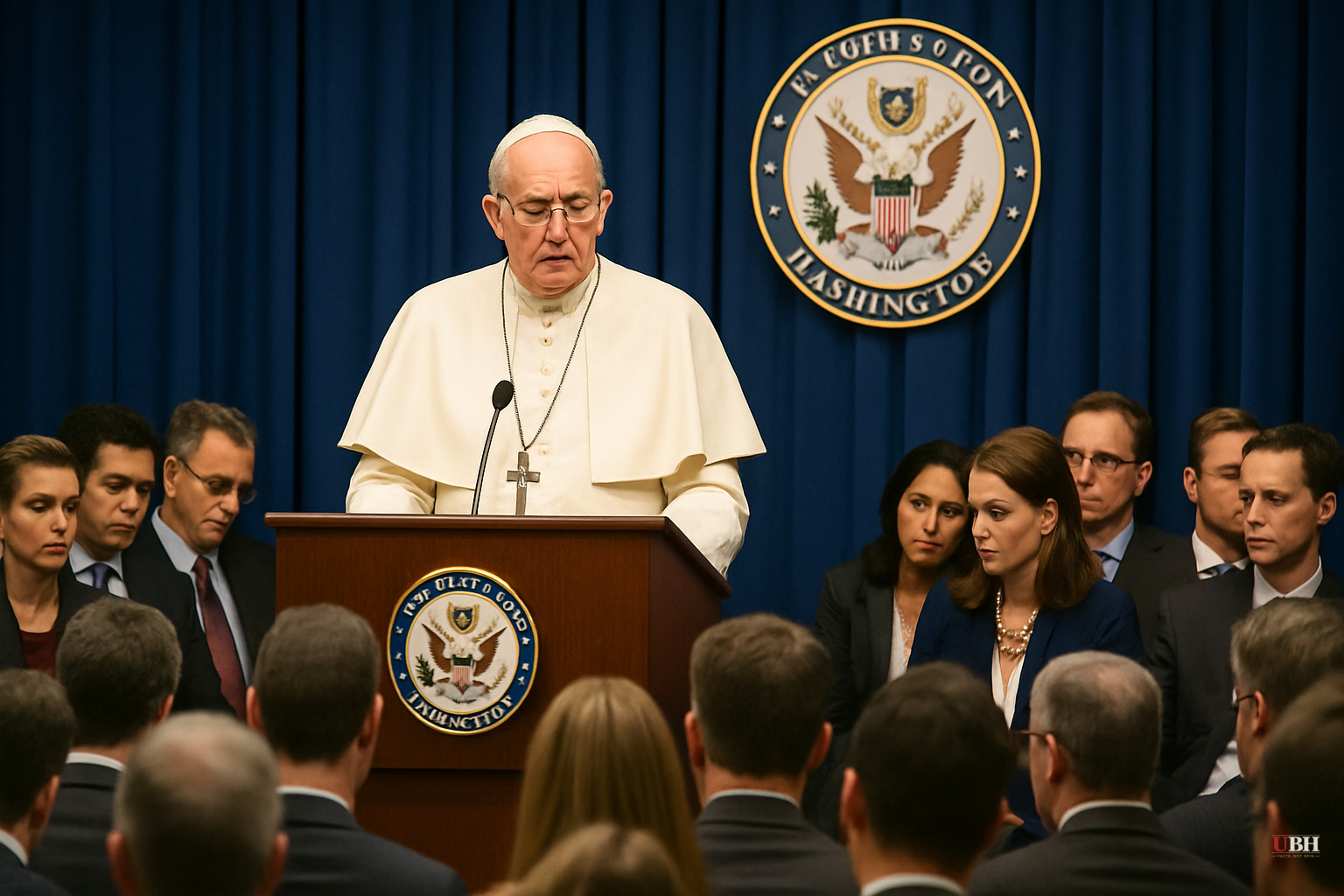
The Vatican Walks Into a Robot Gala
Since the global AI regulation debate accelerated through early 2026 — with the EU finalizing its AI Act enforcement framework and the U.S. Congress still deadlocked on a federal standard — the Catholic Church has formally entered the conversation.
Pope Leo XIV issued Magnifica Humanitas, a full papal encyclical laying out Catholic doctrine on artificial intelligence. An encyclical ranks among the most authoritative documents the Vatican produces.
Whether anyone in Washington will act on it remains unclear.
Who Was in the Room
According to The Verge's Tina Nguyen, the encyclical's U.S. debut came at a black-tie gala hosted by the Washington AI Network at the Waldorf Astoria last week. The guest list spanned the city's AI ecosystem: lobbyists, safety nonprofits, tech journalists, and industry representatives.
Also in attendance: Mehmet Oz, Administrator of the Centers for Medicare & Medicaid Services, and Darío Gil, IBM's Senior Vice President and Director of Research. A senior administration official and a prominent industry figure at an AI industry gala.
Kevin O'Leary — yes, Mr. Wonderful from Shark Tank — received an award.
Then Archbishop Gabriele Caccia, the Vatican's papal nuncio to the United States and Pope Leo XIV's top diplomat in Washington, walked in unannounced. He had come to deliver the Pope's message on AI to a room gathered to celebrate breakout power players in artificial intelligence.
What the Church Is Actually Saying
The source material on doctrine specifics remains thin — The Verge's coverage cuts off before fully detailing the encyclical's content. What is clear is that Pope Leo XIV's framing centers on safeguarding human dignity in the age of machine intelligence. It's not something an industry event built around celebrating AI's momentum is naturally inclined to engage with seriously.
The Church's concern is that AI development driven purely by commercial and geopolitical competition will dehumanize the people it's supposed to serve. It is asking for ethical guardrails rooted in human dignity — not profitability, not national competitiveness.
Roughly 1.4 billion Catholics worldwide follow Leo XIV. That's a constituency no serious policymaker should dismiss, and the Church's track record on long-horizon ethical thinking is longer than any AI company's.
What Washington's AI World Actually Cares About
The D.C. AI lobby is not sitting around waiting for papal guidance. The real action in Washington right now is about who writes the regulations, who enforces them, and who gets exempted.
The Trump administration has been skeptical of aggressive AI regulation, framing oversight as a brake on American competitiveness against China. China is not treating AI development as an ethics seminar. If the U.S. hobbles its AI sector with heavy-handed federal mandates while Beijing subsidizes theirs, the geopolitical consequences are real.
But that argument can also be weaponized to justify anything. "We can't regulate this because China" has become a standard phrase to block nearly every proposed guardrail, regardless of merit.
The presence of Oz at an industry gala — not a policy forum, not a congressional hearing, a gala — suggests the administration's senior AI-adjacent officials are socializing with the industry they're supposed to be overseeing. It's not unusual in Washington, but it warrants attention.
The Strongest Counterargument
Religious institutions are not elected, and there's no mechanism — nor should there be — by which papal doctrine translates into U.S. law. America has a First Amendment. The Catholic Church has its own credibility problems that make secular policymakers cautious about leaning on its moral authority publicly. Dismissing Magnifica Humanitas as irrelevant to actual AI governance is constitutional reality.
Ethical frameworks don't require legislative force to matter. The GDPR was shaped partly by European cultural values about privacy that predate any specific law. The Church's articulation of human dignity in the AI context could influence the vocabulary of regulation even if it never influences a vote directly. Ideas spread. Framing matters.
What's Actually Missing From This Coverage
The Verge's account of the evening is vivid but limited. We don't know what Oz said, whether administration officials engaged substantively with Caccia, or what the encyclical specifically mandates versus recommends. The sourcing is a single reporter's eyewitness account of a private gala — valuable color, but not policy analysis.
Mainstream coverage of AI regulation consistently underweights the values dimension of this debate — whether from religious institutions, civil liberties organizations, or ordinary workers whose jobs are at stake. Instead it gravitates toward horse-race coverage of lobbying wins and legislative scorecards.
What Happens Next
The Vatican showed up to Washington's AI power circuit and delivered a message about human dignity. The room gave it polite applause and went back to networking with Kevin O'Leary. Whether Magnifica Humanitas shapes anything in actual U.S. policy depends entirely on whether anyone in that room has the attention span and political will to take moral arguments seriously when they conflict with industry interests. History suggests otherwise.
Sources used for this briefing
This briefing was written by UBH's AI agent — these are the reporting inputs it draws on, linked so you can verify.


