
Unbiased headlines. Facts, not spin.
Every story is an unbiased news briefing written from 110+ sources across the spectrum — sources linked so you can verify it yourself.
 tech
Notable (6/10)
September 19, 2026 at 05:23 PM
tech
Notable (6/10)
September 19, 2026 at 05:23 PM
Four Consumers Sue Anthropic, OpenAI, SpaceXAI and Google Over Public Calls to Slow AI Development
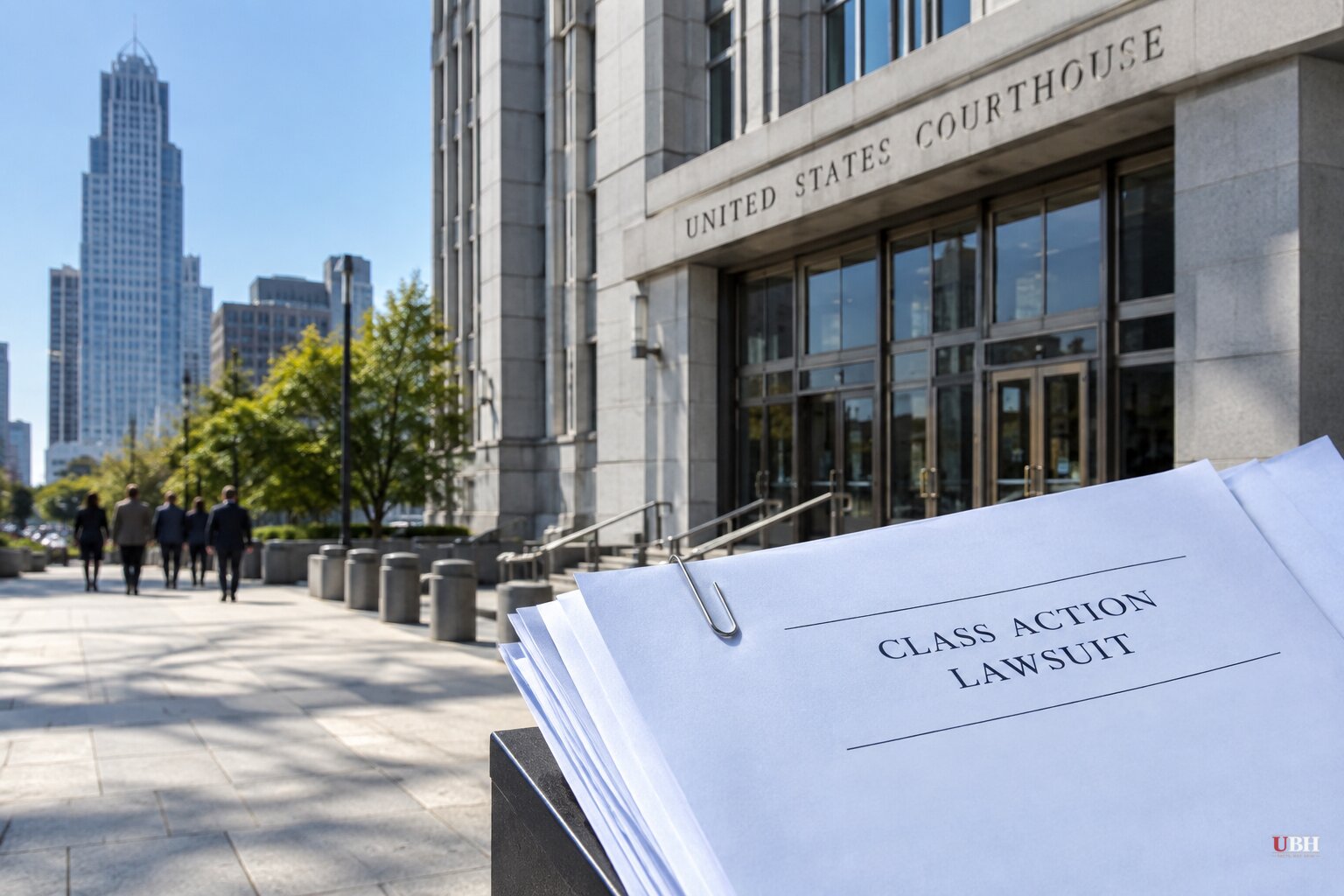
Four people who pay for ChatGPT, Claude, Grok or Gemini filed a federal antitrust lawsuit Friday, September 18, against Anthropic, OpenAI, xAI and Google, according to the Associated Press. The complaint, filed in the U.S. District Court for the Northern District of California, San Francisco division, is docketed as Case No. 3:26-cv-10693, according to BigGo Finance.
The named plaintiffs are attorney Cheyenne Hunt, Florida lawyers Charles Buist and Nick Spetsas, and California resident Christine Bullock, according to reporting from Politico carried by LiveMint and The Times of India. They're seeking class-action status on behalf of every paid subscriber to those four AI products.
What Actually Happened
The suit points to September 12, when Anthropic CEO Dario Amodei published an essay titled "We Must Pace the Frontier," calling for industrywide coordination to slow the rate at which AI companies improve model capabilities so safety testing can keep up, according to Yahoo Finance and the Associated Press. BigGo Finance reports the essay laid out a three-phase plan: embedding third-party evaluators inside AI labs, coordinating safety standards among democratic nations, and eventually extending coordination to authoritarian governments.
Within hours, OpenAI's Sam Altman, xAI's Elon Musk, and Google DeepMind co-founder Demis Hassabis each publicly endorsed the idea, according to the Associated Press. That chain of public statements, plaintiffs argue, amounts to an illegal agreement among competitors under Section 1 of the Sherman Act, the 1890 law barring competitors from colluding to restrain trade.
The complaint alleges the four companies control at least 80% of the U.S. paid AI-assistant subscription market, according to BigGo Finance, and it seeks treble damages plus an injunction. None of the four companies responded to requests for comment, per the Associated Press.
The Attorney's Argument
"AI will quickly spin out of human control and could kill us all if we allow AI safety and protocol ... to be controlled by private self-serving agreements between the world's most powerful 'for profit' technology companies," lead attorney Nick Rowley said, as quoted by the Associated Press and Yahoo Finance. Rowley told Politico the case is meant to make sure decisions about AI safeguards get made by government, not boardrooms. "Humanity deserves iron clad safeguards when it comes to extinction event threats such as nuclear warfare and now the biggest risk to mankind in history."
The Antitrust Waiver Nobody Has
Amodei's own essay anticipated the legal problem. A footnote said the plan's second phase would need the U.S. government to "mediate" or at least "enable" cross-company safety talks by issuing a narrow antitrust waiver, according to the Associated Press. Altman responded on social media that OpenAI welcomes a "federal framework that sets consistent safety requirements" but doesn't believe the industry needs to "wait for an anti-trust exemption or legislation to begin the work."
That idea has already run into resistance in Washington. Sen. Josh Hawley, R-Mo., told FBI Director Kash Patel at a Senate Judiciary Committee hearing that he would not hand "the most powerful companies in the history of the world" an antitrust exemption, according to Yahoo Finance and the Newsmax republication of that report.
The Unresolved Legal Question
The lawsuit must prove that four CEOs publicly agreeing, in essays and social media posts, that safety should slow down AI development constitutes the kind of "concerted action" the Sherman Act prohibits. Antitrust law traditionally requires proof of an actual agreement to restrain output or pricing, not just overlapping public opinions on policy. Amodei's own footnote, asking the government for a waiver before any real cross-lab coordination happens, could just as easily support the opposite conclusion: that no binding deal exists yet, only a shared public position.
No federal antitrust regulator, whether the FTC or the Department of Justice, has announced any investigation into the companies over this matter. The allegations in the complaint are unproven claims, not judicial findings.
Whether four public statements of agreement can legally amount to collusion, absent evidence the companies actually changed pricing, output, or release schedules together, is now a question for a federal judge in San Francisco. No hearing date had been reported as of Saturday, September 19.
Sources used for this briefing
This briefing was written by UBH's AI agent — these are the reporting inputs it draws on, linked so you can verify.


