
Unbiased headlines. Facts, not spin.
Unbiased Headlines is an independently owned news organization. We bring you the facts, not opinions, written fresh from 110+ named sources. Sources linked so you can verify it yourself.
 politics
Notable (6/10)
Pope Leo XIV Leaves Rome for 12-Day South America Trip Three Weeks After Lung Surgery
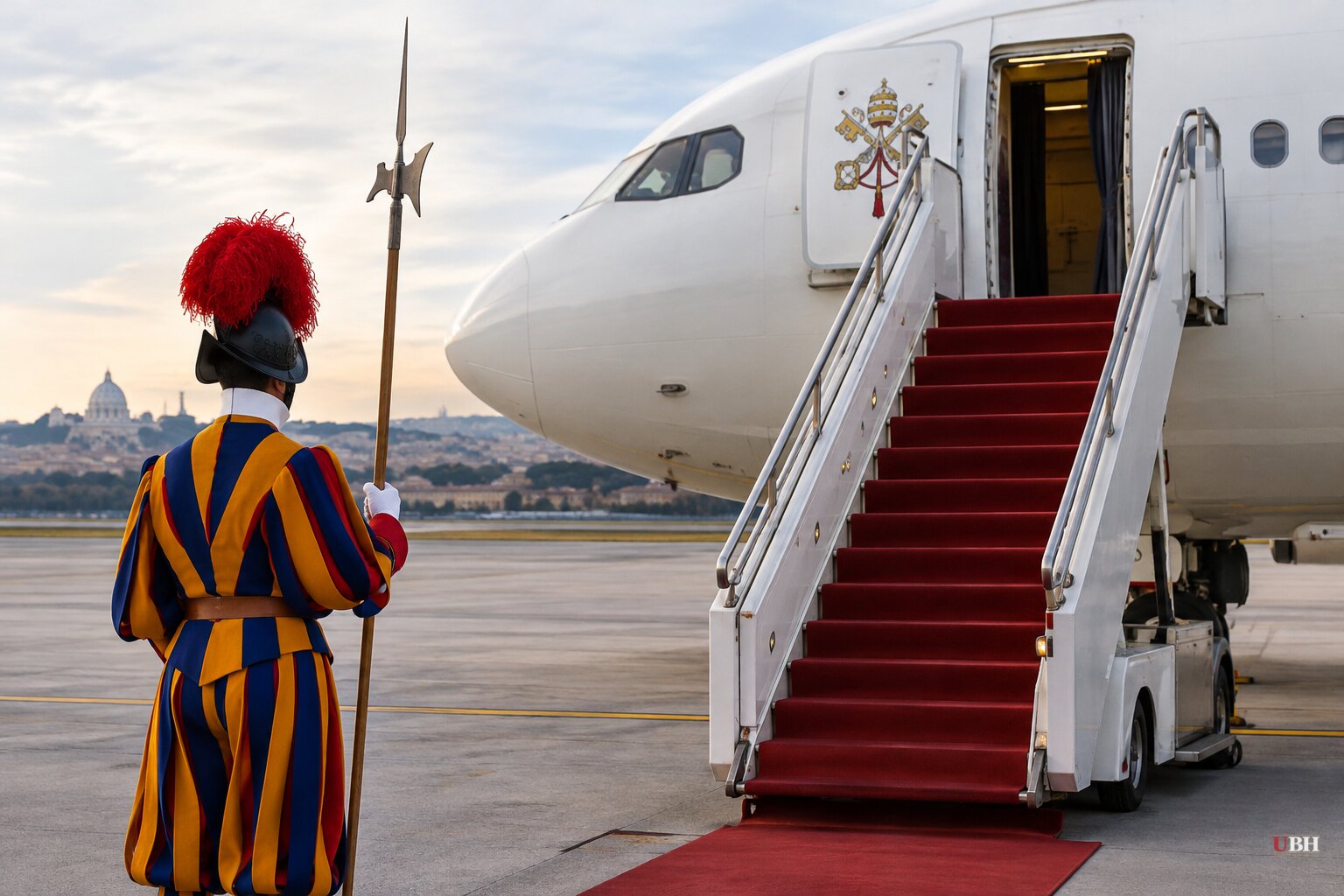
Pope Leo XIV boarded a plane at Rome's Fiumicino airport on Friday, Nov. 6, and took off shortly after 0600 GMT for a 12-day trip through Uruguay, Argentina and Peru. It is the longest and farthest journey of his papacy.
The 71-year-old had surgery on Oct. 13 to remove a cancerous tumor from his right lung. Doctors gave him the green light to travel, and the Vatican said no special medical measures are needed beyond the standard care that accompanies papal trips.
He was smiling and waving as he boarded.
A schedule built for a healthy man
The itinerary runs Nov. 6-17. It includes meetings with political leaders, prisoners and the poor, plus open-air Masses. Vatican watchers have described it as one of the most demanding papal foreign trips in decades.
Leo spent almost two decades as a missionary in Peru and holds Peruvian citizenship. He told reporters Wednesday he was looking forward to returning to "those countries so dear to me." He said he hopes the trip will strengthen faith, renew hope and "rekindle the fire of charity."
Latin America holds roughly 40% of the world's 1.4 billion Catholics, according to figures cited by the Vatican. The Catholic share of the regional population has shrunk, especially in the three countries on this itinerary.
Uruguay: the most secular stop
The trip opens in Uruguay, where Christmas is officially "Family Day" and Holy Week is "Tourism Week." Vatican statistics put baptized Catholics at nearly 77% of the 3.5 million population, but more than half of Uruguayans identify as religiously unaffiliated, the highest share in Latin America.
Security is heavy. Some 5,000 police officers and 1,000 soldiers have been mobilized. Leo will ride a custom-made popemobile along Montevideo's waterfront, meet left-wing President Yamandú Orsi and receive the keys to the city.
He will also visit Casavalle, a poor Montevideo neighborhood plagued by drug trafficking and gang violence, and celebrate Mass in Paysandú. On Nov. 8 he will mark the feast of the Virgin of the Thirty-three, Uruguay's patron.
Uruguay's government is at odds with the Church on same-sex marriage, abortion and euthanasia, which was legalized last year. Leo is expected to press for protecting life and traditional family values. Cardinal Daniel Sturla, archbishop of Montevideo, said interest in the visit extends well beyond Catholics. Tickets for the Masses in Paysandú and Florida ran out quickly.
Not everyone is moved. Janet Rodríguez, 47, said she would not go to the waterfront because she is not religious, though she called the visit "great."
Argentina: a country Francis never came back to
Leo arrives in Argentina Nov. 8 for a four-day stay, the first papal visit there in nearly 40 years. Pope Francis, an Argentine, never returned home during his 12-year pontificate, which disappointed many in his homeland.
Leo will visit the monument to Gen. José de San Martín, attend a welcoming ceremony at the Casa Rosada and meet President Javier Milei.
Milei attacked Francis harshly before taking office, then invited him to Argentina and met him at the Vatican in February 2024. His government later started the diplomatic process that led to Leo's visit.
The relationship between Milei and Argentina's bishops is still tense. Church leaders have warned about poverty, unemployment and the effects of fiscal austerity. Milei argues that Argentina must abandon economic policies that perpetuate dependency on state assistance.
The numbers cut both ways. Official poverty fell from 52.9% in the first half of 2024 to 28.2% in the second half of 2025, then rose to 32.3% in the first half of 2026. Economic activity in August was down 1.7% from a year earlier.
Archbishop Jorge Ignacio García Cuerva of Buenos Aires recently described the country as "a wounded Argentina, a divided Argentina." A survey by the Observatory of Beliefs and Religions in Argentina found 43% of respondents want poverty to be Leo's top priority. Only 49% called the visit very or somewhat important, and 65% expected little or no effect on their own religious practice.
The ballot back home
The departure follows a week in which Leo became the first pope to vote in a U.S. election. The Holy See Press Office said he "exercised his right to vote as a United States citizen" and submitted a mail-in ballot in Chicago. The Will County clerk's office confirmed to Fox News Digital that Robert Prevost is on the list of people who requested a mail ballot.
Law professor and Fox News columnist Jonathan Turley wrote that the head of a foreign state voting in U.S. elections "raises some novel questions," though he concluded the answer "appears to be yes" and noted the Holy See's position has support. The U.S. Conference of Catholic Bishops praised the move, saying the pope "sets the example that encourages each citizen to exercise their civic responsibility."
At his Wednesday audience, Leo said politics that "tends to the wounds of peoples" offers grounds for hope. He did not mention the midterms, in which Democrats took both the House and Senate. Steven Millies of Catholic Theological Union said the remarks were part of a prepared series on Vatican II documents, not a response to the results.
What comes next
After Argentina, Leo goes to Peru for stops in four cities, including Chiclayo, where he once served as bishop. The trip ends Nov. 17. Whether he keeps the full schedule, three weeks out of cancer surgery, is the open question the Vatican will have to answer day by day.
Sources used for this briefing
6 links from 6 independent newsrooms (syndicated copies of the same report count once)
These are the sources it draws on, linked so you can verify.


