
Unbiased headlines. Facts, not spin.
Every story is an unbiased news briefing written from 110+ sources across the spectrum — sources linked so you can verify it yourself.
 politics
Low Interest (4/10)
July 12, 2026 at 09:54 PM
politics
Low Interest (4/10)
July 12, 2026 at 09:54 PM
Pope Leo and House Speaker Mike Johnson Clash Over What Matthew 25 Means for Immigration Policy
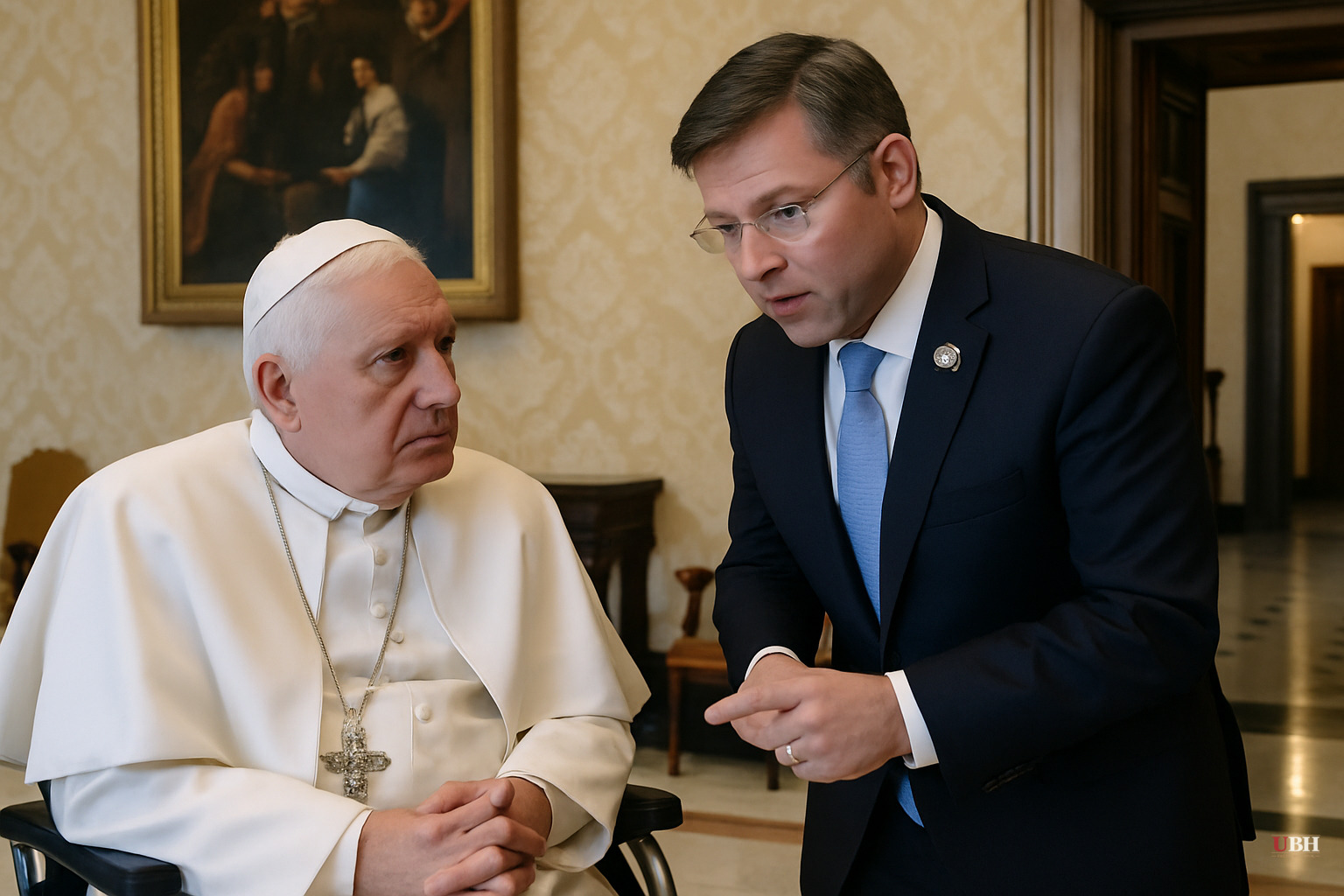
A 2,000-year-old text meets a modern immigration fight
A Bible passage most Americans haven't thought about since Sunday school is now central to a fight over U.S. immigration policy. Matthew 25, the New Testament's "sheep and the goats" passage, describes Jesus explaining how God judges people, according to Religion News Service reporter Jack Jenkins, who discussed the dispute on NPR's Weekend Edition.
The text has Jesus saying: "I was hungry, and you gave me food, I was thirsty, and you gave me something to drink, I was a stranger, and you welcomed me." It concludes with the line that whatever was done "to one of the least of these," was done to Jesus himself, Jenkins said.
The theology isn't controversial. Who counts as "the least of these," and whether the mandate falls on individuals, churches, or the U.S. government, is where the fight starts.
The pope weighs in
Pope Leo XIV invoked the passage in remarks in November 2025, criticizing the Trump administration's immigration approach. "Jesus says very clearly, at the end of the world, we're going to be asked, you know, how did you receive the foreigner? Did you receive him and welcome him or not?" the pope said, according to the archived recording cited by Jenkins.
Weeks later, House Speaker Mike Johnson was asked by a reporter to respond. Johnson didn't dodge the theology. He pushed back on the framing directly.
"People cite passages out of the Old Testament and they say, well, you're supposed to take care of the sojourner and the neighbor, treat him as yourself, welcome then in. Yes, but that is an admonition to individuals, not to the civil authorities," Johnson said, according to the archived recording.
Johnson made clear in a social media post the same day that he applies the identical logic to Matthew 25: the passage is a personal moral command, not a governing document for national border policy.
Is Johnson's argument fair?
Johnson's distinction is a real and longstanding one in Christian political thought, not a talking point invented for this fight. Many conservative theologians and pastors have argued for decades that Scripture's charity commands bind individual believers and church communities, while questions like border enforcement, asylum caps, and deportation policy are prudential matters of statecraft that Scripture doesn't directly settle. Under that view, a Christian can personally donate to a shelter, volunteer at a border ministry, or sponsor a refugee family and still support strict national immigration limits without contradiction.
That argument surfaced again at a congressional hearing this spring, where Republican Rep. Michael Cloud of Texas engaged the same Matthew 25 debate, according to Jenkins.
The counterargument
Mainline Protestant pastors, Black Protestant leaders, and now the pope read the passage differently. Their case: Matthew 25 describes a final judgment based on how "the least of these" were treated, without carving out an exception for governments acting through law. If a nation's policies produce hungry, thirsty, or unwelcomed strangers at scale, they argue, that's not a loophole around the text. It's the exact scenario the text warns about.
This is fundamentally a dispute over biblical interpretation, not a factual claim that can be verified or debunked. Both readings have deep roots in Christian tradition. Individual-conscience readings of Scripture and communal or systemic readings have coexisted, and clashed, for centuries, well before Trump-era immigration fights.
What's unresolved
No court, denomination, or theological body is going to settle whether Matthew 25 binds "civil authorities." That's an argument that predates this administration and will outlast it.
What is measurable is how the debate is playing out in real time on Capitol Hill: Speaker Johnson has staked out a public, on-the-record theological position defending current immigration enforcement policy, and Pope Leo XIV has staked out a public position criticizing it. Whether that argument shapes any actual legislation, such as asylum processing rules or deportation funding currently before Congress, remains an open question neither side has answered.
Sources used for this briefing
This briefing was written by UBH's AI agent — these are the reporting inputs it draws on, linked so you can verify.


