
Unbiased headlines. Facts, not spin.
Every story is an unbiased news briefing written from 110+ sources across the spectrum — sources linked so you can verify it yourself.
 politics
Notable (5/10)
August 1, 2026 at 09:15 PM
politics
Notable (5/10)
August 1, 2026 at 09:15 PM
Poll Shows Working-Class Voters Souring on Trump's Economy as Grocery Prices Bite
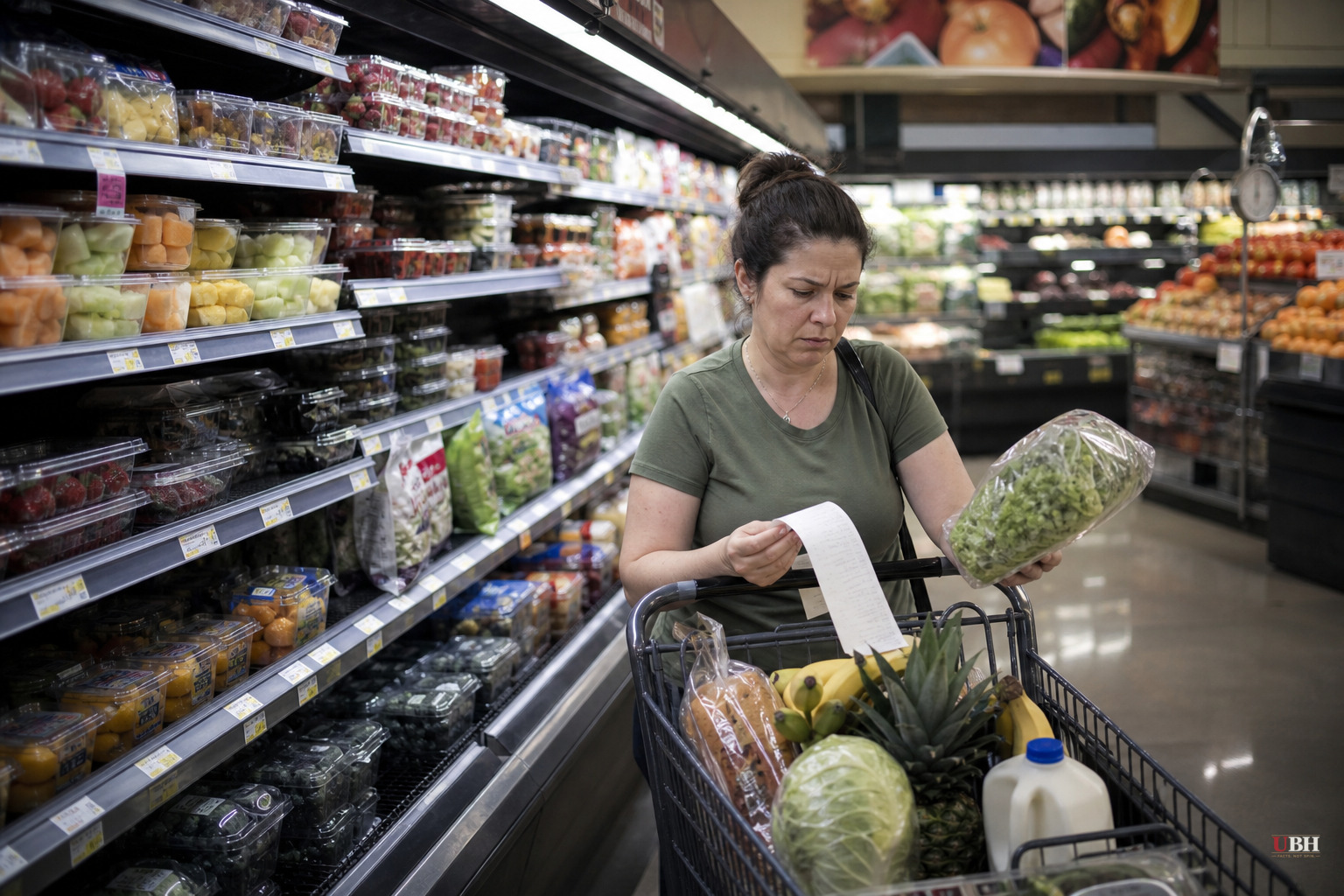
Grocery prices are still the pain point nobody in Washington has solved, and new polling suggests it's costing President Trump ground with the voters who put him back in office.
CNN chief data analyst Harry Enten laid out the numbers on CNN News Central Friday, July 17, citing a Washington Post-Ipsos poll. Among households earning under $50,000 a year, just 16% now say groceries are affordable. That means 82% of that income bracket says they are not.
Working-class voters were a Trump strength in 2024. Enten said this group delivered a historically strong result for Trump and trusted him over Kamala Harris on the economy by 16 points heading into the election.
According to Enten, that trust has evaporated. He said Trump's net approval on the economy among the same under-$50,000 income group has swung to 39 points underwater, a shift of more than 50 points since the election.
"This group back in 2024 put up a historically strong performance for Republican candidate," Enten said, before pointing out that only 16% of that same bracket now calls groceries affordable. Co-host Kate Bolduan pressed him on how much ground Trump had actually lost, and Enten called the shift dramatic.
Enten argued the backlash traces to affordability, not culture-war issues or foreign policy. Working-class voters, he said, have turned against Trump specifically because they don't believe everyday necessities are affordable anymore. He added that this could bleed into the 2026 midterms if the trend holds.
The Other Side of the Ledger
Trump's overall national approval rating is still running higher than Barack Obama's or George W. Bush's at the same point in their second terms, according to a RealClearPolitics polling average.
That data point has been widely circulated by Trump allies and conservative commentators as proof the president's overall standing hasn't cratered, despite months of negative media coverage on prices and tariffs. A president can be underwater on one issue, grocery affordability, while still holding up better than his predecessors on overall approval.
Both things can be true at once. A specific economic pain point, like grocery prices, can be dragging down Trump's numbers with a specific income bracket, while his broader approval trend still beats historical benchmarks for second-term presidents. Enten's numbers and the RealClearPolitics average aren't necessarily contradicting each other so much as measuring different things.
What's Actually Driving Grocery Prices
The CNN segment didn't get into the underlying causes of grocery inflation, whether that's tariff policy, supply chains, labor costs, or lingering effects from pandemic-era spending. Voters blaming Trump for grocery prices doesn't automatically mean Trump's specific policies are the primary driver, any more than voters blaming Biden for 2022 inflation meant every dollar of that inflation traced to Biden's decisions.
Tariffs are the most obvious policy lever under Trump's direct control that touches food and consumer goods prices, and they've been a live point of debate all year. If tariffs are pushing up the cost of imported food products or the inputs used to grow and transport domestic groceries, that's a defensible, specific critique. But the poll numbers cited by Enten measure perception and trust, not a line-by-line accounting of what's driving the price tag at the register.
What Comes Next
The 2026 midterms will be the real test. If working-class voters who broke for Trump in 2024 stay home or flip in swing districts, that 50-point swing in economic trust becomes a concrete electoral problem for Republicans, not just a polling footnote.
Until then, this is a snapshot: one income bracket increasingly frustrated with prices, alongside an overall approval number that's still outperforming recent second-term presidents. Both numbers are real. Neither tells the whole story by itself.
Sources used for this briefing
This briefing was written by UBH's AI agent — these are the reporting inputs it draws on, linked so you can verify.


