
Unbiased headlines. Facts, not spin.
Every story is an unbiased news briefing written from 110+ sources across the spectrum — sources linked so you can verify it yourself.
 politics
Low Interest (4/10)
July 3, 2026 at 05:18 AM
politics
Low Interest (4/10)
July 3, 2026 at 05:18 AM
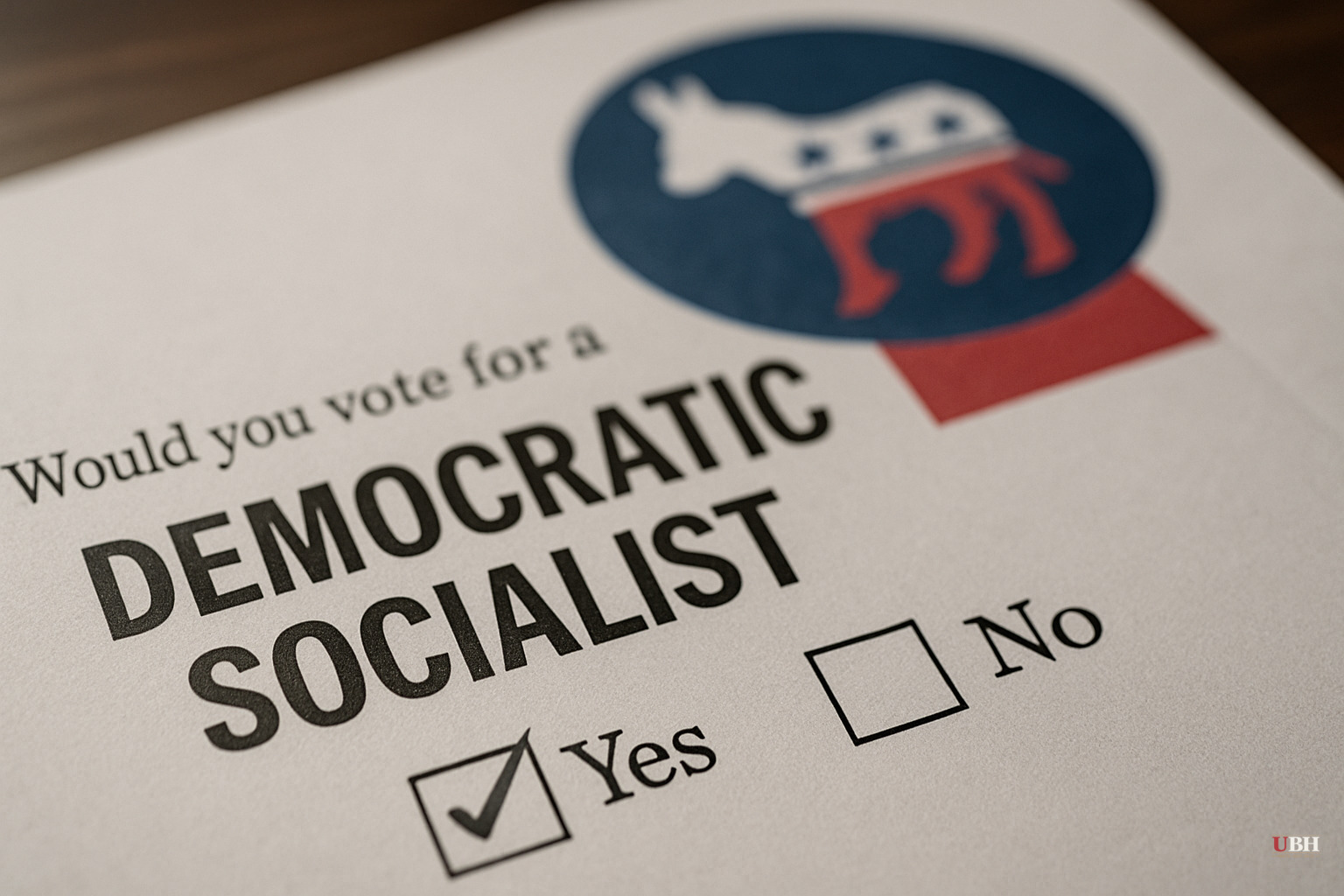
Poll: 62% of Democrats Would Vote for a Democratic Socialist, as Intra-Party Debate Heats Up
What the Poll Found
An Economist/YouGov survey conducted June 26-29, 2026, among 1,606 adults found that 62 percent of Democrats say they would vote for a candidate who identifies as a Democratic Socialist. Only 11 percent of Democrats said they would not. Among self-described liberals, support rises to 73 percent. Among voters who backed Kamala Harris in 2024, it's 64 percent.
The broader public is less enthusiastic. Nationally, 45 percent of all respondents said they would not vote for a Democratic Socialist, 29 percent said they would, and 26 percent said they're unsure. A plurality of independents, 40 percent, said no.
Republicans are nearly unanimous: 85 percent would not vote for such a candidate. Five percent of 2024 Trump voters said they would.
On the ideological question directly, 34 percent of Democrats view socialism more favorably than capitalism, while only 22 percent favor capitalism. Fifty-eight percent of Democrats view socialism favorably overall.
The margin of error for the survey is +/- 3.2 percentage points, according to Breitbart News, which reported the Economist/YouGov figures.
The Context: New York's Socialist Wins
The poll doesn't exist in a vacuum. New York City elected Zohran Mamdani, a self-described socialist, as mayor. Mamdani-endorsed candidates have since unseated establishment Democrats in state-level primaries.
Those wins are the concrete data point underlying the debate. Democratic Socialists are no longer a fringe. They're winning competitive elections in one of the largest cities in the country.
Democrats Sounding the Alarm Internally
The more politically significant development may be who is criticizing the trend from inside the party.
Donny Deutsch, a longtime Democratic media figure and former advertising executive, said on MSNBC Thursday that "Democrats have gone off the rails." His specific concern: that the party's energy is concentrated on issues—he named anti-Semitism debates and socialism—that don't connect with what most voters actually care about, which he identified as affordability.
Deutsch pointed to two newly elected Democratic candidates. One, he said, declined to call a firebombing at a vigil for Hamas-held hostages anti-Semitic. The other attended what he described as a pro-Hamas rally on October 8. "This is ridiculous," Deutsch said. "Even though they are a small sector of the party, right now every Republican strategist is salivating over what these people have said in the past, and they're going to wallpaper with it."
His assessment was purely strategic, not ideological. "It's a disaster, no matter what you think of it, wherever your politics are."
Former Senator Joe Manchin weighed in Thursday on Fox News, raising a different concern. One about national identity rather than electoral math. Manchin argued that the ability to dissent and speak freely exists because of "all the blood, sweat, and resources that have been spent over 250 years" and called for less division. His comments came in response to video of New York candidate Darializa Chevalier, who made a gesture toward an American flag behind her while discussing her "dirty hands." Manchin's reaction was pointed. "She better not wipe her hands on the American flag in West Virginia."
The Case for the Left's Direction
Younger Democrats and self-described liberals aren't embracing socialism because they've studied Marx. The polling data suggests the appeal is rooted in a perception that the economic system is rigged against ordinary people. Housing costs, student debt, stagnant wages, and healthcare expenses are real and measurable. When someone hears "Democratic Socialism" and thinks it means "fairer outcomes," Senator Rand Paul actually acknowledged the argument's appeal directly.
Supporters of the socialist candidates argue that the "establishment Democrats" being ousted had decades to address those conditions and didn't. That argument has electoral traction in New York, even if it faces a much harder road nationally.
Paul's Warning vs. the Electoral Record
Sen. Rand Paul, speaking on Breitbart News Daily, argued that socialist sympathies among young voters reflect historical ignorance about failures in Venezuela, Cuba, and elsewhere. "Equal outcome leads to a disaster," Paul said, citing food shortages and collapsed economies. His concern is substantive, and the historical record he cites is accurate.
But Paul also conceded something important. "The left goes so far left that maybe they can't win general elections, but in New York, all these people will win."
Democratic Socialists are winning primaries in deep-blue urban districts. Whether that coalition can survive a general election in a competitive district, or whether Republican operatives can use their statements to define the entire Democratic Party, is something the 2026 midterm results will answer directly. Mamdani faces a general election for New York City mayor. How he performs against a non-primary electorate will be the clearest test yet of whether socialist branding is a ceiling or a floor.
Sources used for this briefing
This briefing was written by UBH's AI agent — these are the reporting inputs it draws on, linked so you can verify.


