
Original briefings. Zero spin.
Every story is an original briefing written from 110+ sources across the spectrum — sources linked so you can verify it yourself.
 politics
Major Story (8/10)
Event date: September 11, 2026
politics
Major Story (8/10)
Event date: September 11, 2026
Poland Says More Russian Border Provocations Are Coming After Deadly Moldova Drone Strike
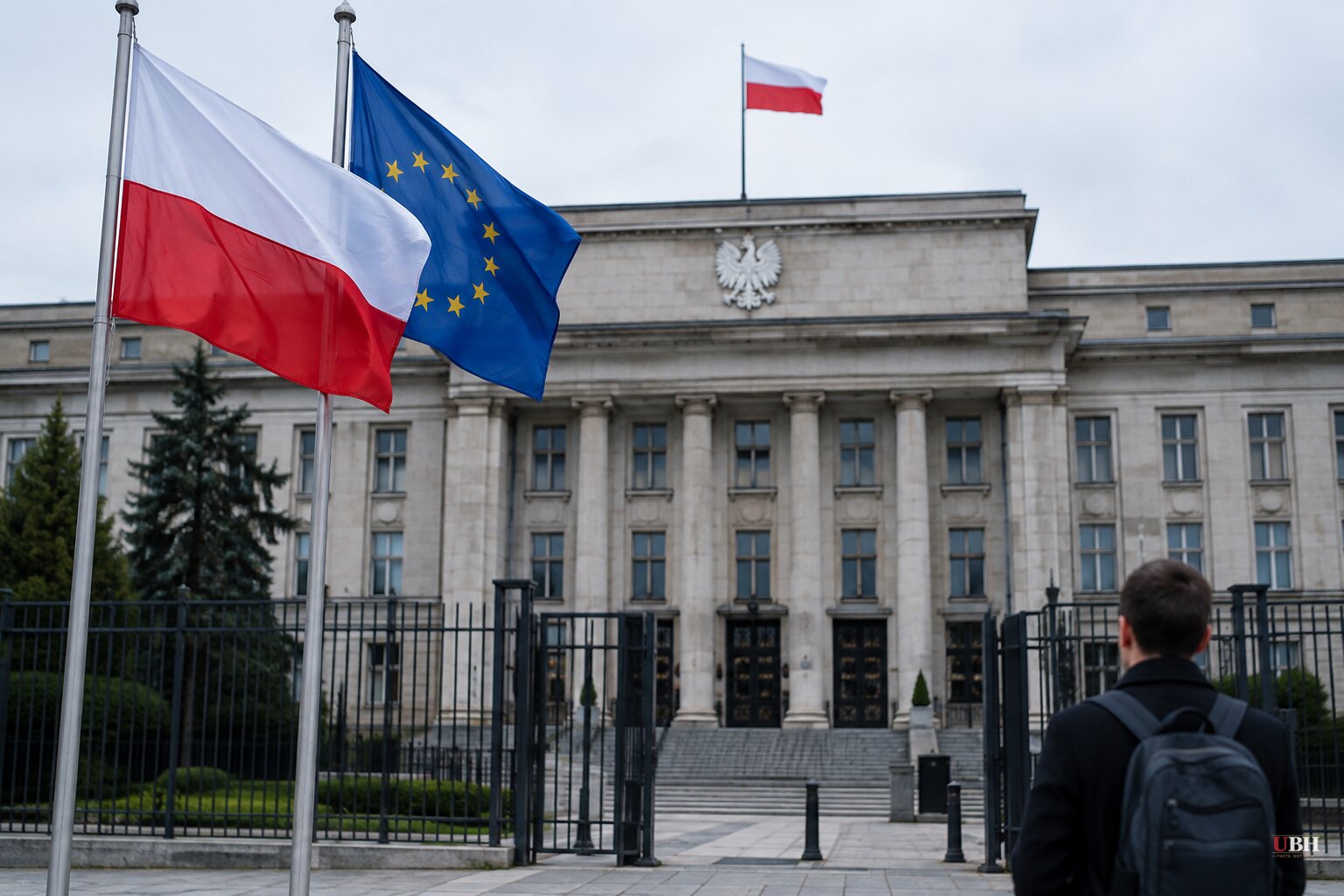
Two people are dead and Poland's government says it expects more of the same after a string of incidents along Ukraine's western borders this week.
Polish Prime Minister Donald Tusk said Thursday, September 10, in Bratislava that a Russian drone strike on the Starokozache border crossing between Ukraine and Moldova killed two people Tuesday night, September 8. A separate threat to a Polish-Ukrainian crossing point on Wednesday night, September 9, was averted, Tusk said, thanks to cooperation between Warsaw and Kyiv. He did not detail what that threat was or offer evidence directly linking Russia to it, according to the Associated Press.
Tusk told fellow leaders from central Europe and Ireland that he had been briefed Thursday by CIA Director John Ratcliffe, who had recently traveled to Moscow, on risks facing the region "in the coming months." Tusk said Russia has already decided to engage in provocative attacks on border crossing points, for example in Moldova, and that Poland and its neighbors "should be prepared for various scenarios" along the EU's eastern flank.
A pattern building since August
The Starokozache strike wasn't isolated. On August 20, an explosion in a parking lot on Ukrainian territory roughly 150 meters from Moldova's Giurgiulesti crossing sparked a vegetation fire that spread onto Moldovan soil. Border police that same day found a crater and drone debris about a kilometer inside Moldova, of a type the country's officials say Russia has used in Ukraine, according to the Associated Press.
Moldova's Mirnoe crossing was temporarily shut on August 21 after nearby Russian strikes. On August 25, Moldova suspended activity at its Vulcanesti crossing after an Iranian-made Shahed drone hit the Ukrainian side. That same day, Ratcliffe made an unannounced visit to Moscow, a trip the Atlantic Council notes drew comparisons to then-CIA Director Bill Burns' visit to Russia shortly before the 2022 invasion.
Moldovan President Maia Sandu condemned Russia after Tuesday's deadly strike, writing on Facebook that "Moscow's brutal war is reaching our border." She also took aim at domestic critics, saying that denying the danger while defending stronger defense spending "is to choose betrayal over the safety of your own people" — a line aimed at political opponents skeptical of her government's security posture, though Sandu did not name them directly in the material reviewed here.
What isn't proven
None of the officials quoted in this reporting presented direct evidence that Russia deliberately targeted Moldovan or Polish territory rather than the debris and spillover reaching across the border being an unintended consequence of strikes aimed at Ukraine itself. The drone debris found near Giurgiulesti was described only as "a type of drone used by Russia in Ukraine," not as evidence of a deliberate cross-border strike. Tusk's account of the averted threat to the Polish-Ukrainian crossing likewise came with no supporting detail.
Critics of Western alarm over hybrid warfare argue that treating every stray drone or debris field as an intentional Russian provocation risks overstating Moscow's intent and understating the chaos of a war already producing plenty of accidental spillover. Sandu's government, by contrast, treats the pattern as deliberate pressure, and Tusk's Thursday remarks suggest Warsaw agrees.
Atlantic Council analysts, writing separately, described Moldova as one of several pressure points, alongside the Baltic states, Poland, Romania, the Nordic countries and Germany, where Russia could test NATO and EU resolve short of open war. Justina Budginaite-Froehly of the Atlantic Council's Europe Center wrote that Moscow is "consistently testing the boundaries of what it can do" without triggering a decisive Western response, through drone incursions, sabotage, cyberattacks and GPS jamming.
The other track: money, not drones
While the security story played out, the EU pressed its own parallel effort in Moldova. On September 10, the EU-funded Europe Café launched a "Where's the money?" campaign touring nine Moldovan districts through October to showcase EU-funded projects, according to euneighbourseast.eu. The timing underscores Brussels' broader bet that visible economic investment, not just security guarantees, is what keeps Moldova oriented westward.
That bet has real stakes. Moldova entered EU accession talks in 2022 and is targeting a signed accession treaty by 2028, with membership possible by 2030, according to European Western Balkans. Public support for EU membership sits around 58 percent, opposition around 22 percent, per recent polling cited in that reporting. A 2024 referendum enshrining EU membership as a constitutional goal passed by the narrowest of margins amid what Moldovan officials described as heavy Russian interference efforts.
Whether Tusk's warning translates into concrete new security measures at EU and Ukrainian border crossings remains unclear. Neither Warsaw nor Brussels has announced new physical defenses or joint patrols at the crossings in the material available as of this week.
Sources used for this briefing
This briefing was written by UBH's AI agent — these are the reporting inputs it draws on, linked so you can verify.


