
Unbiased headlines. Facts, not spin.
Unbiased Headlines is an independently owned news organization. We bring you the facts, not opinions, written fresh from 110+ named sources. Sources linked so you can verify it yourself.
 tech
Major Story (7/10)
Event date: September 3, 2026 ·
tech
Major Story (7/10)
Event date: September 3, 2026 ·
Phone Prices Are Rising Because Memory Chips Got Sucked Into the AI Boom
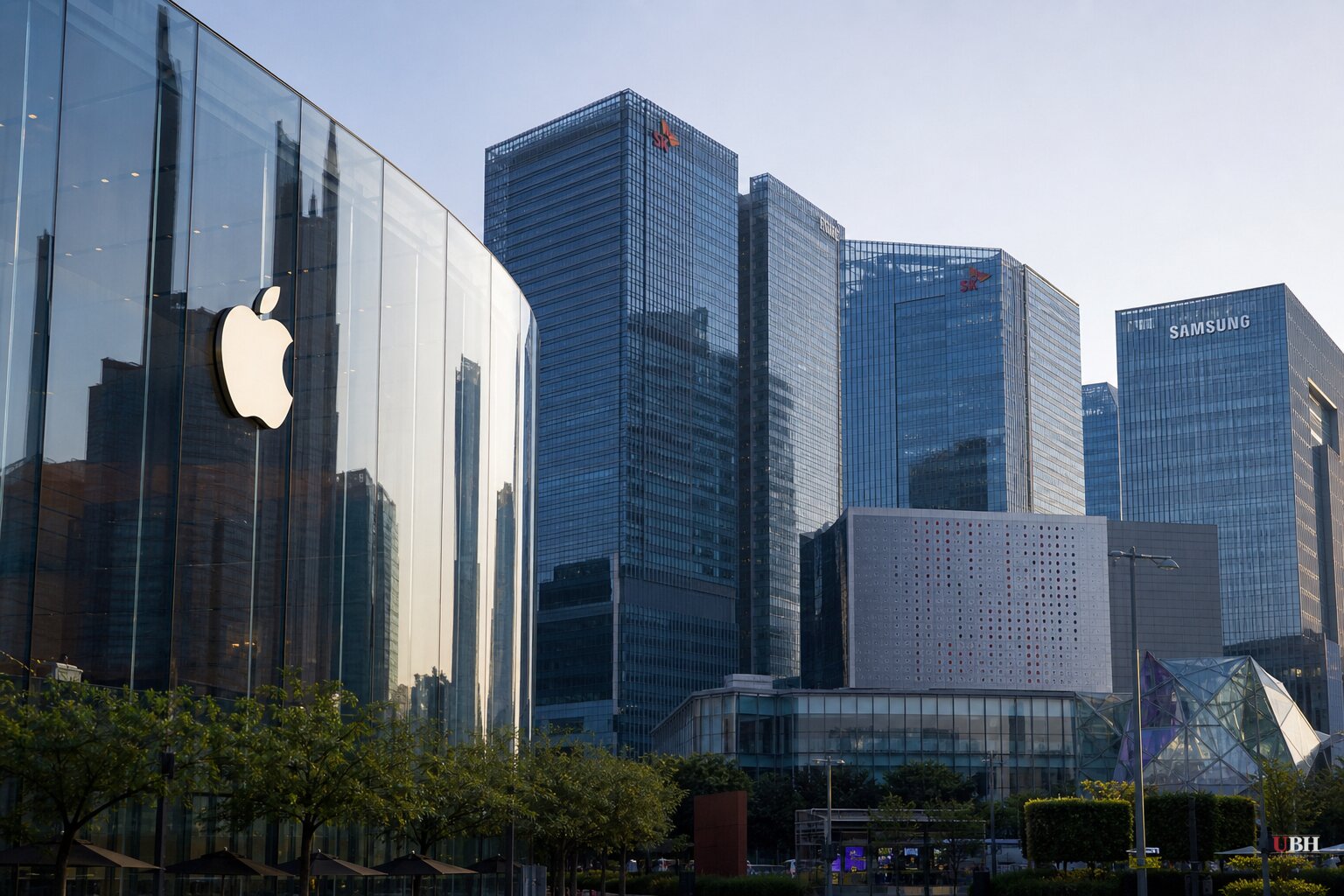
The chips inside your phone just got a lot more expensive
Apple is set to unveil its iPhone 18 lineup this week. Whatever the price tag turns out to be, it arrives at a moment when nearly every other phone maker on earth has already raised prices, and the reason has almost nothing to do with iPhones themselves.
It's memory chips. DRAM and NAND flash, the parts that hold your apps, photos, and data, have become the most volatile line item in a phone's bill of materials. Counterpoint Research found smartphone DRAM prices rose about 83% quarter-over-quarter in the second quarter of 2026, according to reporting by TradingKey and separately cited by the tech outlet subsellkaro.
Where the demand actually went
The common explanation is AI, and that's real, but it's not the whole story. According to The Verge, Micron president and COO Manish Bhatia said the memory industry had already concluded years ago that it needed to build entirely new wafer-processing capacity, not just squeeze more chips onto existing wafers, because "technology alone was able to keep up with the demand" no longer applied.
Micron reached that conclusion back in 2021. Then pandemic-era electronics demand cratered, manufacturers sat on excess inventory, lost money, and slowed expansion plans. Generative AI's memory appetite hit right as the industry was still recovering from that hangover, The Verge reported.
The mechanics matter here. High-bandwidth memory used in AI servers isn't the same product as the DRAM in your phone, but they compete for the same wafer capacity. Micron's own estimates, cited by TradingKey, say producing a given amount of HBM requires roughly three times the wafer input of conventional DRAM. When AI customers place bigger, steadier, higher-margin orders, memory makers redirect capacity toward them. Phone makers get what's left, at a higher price.
Three companies, Samsung, SK Hynix, and Micron, control close to 90% of the global DRAM market, according to Counterpoint data cited by TradingKey. That concentration means a handful of corporate decisions about where to point production lines can ripple through the price of every phone sold worldwide.
Real numbers, and where they diverge
Counterpoint's Global Smartphone Price Increase Tracker put the average global retail price increase at 15% so far in 2026, according to Android Authority. But that pain isn't spread evenly. The U.S. is seeing just a 5% increase, versus 7% in Europe, 10% in China, 16% in Latin America, 18% in the Middle East and Africa, 19% across the rest of Asia-Pacific, and 21% in India, Android Authority reported.
American shoppers aren't immune. Google added $100 across the Pixel 11 lineup, Samsung did the same on the Galaxy S26 and S26+, and Motorola tacked $200 onto the Razr Ultra 2026, according to Android Authority.
Two industry-tracking outlets cite IDC figures for 2026 average smartphone prices that don't line up. Phyx.me cited IDC projecting a 14% rise to roughly $485. Phandroid, citing the same research firm, reported an average selling price of $581 this year, up 27.6%. Neither piece specifies whether those numbers reflect different time windows or different phone segments, and readers should treat both as directional estimates rather than a single confirmed figure.
What both agree on: budget phones are the first casualties. IDC data cited by phandroid says more than 173 million phones priced under $100 shipped last year, and that number is expected to drop sharply as manufacturers can no longer profitably sell at that price point. Subsellkaro reported that smaller vendors and white-label brands are exiting the prepaid segment entirely, with Samsung and Motorola picking up their market share.
Apple's different math
Apple is the outlier so far. Appleworld.today, citing Counterpoint Research director Tarun Pathak, reported that Apple has held iPhone prices steady even though memory prices have risen roughly fourfold since the fourth quarter of 2025. Pathak said memory has "reset pricing across the industry," but Apple's scale and long-term supplier contracts have let it absorb costs other manufacturers can't. Counterpoint senior analyst Karn Chauhan said that's expected to change: "Prices for new smartphones are expected to keep rising over the coming quarters, including for the upcoming iPhone 18 series."
That's a forecast, not a confirmed fact. Whether Apple raises iPhone 18 prices this week remains an open question until the company actually announces them.
Frustration and supply reality
The frustration is fair. A phone that cost $200 with 8GB of RAM two years ago now runs $280 or doesn't exist, and consumers reasonably wonder if manufacturers are just padding margins. Phyx.me's framing, "This isn't greed. It's math," is the more accurate read of the available evidence. Bill-of-materials costs for sub-$200 phones rose 20% to 30% since the start of 2026, driven by a documented global supply squeeze rather than a documented pricing conspiracy. No source here alleges collusion or antitrust violations by Samsung, SK Hynix, or Micron, and none has been charged with one.
TrendForce projects DRAM demand will keep outpacing supply through 2027, driven largely by HBM's capacity consumption, according to TradingKey. IDC, cited by phandroid, expects memory prices to keep climbing through at least 2028, and doesn't expect a return to pre-2026 price levels even after that. The next data point arrives this week, when Apple decides whether the iPhone 18 breaks its own streak of steady pricing.
Sources used for this briefing
7 links from 7 independent newsrooms (syndicated copies of the same report count once)
These are the sources it draws on, linked so you can verify.


