
Unbiased headlines. Facts, not spin.
Every story is an unbiased news briefing written from 110+ sources across the spectrum — sources linked so you can verify it yourself.
 politics
Major Story (7/10)
July 16, 2026 at 10:45 AM
politics
Major Story (7/10)
July 16, 2026 at 10:45 AM
Pew Poll: Global Confidence in Trump at 23%, U.S. Favorability Trails China in 25 Countries
The numbers
Pew Research Center surveyed 42,151 adults across 36 countries between February 8 and May 13, 2026. The finding making headlines: a median of just 23% of respondents said they have confidence in President Trump to do the right thing in world affairs. Roughly two-thirds expressed little or no confidence, according to Pew.
Confidence in Trump dropped in 16 of 24 nations where Pew has trend data going back further. Not a single country showed improvement, Pew reported.
Favorability toward the U.S. itself isn't much better. Across the 36 countries surveyed, 37% held a favorable opinion of the United States compared to 57% unfavorable, according to the South China Morning Post's reporting on the Pew data. Favorability fell in 15 of 24 trend countries, with double-digit drops in Indonesia, Italy, Nigeria, South Africa, South Korea and Turkey.
China passes the U.S. for the first time in nearly two decades
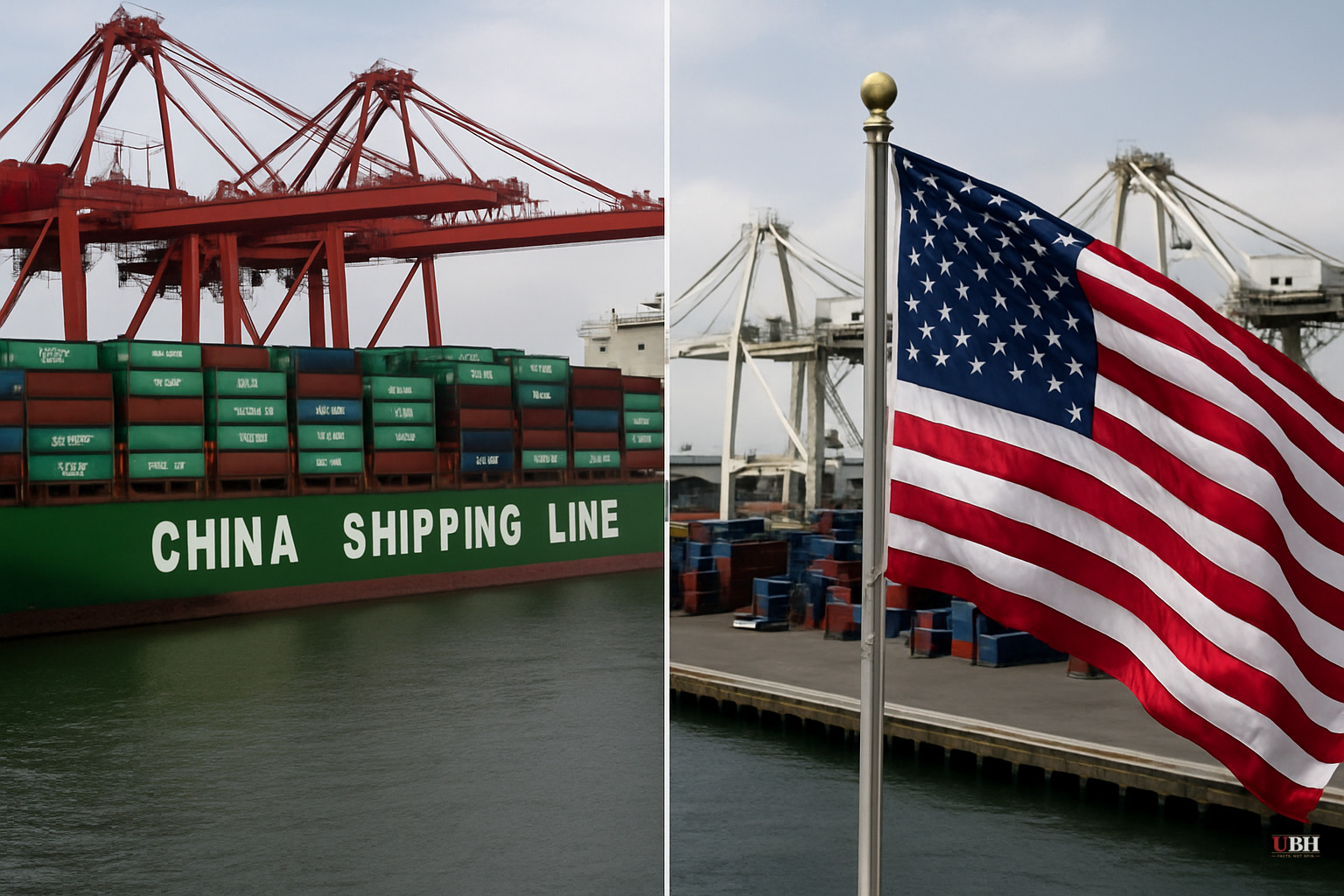
The Daily Beast highlighted the most striking comparative finding: people in 25 of the 36 surveyed countries or territories now hold a more favorable opinion of China than the United States. Only six countries — Poland, the Philippines, South Korea, India, Japan and Israel — rated the U.S. more positively than China.
Respondents in 22 countries, including Canada, Mexico, France, Germany and the U.K., expressed more confidence in Chinese President Xi Jinping than in Trump, though confidence in both leaders remained low overall, according to Pew.
Canada shows the sharpest swing. Favorable views of the U.S. there collapsed from 57% in 2023 to 33%, while favorable views of China rose from 14% to 44%, per Pew's data as reported by The Daily Beast. In South Korea, confidence in Trump fell from 33% last year to 23%, while confidence in Xi rose from 15% to 24%. Nearly a dead heat.
Europe is the outlier, and it's ugly there
Pew's own report singles out Europe as uniquely negative. Majorities in all 10 European nations polled say they lack confidence in Trump on world affairs, and in eight of those countries roughly three-quarters or more hold that view. Confidence in Trump dropped significantly in eight European nations since 2025, including 15-point drops in both Greece and Italy, according to Pew.
Even among people who favor right-wing populist parties, Trump's numbers slipped. Pew found that 49% of Italians with a positive view of the Brothers of Italy party had confidence in Trump in 2025; that fell to 30% this year.
A median of 85% across the 10 European nations disapprove of how Trump is handling Greenland and tariffs specifically, Pew reported. Trump also gets poor marks on Gaza, the Russia-Ukraine war and Iran.
What's driving it, according to Pew
Laura Silver, associate director of Pew's Global Attitudes Research, told The Guardian that the decline tracks with the outbreak of the U.S.-Israeli military conflict with Iran that began in late February 2026, along with the administration's actions in Venezuela and its stated interest in acquiring Greenland. She said there's "an actual relationship between the outbreak of the war and the sense that the U.S. is just not contributing to peace and stability."
A separate June 2026 survey by the European Council on Foreign Relations, cited by The Daily Beast, found just 1 in 10 people across 15 countries now consider the United States an ally. A February 2026 Politico poll found 48% of Canadians viewed the U.S. as the biggest threat to global peace, versus 29% who named Russia.
The context these numbers need
Fair point from Trump's defenders: foreign opinion polls have never been a great predictor of whether a president's policies actually work. George W. Bush hit rock-bottom approval across Western Europe over the Iraq War, and Statista's Felix Richter, drawing on the same Pew trend data, notes Trump's current ratings are broadly in line with Bush's late-term numbers. Bush's policies are debated on the merits today, not settled by how Europeans felt about him in 2007.
It's also true that a president pursuing tariffs, tougher immigration enforcement, or a harder line on China is, by design, going to upset the governments and populations of countries that benefited from the old arrangement. Unpopularity abroad isn't proof of failure at home. Obama was beloved overseas and still left office with Americans divided on his record.
The Pew data is difficult to dismiss entirely. No country improved. The China favorability crossover is new in the two decades Pew has tracked this. And the erosion isn't limited to hostile nations. It's showing up in Canada, South Korea, Japan and NATO Europe, the actual alliance structure the U.S. relies on for basing rights, intelligence sharing and coordinated deterrence against China and Russia.
What's unresolved
Pew's report doesn't measure whether declining foreign confidence translates into reduced cooperation on trade, defense spending, or intelligence sharing. Those are separate questions requiring separate data. The White House had not responded to The Daily Beast's request for comment as of publication. Whether the administration views these numbers as a cost worth paying for its foreign policy priorities, or as a problem to manage, remains an open question with no public statement attached to it yet.
Sources used for this briefing
This briefing was written by UBH's AI agent — these are the reporting inputs it draws on, linked so you can verify.


